
Blade Application Guides
Browse focused application knowledge
Cutting guides by industry, process, equipment and defect
Use these curated topic pages to compare related materials and cutting conditions without relying on broad site search.
Industries
Cutting processes
Equipment types
Cutting defects
Technical Articles
Industrial cutting problem knowledge base
1857 Blade Application Guides
Search by material, industry, cutting process or a problem described in your own words. You do not need to know the exact blade name.
Filtration & Membranes
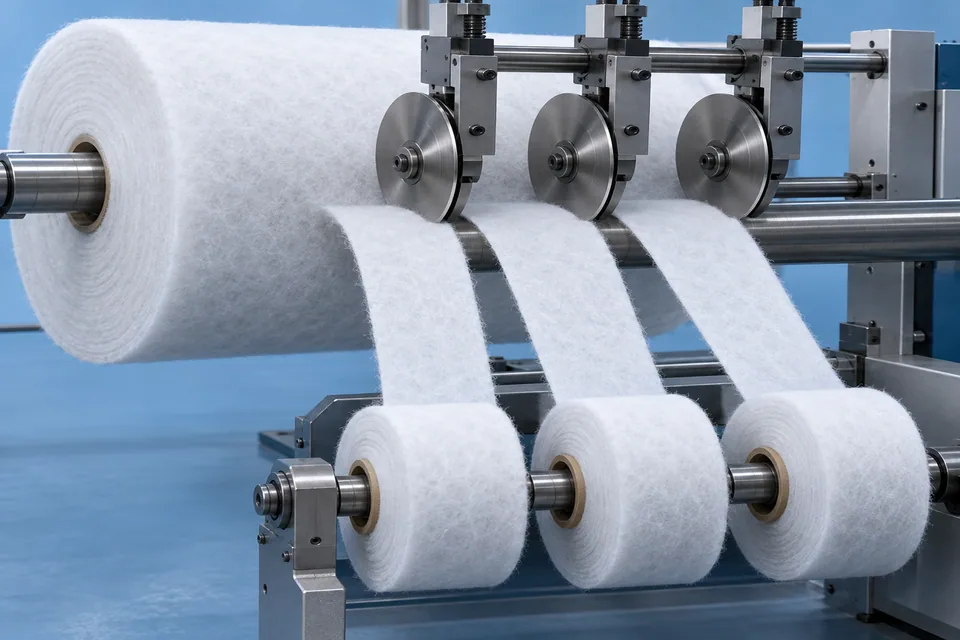
Paint-Booth Filter Roll Shear Slitting Blades
Plan rotary shear conversion of paint-booth filter rolls by useful width, orientation, fiber shedding and installation handling.
Read the application guide →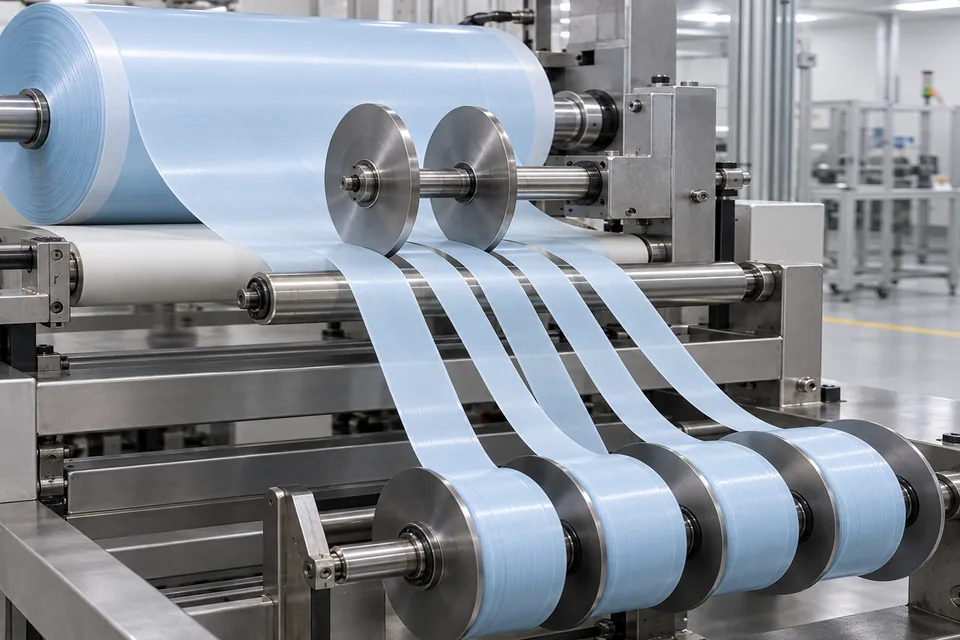
Filtration & Membranes
Nanofiltration Membrane Sheet Shear Slitting Blades
Review paired shear slitting of NF flat-sheet stock by coated-face protection, support-layer edge quality and later element testing.
Read the application guide →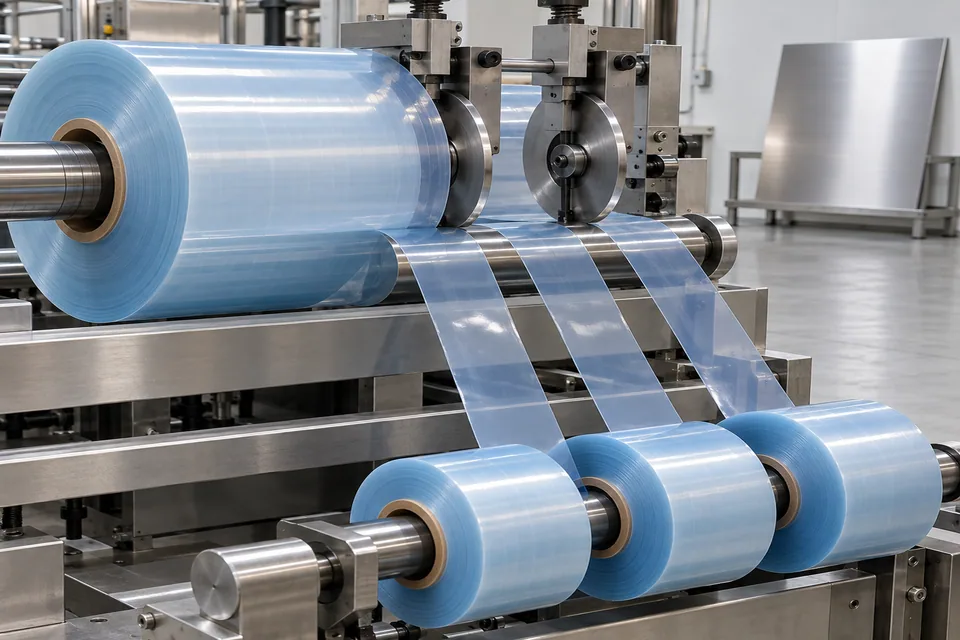
Films & Foils
Stainless Steel Protection Film Shear Slitting Blades
Plan paired rotary shear slitting of stainless steel protection film rolls by adhesive edge, lane width, clean winding and later steel-surface application.
Read the application guide →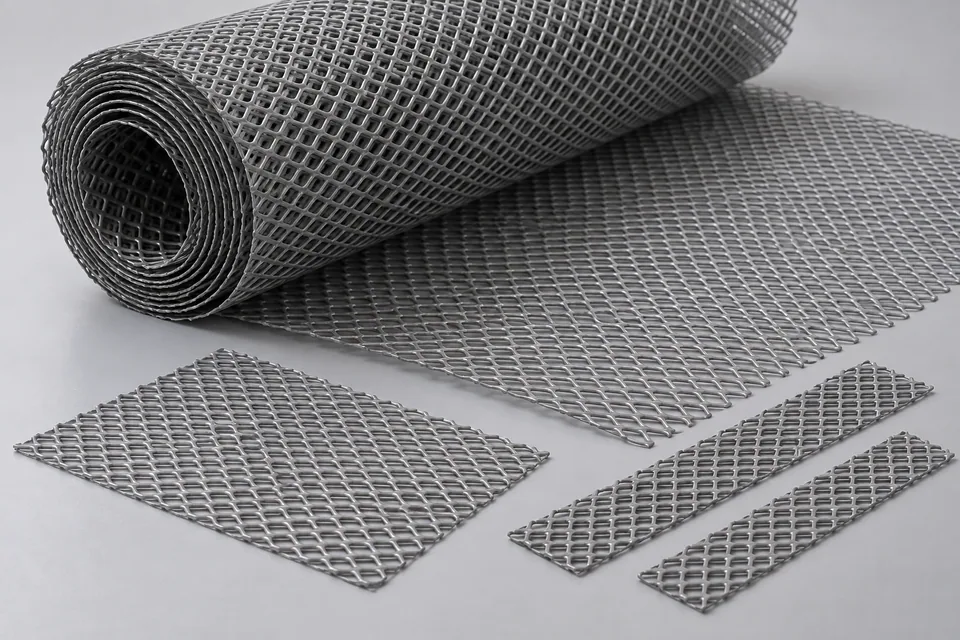
Filtration & Membranes
Electrodialysis Spacer Mesh Shear Slitting Blades
Review continuous shear cuts in electrodialysis spacer mesh by width, open apertures, loose strands and later frame fit.
Read the application guide →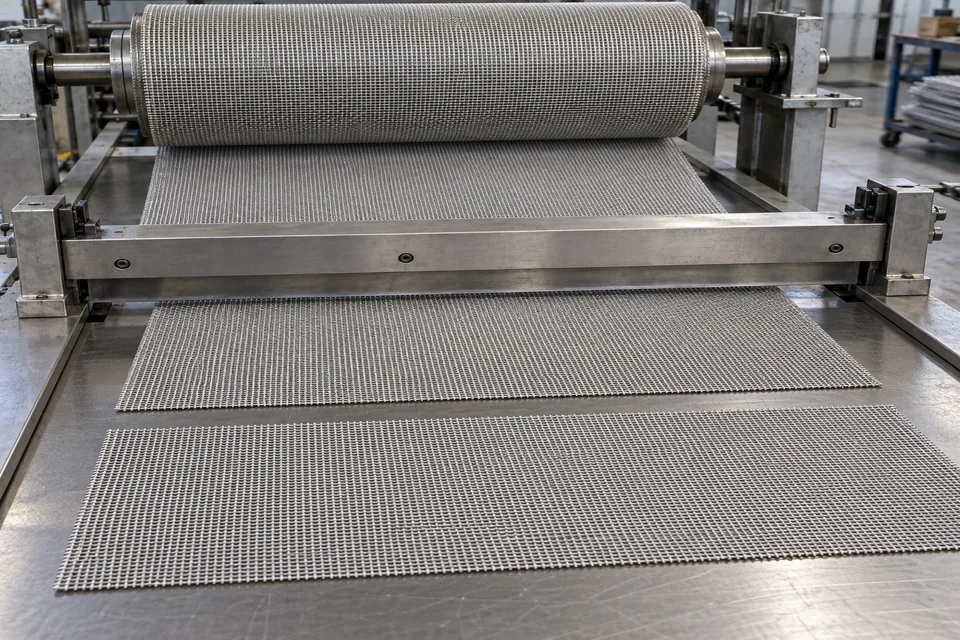
Textiles & Nonwovens
Stainless Woven Wire Mesh Cut-to-Length Blades
Plan transverse shearing of stainless woven mesh from a reel into sized pieces by weave orientation, length, wire-end control and flat part handling.
Read the application guide →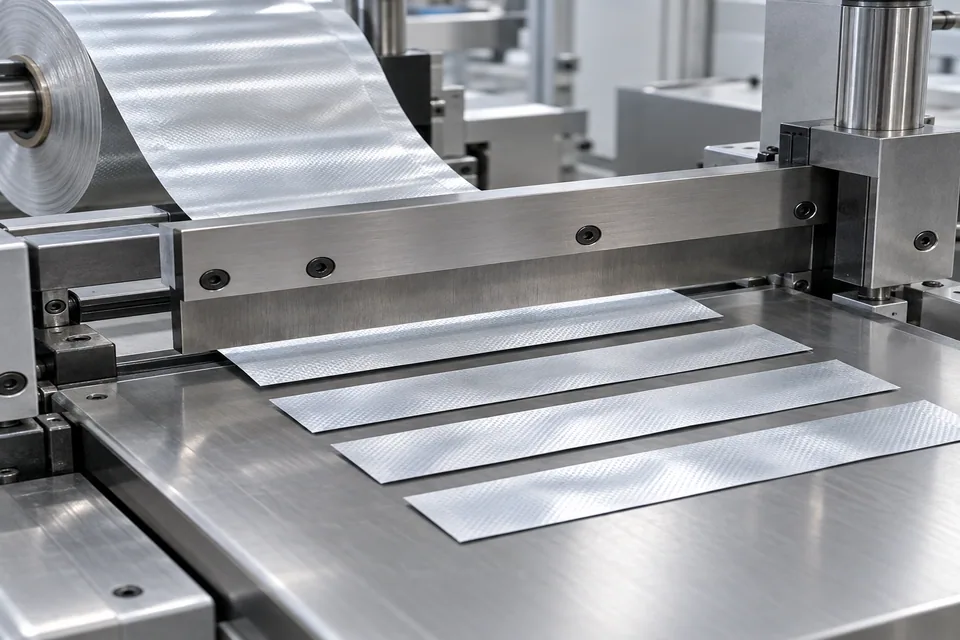
Packaging & Paper
Suppository Strip-Pack Foil Cross Cutting Blades
Plan transverse cuts in suppository AL/PE strip-pack foil by cavity pitch, end-seal margin, foil cracking and PE smearing.
Read the application guide →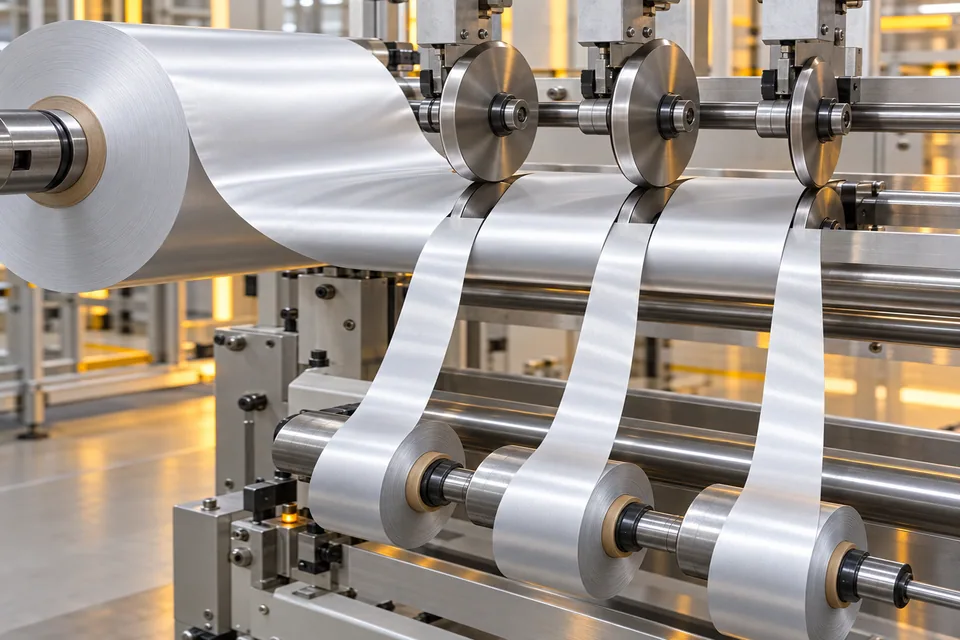
Packaging & Paper
Effervescent Tablet Sachet Laminate Razor Slitting Blades
Review stationary-razor lanes in effervescent sachet laminate by slit registration, foil fracture, sealant drag and moisture-barrier risk.
Read the application guide →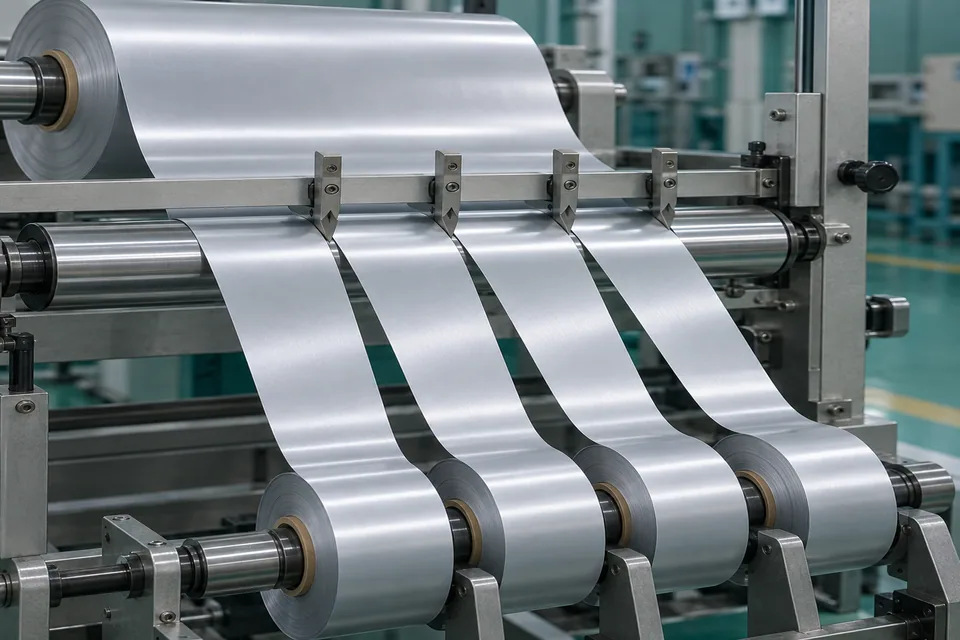
Packaging & Paper
Effervescent Tablet Sachet Laminate Shear Slitting Blades
Plan paired rotary shear conversion of effervescent sachet laminate with knife-pair geometry, print registration and barrier-edge inspection.
Read the application guide →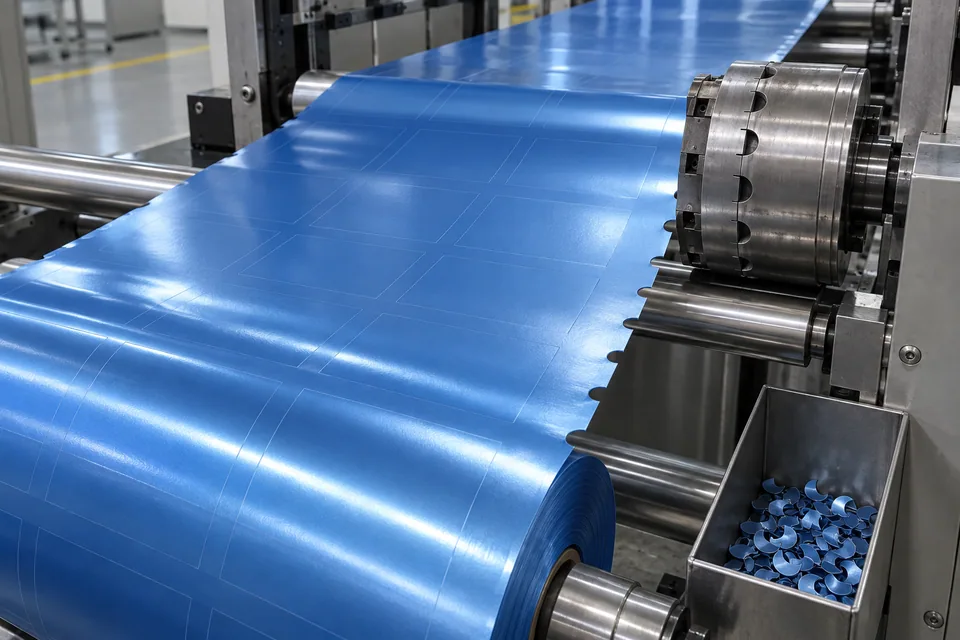
Packaging & Paper
Effervescent Tablet Sachet Laminate Rotary Die-Cutting Blades
Review indexed rotary die cuts in unfilled effervescent sachet laminate for tear features or repeated blanks without violating seal lands.
Read the application guide →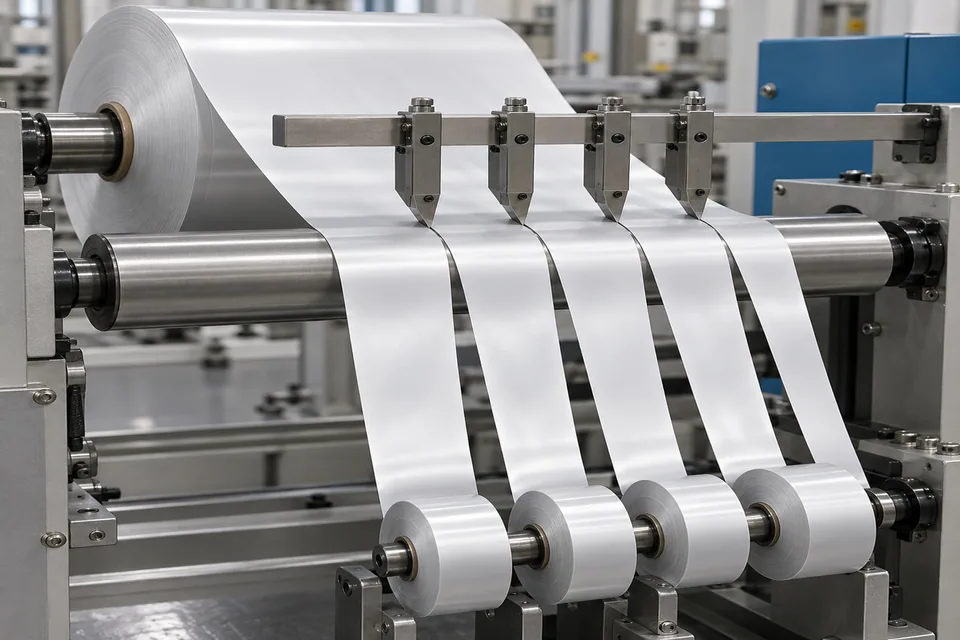
Packaging & Paper
Unit-Dose Powder Stick-Pack Film Razor Slitting Blades
Evaluate stationary-razor slits in powder stick-pack film by narrow-lane width, longitudinal seal allowance and edge debris.
Read the application guide →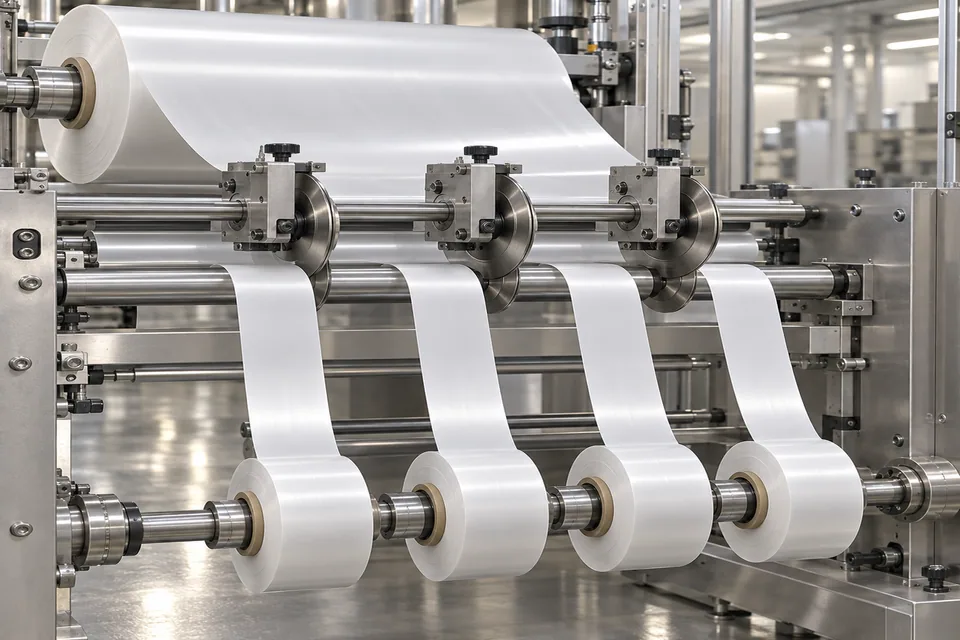
Packaging & Paper
Unit-Dose Powder Stick-Pack Film Shear Slitting Blades
Plan paired rotary shear slitting of powder-stick laminate with lane alignment, sealant-edge checks and post-rewind inspection.
Read the application guide →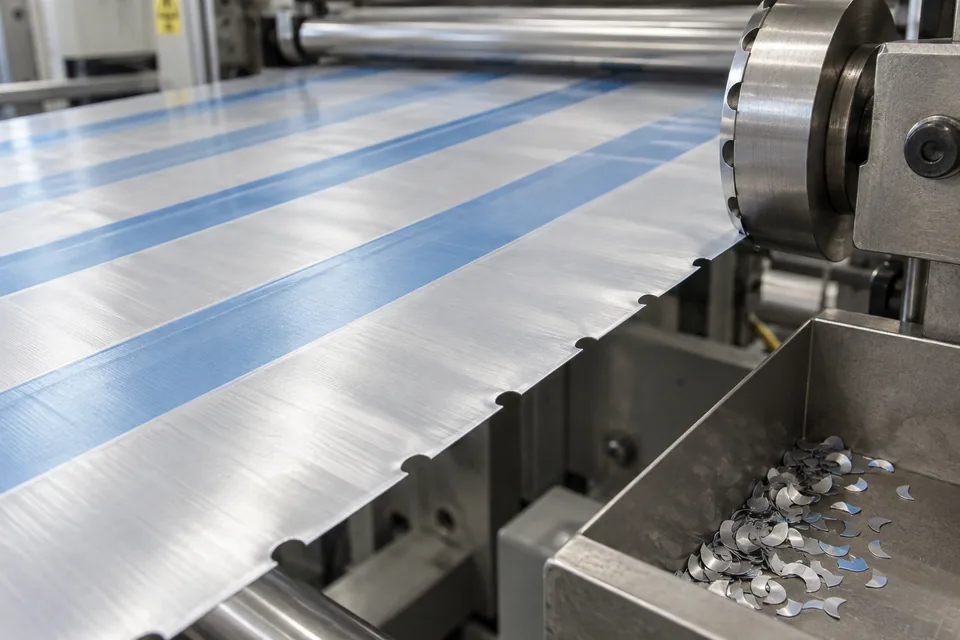
Packaging & Paper
Unit-Dose Powder Stick-Pack Film Rotary Die-Cutting Blades
Assess rotary die features in unfilled powder stick-pack film against print repeat, future seals, layer depth and waste removal.
Read the application guide →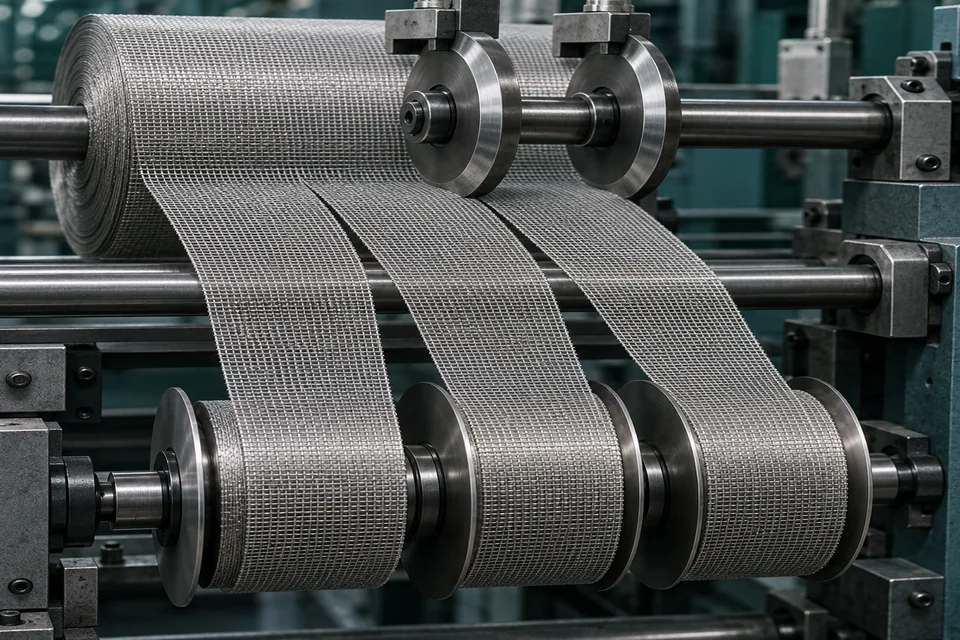
Textiles & Nonwovens
Stainless Woven Wire Mesh Coil Slitting Blades
Plan longitudinal slit coils of stainless woven mesh by weave direction, wire release, roll width and edge finishing.
Read the application guide →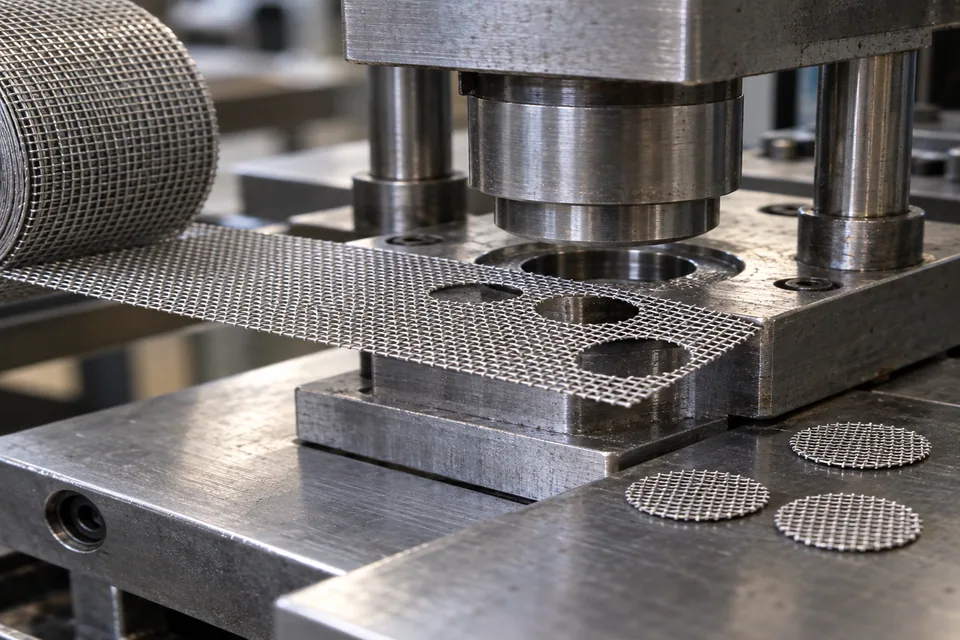
Textiles & Nonwovens
Stainless Woven Wire Mesh Precision Blanking Blades
Review die-blanked stainless woven mesh shapes by profile, wire pullout, aperture distortion and part release.
Read the application guide →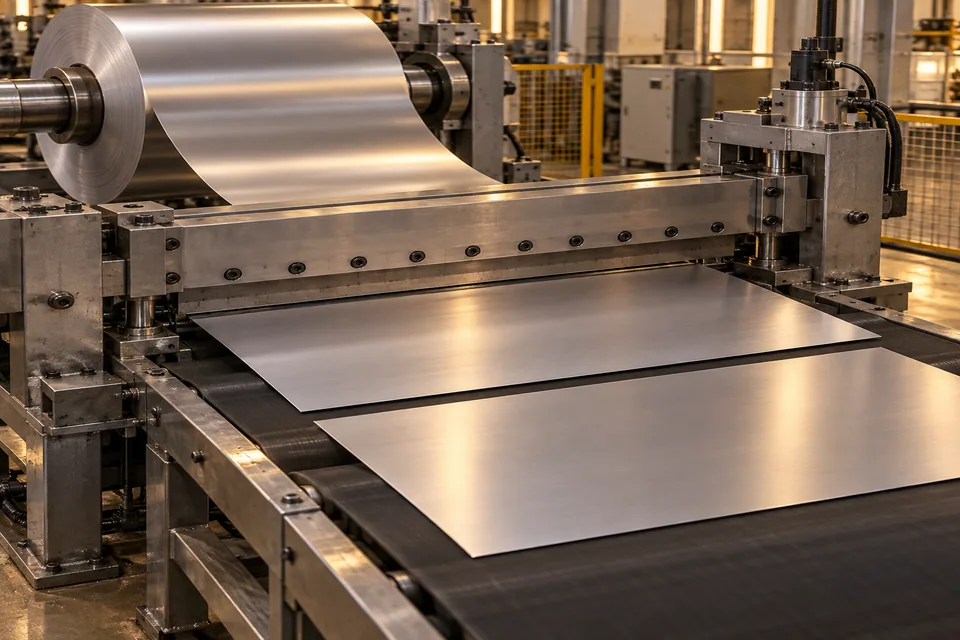
Films & Foils
Inconel Alloy Foil Cut-to-Length Blades
Plan transverse cut-to-length blanks from specified Inconel foil coil by length, burr, curl, surface marking and support.
Read the application guide →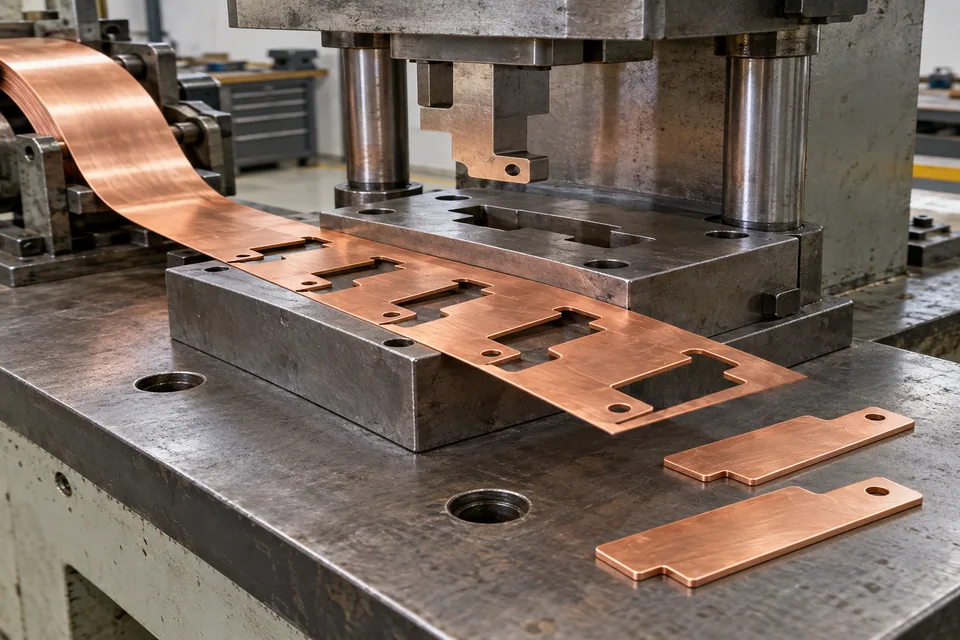
Films & Foils
Pre-Lamination Copper Busbar Sheet Precision Blanking Blades
Plan punch-and-die blanking of copper conductor sheets before busbar lamination, checking burr, holes, flatness and insulation fit.
Read the application guide →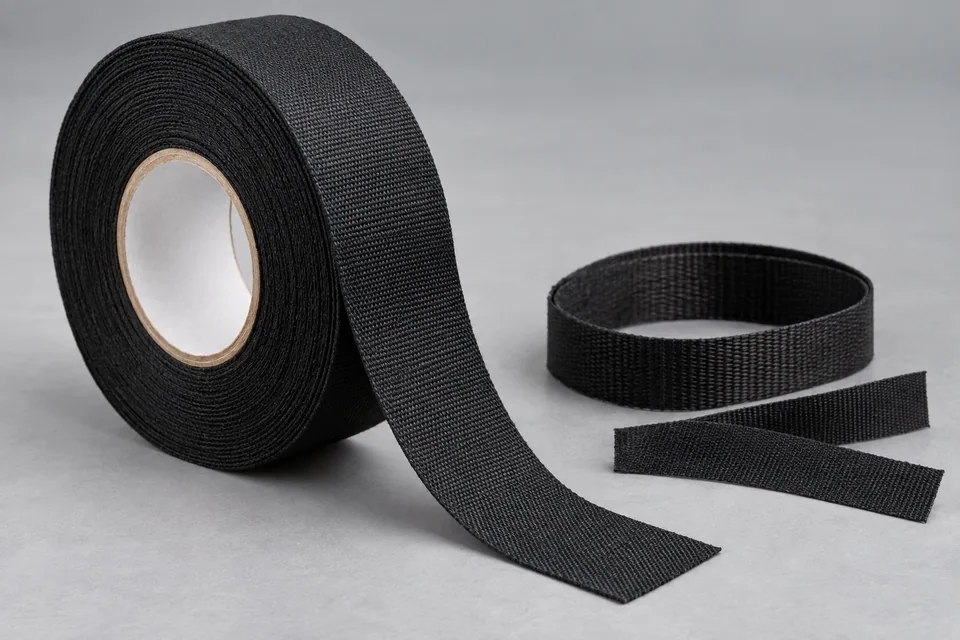
Films & Foils
Wire-Harness Cloth Tape Shear Slitting Blades
Plan paired rotary shear slitting of harness cloth tape by backing fray, adhesive transfer, liner choice and winding quality.
Read the application guide →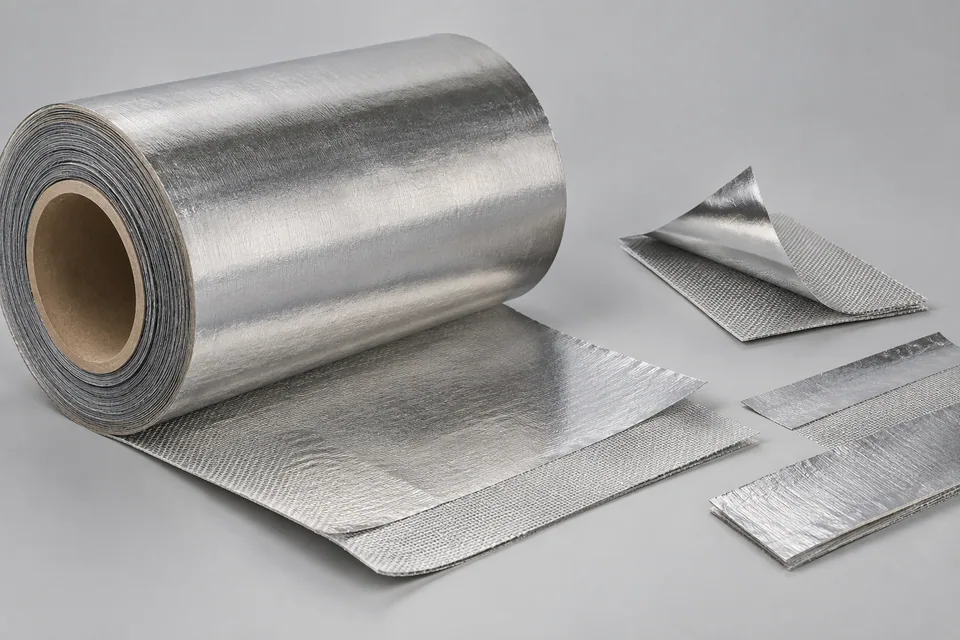
Films & Foils
Cable Shielding Laminate Shear Slitting Blades
Review paired shear cuts in foil/PET shielding laminate by metal burr, polymer peel, conductive adhesive and slit-roll identity.
Read the application guide →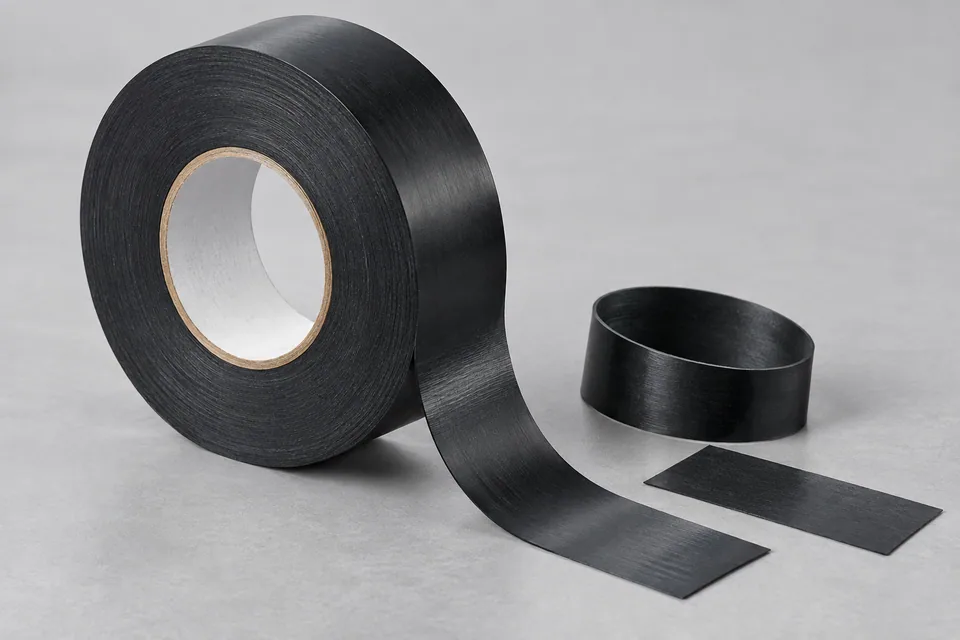
Films & Foils
Semiconductive Cable Tape Shear Slitting Blades
Plan longitudinal shear slitting of carbon-black cable tape by width, coating shed, nonwoven fray and winding orientation.
Read the application guide →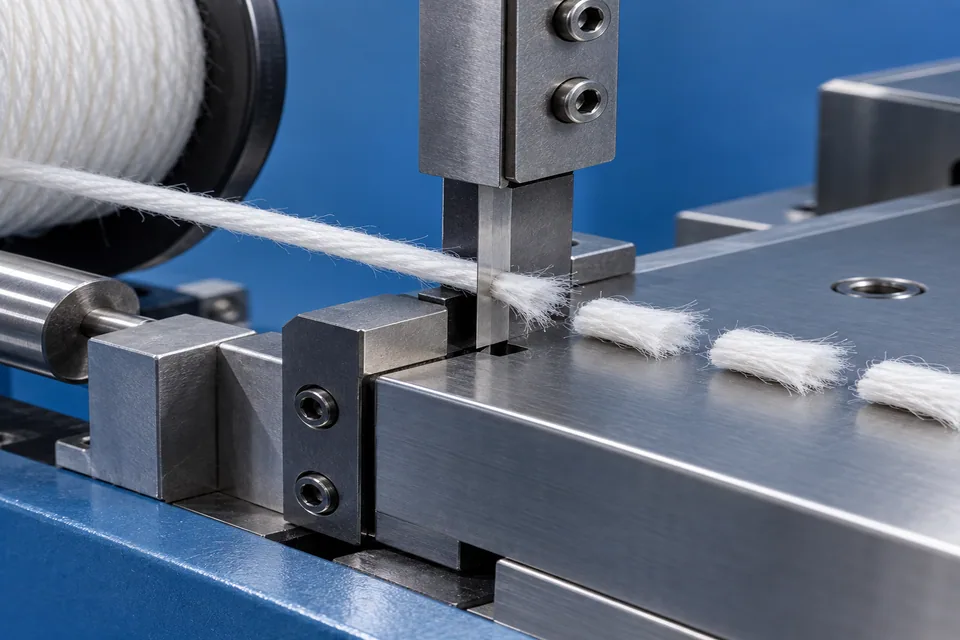
Cables & Wires
Water-Blocking Cable Yarn Transverse Cutting Blades
Review measured cross cuts in water-blocking cable yarn for strand length, fray, powder shedding and cable-feed handling.
Read the application guide →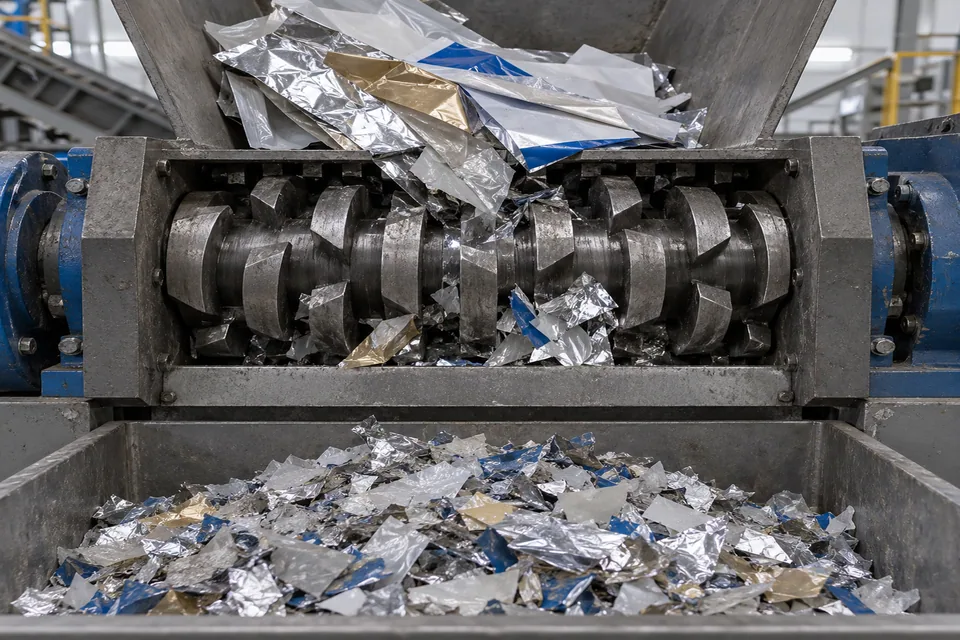
Films & Foils
Multilayer Pouch Production Waste Primary Shredder Knives
Review first-stage shredding of clean multilayer pouch production scrap by feed shape, coarse output and contamination segregation.
Read the application guide →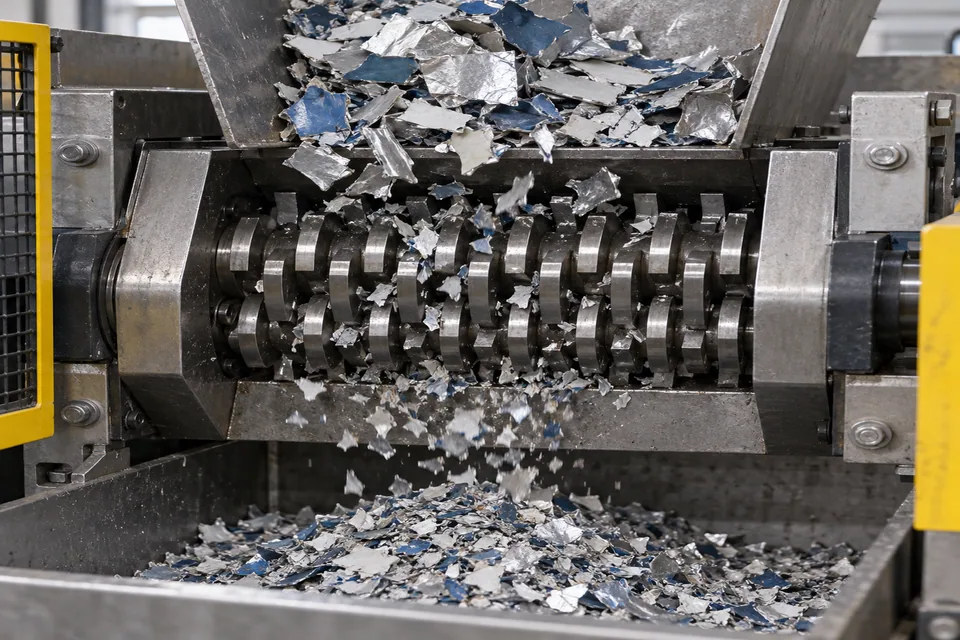
Films & Foils
Multilayer Pouch Production Waste Secondary Shredder Knives
Plan a second reduction pass for coarse pouch-film shreds when the granulator needs shorter, more uniform feed.
Read the application guide →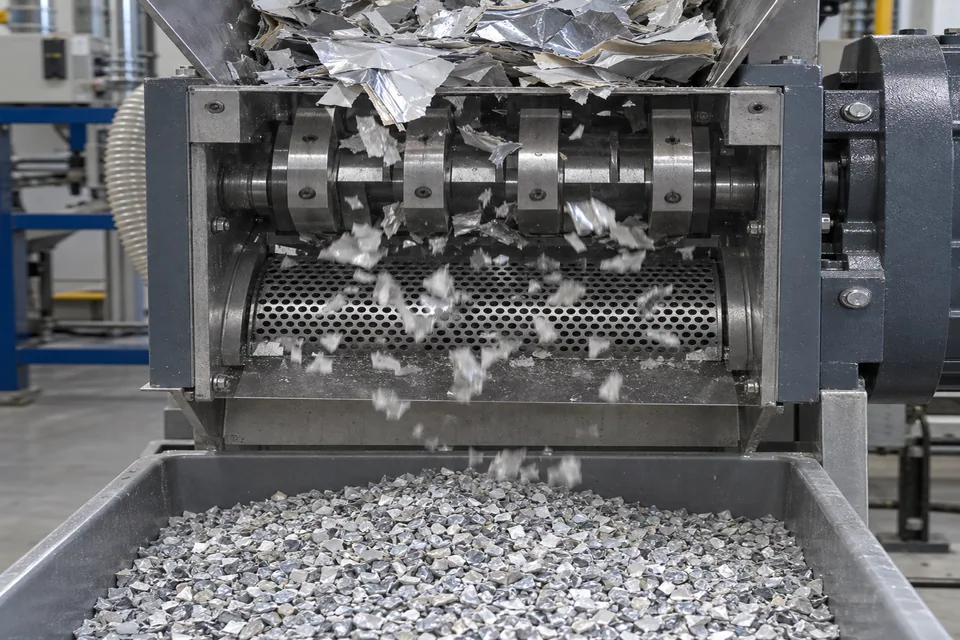
Films & Foils
Multilayer Pouch Production Waste Granulator Knives
Assess knife granulation of pre-shredded pouch-film production waste by flake distribution, heat, dust and screen condition.
Read the application guide →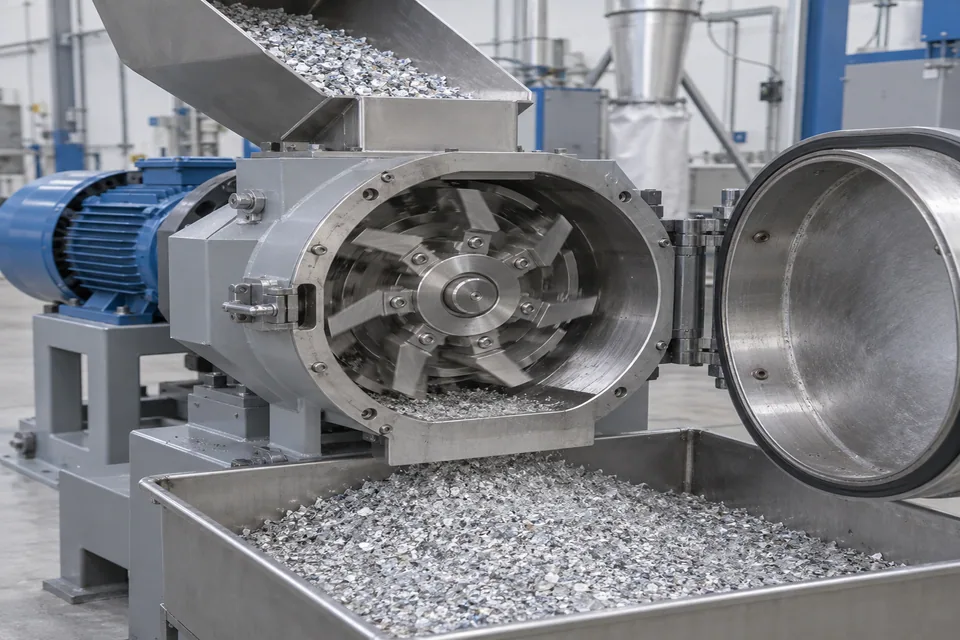
Films & Foils
Multilayer Pouch Production Waste Fine Crusher Knives
Consider fine knife reduction of pre-sized pouch laminate only when a downstream process specifies smaller particles and a material trial passes.
Read the application guide →Industrial Blade Application Guides: From Material to Cutting Edge
Reliable cutting comes from a system, not a single hardness number. Industrial blade technology connects the processed material, cutting method, machine condition, blade material, heat treatment, geometry, grinding accuracy and maintenance practice.
This page gives engineers and buyers a practical framework for discussing blade performance with Meirente before a quotation, trial or repeat-order improvement.
Start With the Cutting Application
A thin film, abrasive glass fiber, soft food product, polymer strand and electronic ceramic sheet place very different demands on a blade. The first questions should cover material behavior, thickness, speed, cutting gap, temperature, contamination, target finish and the cost of downtime.
Material Selection Is a Balance
Tool steel, stainless steel, high-speed steel, powder-metallurgy grades, tungsten carbide and coated solutions offer different combinations of hardness, toughness, wear resistance, corrosion resistance and cost. Selection should reflect the dominant failure risk instead of using the same grade for every application.
Edge Geometry Controls How the Blade Enters the Material
Bevel angle, single- or double-bevel direction, edge thickness, tooth pitch, tooth height, rake and clearance influence cutting force, dust, burrs, heat and edge strength. A sharper edge can reduce force, but an edge that is too thin may chip or deform under impact.
Heat Treatment, Grinding and Surface Engineering
Heat treatment develops the material properties required by the design. Precision grinding then controls flatness, parallelism, runout, concentricity and final edge geometry. Surface finishing or coating may help with wear, friction, corrosion or material adhesion when the application and base material justify it.
Measurement and Failure Feedback
Inspection confirms whether the blade matches the agreed specification; production feedback confirms whether the specification matches the real process. Photos and records of wear, chipping, deformation, burrs, dust, motor load, heat and cutting hours help separate material problems from alignment, gap, vibration or contamination issues.
Is higher hardness always better?
No. Higher hardness can improve wear resistance but may reduce toughness. The correct balance depends on impact, material abrasiveness and machine stability.
Why does the same blade wear differently on two machines?
Alignment, holder condition, cutting gap, speed, cooling, vibration, contamination and processed material can all change blade life.
When should a coating be considered?
Consider it when wear, friction, corrosion or adhesion is a defined problem and the coating is compatible with the base material, edge and operating temperature.
What information helps diagnose chipping?
Provide the chipped location, installation direction, holder condition, cutting gap, speed, processed material, contamination risk and close-up photos.
Can edge geometry be changed without changing the machine?
Sometimes, but the blade-holder interface, clearance and cutting method must be reviewed before any geometry change is approved.