
Blade Application Guides / Application Guide / Cable manufacturing
Semiconductive Cable Tape Shear Slitting Blades
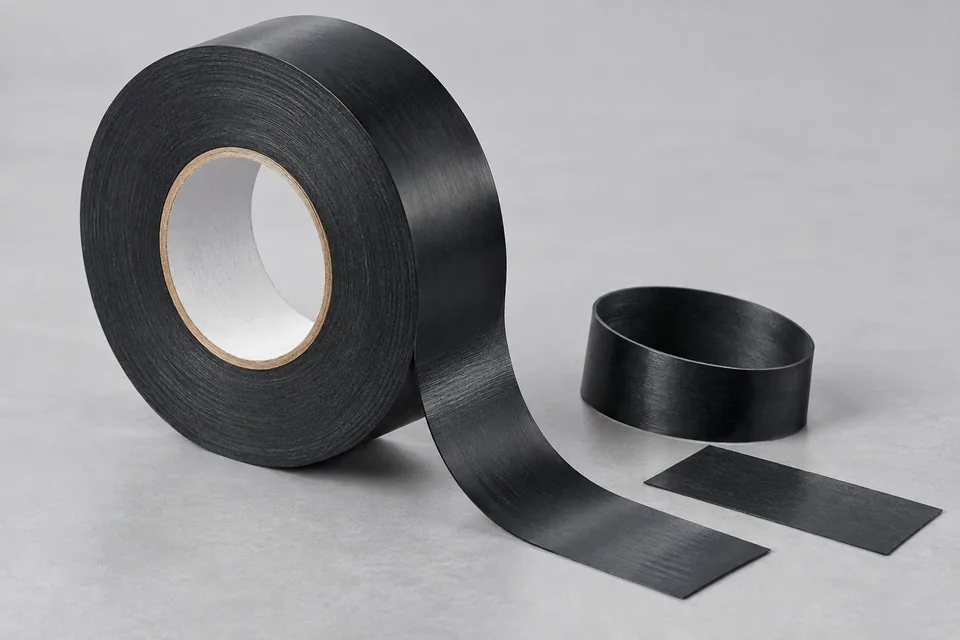
Semiconductive cable tape can be a woven or nonwoven carrier with a carbon-black treatment. JGILI and Qingdao Hetian describe such cable binding and shielding tapes supplied in narrow roll widths. The tape is a separate cable material, not the extruded semiconductor layer on a conductor. Shear slitting uses paired rotating edges to divide a wider treated web into continuous narrow reels for later cable assembly. Cut-edge dust, exposed carrier fibers and changes near the edge may matter more than cosmetic straightness. The actual tape grade, coating and resistance acceptance must come from the buyer. No knife trial by itself validates electrical field control or cable service behavior.
Updated
Where This Cutting Application Appears
Set widths for the cable layup
Use the cable maker’s tape overlap and wrap angle to determine reel width and outside waste. Mark which face is conductive and whether the tape is reinforced. Keep each slit roll labeled by grade, face and web direction so later winding does not reverse the intended contact.
Trial paired shears on treated fabric
Record top/bottom knife condition, overlap, side clearance and tension. Run actual carbon-coated tape rather than untreated carrier. Compare whether the rotating edges cut cleanly or scrape coating into fine black dust as the run continues.
Inspect coating and carrier together
Check both new edges for carbon rub-off, loose fibers, uncut bridges and local delamination. Compare width and edge texture after winding. If the buyer specifies resistance, measure near-edge and center regions with its stated condition rather than importing a figure from another tape grade.
Follow narrow rolls into cable wrapping
Observe the reel through the normal unwind, guide and wrap path. Distinguish particles released at slitting from particles made by tension or contact later. The cable manufacturer must test the finished layup and electrical performance.
Define the Required Cut Result
- Hold tape width and overlap for the intended cable build.
- Limit carbon-black dust and fiber tails at the slit.
- Preserve face orientation and stable narrow reels.
- Provide specimens for buyer-defined electrical and cable trials.
Problems to Diagnose Before Changing the Knife
Black dust rises at one knife station
- Inspect blade edge and coating contact.
- Compare incoming coating adhesion.
- Review knife-drive slip and collection path.
Carrier fibers remain connected
- Check pair overlap and local support.
- Inspect thick sections of the nonwoven.
- Measure both sides after rewind.
Near-edge resistance changes
- Check coating removal or smearing.
- Compare cut and uncut sample using buyer method.
- Inspect winding pressure and guide abrasion.
Knife Forms That May Be Considered
| Possible knife form | When it may be considered | What must be confirmed |
|---|---|---|
| Paired circular shear knives | For a compatible wide semiconductive tape web requiring narrow reels. | Confirm treated-fiber cut, dust generation and buyer near-edge condition. |
| Rotary edge-trim shear pair | For removing only a treated selvage from one side of the web. | Confirm waste collection does not dust or pull the useful tape. |
Information to Send for Technical Review
You do not need to know the exact blade name. Send the available workpiece, machine, current-knife and cut-result information so the application can be reviewed against a drawing or sample.
- Tape maker, carrier weave/nonwoven and coating formulation
- Supplied width, target reel widths and wrap overlap
- Conductive face and any reinforcement orientation
- Upper/lower knife and support drawings
- Accepted dust, fiber-tail and coating-loss samples
- Winding tension and core configuration
- Buyer resistance measurement condition
- Cable layup and final electrical acceptance method
Questions About This Cutting Application
Is this the extruded semiconductive cable layer?
No. This article addresses a separately supplied woven or nonwoven binding tape.
Why inspect coating dust?
Slitting can loosen carbon-rich particles that affect cleanliness and indicate edge coating damage.
Can one supplier resistance value be used for every grade?
No. Electrical criteria and measurement conditions must come from the buyer’s actual tape specification.
How is shear different from a razor?
Paired rotating knife edges use overlap and side clearance; a stationary razor pierces a moving web.
Does a good slit prove cable performance?
No. The cable owner qualifies wrap, electrical behavior and the completed construction.
Public references and scope
These public sources provide material, cutting-method or safety context for this guide. Supplier pages describe their own materials or equipment; they do not establish a MEIRENTE blade specification or performance claim. Confirm the actual grade, machine setup and required cut with a drawing or sample.
Related product and service information
- Water-Blocking Cable Yarn Transverse Cutting Blades - water-blocking cable yarn · transverse cutting
- Wire-Harness Cloth Tape Shear Slitting Blades - wire-harness cloth tape · shear slitting
- Cable Shielding Laminate Shear Slitting Blades - cable shielding laminate · shear slitting
Request a Custom Cutting-Knife Review
Send the workpiece details, machine or holder information, current knife photos or sample, required quantity and examples of the present cut problem. Final dimensions, material, edge geometry and tolerances are confirmed from the approved requirements.