
Blade Application Guides / Application Guide / Cable manufacturing
Wire-Harness Cloth Tape Shear Slitting Blades
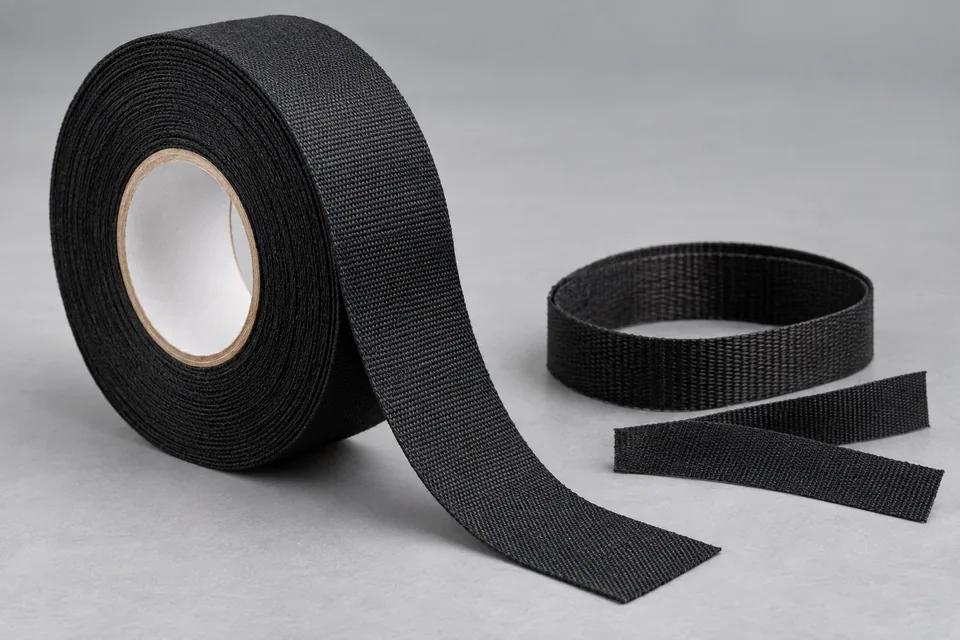
Wire-harness cloth tape is a flexible fabric-backed adhesive tape. tesa documents PET or PA cloth harness wraps and application practices that protect the adhesive from dirt; its examples do not establish the buyer’s particular tape construction. Shear slitting divides a wider finished tape web into continuous narrow rolls using opposed rotating edges. The useful output is a roll for harness wrapping, not a cut cable or completed harness. The backing weave, adhesive formulation and presence or absence of liner change how the edge behaves. Record the intended slit widths and winding arrangement before selecting knife-pair clearance or overlap. A clean tape edge supports later wrapping, but abrasion class, temperature rating and installed harness performance depend on the specified product and assembly test.
Updated
Where This Cutting Application Appears
Derive width from the wrap instruction
Obtain the harness diameter range, requested tape width and planned overlap from the buyer. Include outer waste lanes and core widths in the slit map. Preserve the required backing orientation and label each finished roll so narrow tape is not mixed between harness programs.
Trial the fabric and adhesive together
Document top and bottom knife condition, overlap, side clearance and drive. Cut the real coated cloth at the intended temperature and feed speed; a blade that parts the fabric may still drag adhesive into a string. Compare cuts before and after the knife accumulates tack.
Inspect both cut faces
Examine warp and weft tails, loose lint, adhesive ooze, backing delamination and any exposed liner edge. Check both sides of each lane because paired shears can leave different edge conditions. Record where lint is produced—at the knives, separator or rewind guide.
Rewind and unwind a trial roll
Inspect telescoping, blocking, roll-edge buildup and unwind force after the normal storage interval. Wrap a representative harness segment under the buyer procedure to see whether the edge frays or lifts. Keep harness protection and application acceptance with the product owner.
Define the Required Cut Result
- Produce width-controlled tape rolls for the defined harness wrap.
- Prevent fabric fray and loose lint at slit edges.
- Avoid adhesive transfer, strings and adjacent-roll blocking.
- Keep roll identity and unwind condition traceable.
Problems to Diagnose Before Changing the Knife
Cloth edge unravels after winding
- Inspect weave orientation and incoming coating.
- Compare knife-exit and post-unwind samples.
- Check knife pair support and roll tension.
Adhesive builds on a lower knife
- Check which face contacts the lower member.
- Inspect edge clearance and cleaning interval.
- Compare a new and used knife under the same stock lot.
A finished roll telescopes
- Review core fit and differential winding tension.
- Measure strip width at several turns.
- Inspect whether adhesive blocks the roll edges.
Knife Forms That May Be Considered
| Possible knife form | When it may be considered | What must be confirmed |
|---|---|---|
| Matched rotary shear knife pair | For a compatible wide cloth tape web requiring continuous narrow rolls. | Confirm backing, adhesive and liner edge on actual stock at each knife station. |
| Rotary outside-edge trim pair | When sacrificial coated selvage must be removed before useful lanes. | Confirm waste routing and no adhesive drag into the first useful roll. |
Information to Send for Technical Review
You do not need to know the exact blade name. Send the available workpiece, machine, current-knife and cut-result information so the application can be reviewed against a drawing or sample.
- Tape maker, fabric backing and adhesive construction
- Whether a release liner is supplied and cut with tape
- Master width, target widths and roll-core specification
- Harness wrap and overlap requirement
- Rotary knife/arbor and separator drawings
- Accepted fabric-fray and adhesive-ooze examples
- Winding tension, storage and unwind test method
- Buyer harness application test plan
Questions About This Cutting Application
Why inspect backing and adhesive separately?
A clean-looking fabric edge can still carry adhesive strings that cause blocking or guide buildup.
Is a liner always present?
No. The buyer must identify the actual tape and whether a liner travels through the slitter.
Can slitting establish harness abrasion rating?
No. The finished tape grade and applied harness are qualified by the buyer.
Which edge of a roll should be sampled?
Both sides and several points along the wound roll; paired shear marks may differ.
What should an RFQ include?
Provide real coated tape, lane map, knife and winding drawings, and accepted wrap samples.
Public references and scope
These public sources provide material, cutting-method or safety context for this guide. Supplier pages describe their own materials or equipment; they do not establish a MEIRENTE blade specification or performance claim. Confirm the actual grade, machine setup and required cut with a drawing or sample.
Related product and service information
- Braided Wire Sleeving Length Cutting Blades - braided wire sleeving · length cutting
- Cable Shielding Laminate Shear Slitting Blades - cable shielding laminate · shear slitting
- Semiconductive Cable Tape Shear Slitting Blades - semiconductive cable tape · shear slitting
Request a Custom Cutting-Knife Review
Send the workpiece details, machine or holder information, current knife photos or sample, required quantity and examples of the present cut problem. Final dimensions, material, edge geometry and tolerances are confirmed from the approved requirements.