
Blade Application Guides / Application Guide / Plastic recycling
Multilayer Pouch Production Waste Granulator Knives
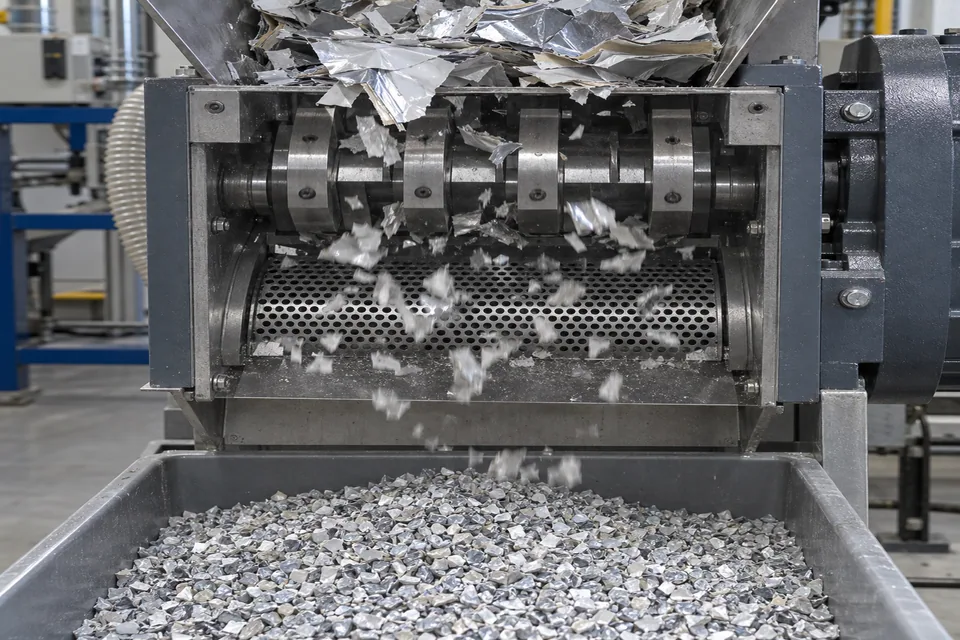
A granulator uses rotor and fixed knives, normally with a controlled discharge screen, to turn pre-sized flexible waste into smaller flakes. ZERMA describes shredder/granulator combinations for production waste and Vecoplan documents film shredding followed by granulation in an actual recycling plant. EREMA establishes that known multilayer production films are a valid recycling input, although their exact composition governs further processing. This article concerns cutting pre-sorted pouch laminate scraps into controlled film flakes; it does not refer to melt pelletizing, despite that process also being called “granulation” in some plants. The buyer must define the layer recipe and intended next step. A fine-looking flake is not evidence of polymer compatibility, cleanliness or approved food-contact reuse.
Updated
Where This Cutting Application Appears
Specify the feed and flake target
Receive loose or pre-shredded production scrap under a known material code. Set the target flake distribution and maximum long piece from the washer, compactor or extruder feed requirement. Avoid cutting more finely than needed, because thin film can generate dust and heat.
Trial rotor, stator and screen as a set
Record rotor knife count, fixed-knife condition, gap, screen aperture and forced-feed arrangement from the installed granulator. Flexible pouch film can float over a hopper or wrap a rotor; compare dry and any intended wet configuration only if the plant supports it.
Inspect cut quality across layers
Check flake size, uncut folded pouches, film curls, delaminated fringes, screen-blinded material and metal or coating particles. Track temperature and inspect for softened sealant lumps. Sample output through the run, not only immediately after knife replacement.
Connect flakes to the next process
Confirm conveyance, washing or compaction flow and whether small films block filters or stick to ducts. Keep laminated-polymer type, print level and lot marked. The recycler determines whether and how those layers are subsequently separated, filtered or reprocessed.
Define the Required Cut Result
- Produce film flakes within the next-stage feed range.
- Limit long folded pieces, dust and heat-softened clumps.
- Keep knives and screen free of damaging buildup.
- Maintain scrap composition and lot traceability.
Problems to Diagnose Before Changing the Knife
Long strips survive the screen
- Inspect rotor/stator sharpness and gap.
- Check for screen damage or bypass.
- Review whether pre-shredding left folded bundles.
Sealant forms warm agglomerates
- Measure operating temperature and residence time.
- Inspect blade friction and feed rate.
- Compare material recipes entering the granulator.
Dust fraction increases late in the run
- Inspect tool wear and screen loading.
- Check recirculation and over-grinding.
- Sample by time and incoming lot.
Knife Forms That May Be Considered
| Possible knife form | When it may be considered | What must be confirmed |
|---|---|---|
| Granulator rotor and fixed bed knives | For a screen-controlled film flake stage on an installed plastics granulator. | Confirm geometry, clearance, temperature and output distribution on actual laminate. |
| Shredder/granulator combination cutting set | Where one machine contains a coarse and knife-granulation chamber. | Confirm which knife set makes the accepted flakes and how oversize recirculates. |
Information to Send for Technical Review
You do not need to know the exact blade name. Send the available workpiece, machine, current-knife and cut-result information so the application can be reviewed against a drawing or sample.
- Actual multilayer recipe and print/sealant content
- Feed-piece size and bulk-density range
- Target flake and long-tail distribution
- Rotor, stator, screen and holder drawings
- Dry or wet processing configuration
- Allowed heat, dust and metal-wear contamination
- Output conveyance and next-process requirements
- Buyer size sampling and resin acceptance plan
Questions About This Cutting Application
Does “granulating” here mean plastic pellets?
No. This guide covers knife-cut film flakes; melt extrusion and pelletizing are separate.
Can layered flakes be reused directly?
Only if the recycler qualifies the known polymer blend and downstream process.
Why not use the smallest screen?
Unneeded over-cutting can raise heat, dust and plugging while adding little feed benefit.
What should be sampled besides size?
Check long folded pieces, sealant lumps, coating dust and metal wear from knives.
Can a granulator accept intact pouch rolls?
Some systems can, but this guide assumes the buyer has defined appropriate pre-sizing and feed controls.
Public references and scope
These public sources provide material, cutting-method or safety context for this guide. Supplier pages describe their own materials or equipment; they do not establish a MEIRENTE blade specification or performance claim. Confirm the actual grade, machine setup and required cut with a drawing or sample.
Related product and service information
- Multilayer Pouch Production Waste Primary Shredder Knives - multilayer pouch production waste · primary shredding
- Discarded Fishing Net Granulating Blades - discarded fishing net · granulating
- Automotive Carpet Scrap Granulating Blades - automotive carpet scrap · granulating
Request a Custom Cutting-Knife Review
Send the workpiece details, machine or holder information, current knife photos or sample, required quantity and examples of the present cut problem. Final dimensions, material, edge geometry and tolerances are confirmed from the approved requirements.