
Blade Application Guides / Application Guide / Air filtration manufacturing
Paint-Booth Filter Roll Shear Slitting Blades
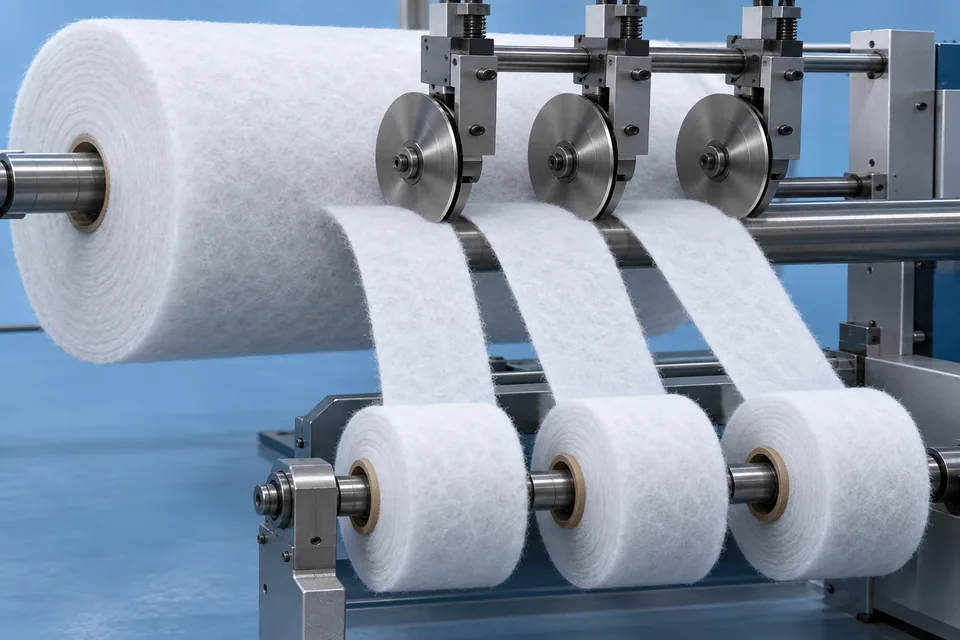
Paint-booth media can be a lofted fiberglass paint arrestor or a synthetic filter roll. Manufacturer examples include both materials, so the buyer must name the exact intake or exhaust grade. Shear slitting creates parallel lengthwise rolls for later installation or pad cutting. A rotary knife pair must be trialed against the supplied loft because a ragged edge can release fibers or compress the graded structure. Measure usable width after winding and inspect the edge again when the roll is handled as it would be in the booth. Paint capture and airflow results require the installed filter system’s test.
Updated
Where This Cutting Application Appears
Identify booth location and material
Record whether the roll is a ceiling intake medium or an exhaust paint arrestor. Mark graded or backing face, roll direction and required installed width so the slitter does not produce a reversed or undersized strip.
Trial shear engagement on lofted stock
Inspect knife overlap, side clearance and nearby support. A loose fiberglass mat may pull strands across the cut, while a bonded synthetic mat may compress; compare the actual grade and keep trial settings separate.
Measure the accepted lane
Check width and straightness after the roll relaxes. Inspect both slit edges for hanging fibers, backing tears and loose particles; distinguish fiber fragments created by cutting from those shed by guiding and rewind contact.
Recheck after packaging and unroll
Unwind a trial lane using the buyer’s installation sequence. Watch for edge collapse, fiber loss and roll telescoping, and compare to the knife-exit sample. The broad media face must remain clean enough for the buyer’s handling standard.
Define the Required Cut Result
- Hold installed filter-roll width.
- Preserve specified face orientation and backing.
- Limit hanging glass or synthetic fibers.
- Collect useful rolls without edge collapse.
Problems to Diagnose Before Changing the Knife
Fibers bridge across adjacent lanes
- Check knife overlap and edge wear.
- Inspect support and loft thickness.
- Compare synthetic versus glass grade.
Roll width changes after rewind
- Measure unrolled material.
- Review winding pressure and tension.
- Check whether the loft was compressed at cut.
Backing splits at one edge
- Map tear to knife position.
- Inspect takeoff and rewind guides.
- Check backing condition on parent roll.
Knife Forms That May Be Considered
| Possible knife form | When it may be considered | What must be confirmed |
|---|---|---|
| Matched rotary shear knives | For a booth-media line compatible with the supplied fiber and loft. | Confirm width, full separation and loose-fiber level on the actual roll. |
| Outer-edge trim pair | If the parent roll has a sacrificial selvage. | Confirm trim collection and protection of the useful filter face. |
Information to Send for Technical Review
You do not need to know the exact blade name. Send the available workpiece, machine, current-knife and cut-result information so the application can be reviewed against a drawing or sample.
- Exact booth-filter grade and fiber type
- Intake or exhaust position
- Layer gradient and backing orientation
- Parent and installed roll width
- Accepted fiber-shedding criteria
- Rotary knife and support drawing
- Winding and packaging method
- Buyer booth-filter acceptance plan
Questions About This Cutting Application
Is every paint-booth filter roll fiberglass?
No. Suppliers also offer synthetic media; cutting checks depend on the exact grade.
Why mark airflow orientation?
A graded medium or backing may have an intended installation face, which should stay identifiable after slitting.
When is useful width confirmed?
Measure after the lane is unwound or otherwise relaxed under the buyer’s installation method.
Does a clean slit prove paint capture?
No. Capture and airflow performance depend on the supplied medium and installed filter system.
What should be sent for review?
Send the exact filter roll, required width, backing orientation, machine drawing and accepted fiber-edge sample.
Public references and scope
These public sources provide material, cutting-method or safety context for this guide. Supplier pages describe their own materials or equipment; they do not establish a MEIRENTE blade specification or performance claim. Confirm the actual grade, machine setup and required cut with a drawing or sample.
Related product and service information
- Vacuum-Cleaner Filter Media Shear Slitting Blades - vacuum-cleaner filter media · shear slitting
- HVAC Pocket-Filter Media Shear Slitting Blades - HVAC pocket-filter media · shear slitting
- Automotive Cabin Filter Media Shear Slitting Blades - automotive cabin filter media · shear slitting
Request a Custom Cutting-Knife Review
Send the workpiece details, machine or holder information, current knife photos or sample, required quantity and examples of the present cut problem. Final dimensions, material, edge geometry and tolerances are confirmed from the approved requirements.