
Blade Application Guides / Application Guide / Membrane module manufacturing
Electrodialysis Spacer Mesh Shear Slitting Blades
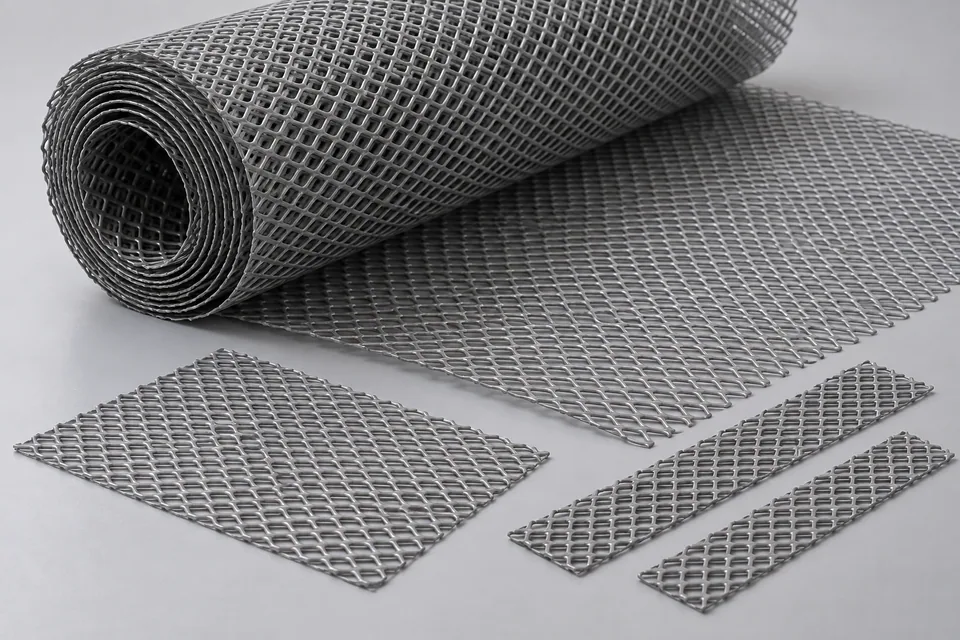
Electrodialysis stacks often separate ion-exchange membranes with a spacer that defines a liquid-flow channel. Depending on the design, the mesh may be bonded to a gasket frame or supplied as a separate net. The cutting workpiece here is a continuous mesh web, only where the specified spacer net is actually supplied in that form; paired rotary shears can then make straight strips for later frame assembly. A preformed mesh-and-gasket spacer is a different workpiece. The buyer must specify mesh polymer, strand geometry and orientation. Trial the actual net to check whether a knife pinches apertures, leaves loose strand ends or distorts the strip width. Hydraulic performance and stack resistance are confirmed only after assembly.
Updated
Where This Cutting Application Appears
Define the channel zone and orientation
Use the spacer-frame drawing to set strip width and any bonding allowance. Mark mesh strand angle relative to flow, and keep the required open central zone free of crushed or fused apertures.
Support an open network at the cut
A mesh has voids where a flat sheet has material. Observe how the rotary pair engages intermittent strands, and check whether the network pulls into the nip or bridges across the finished slit.
Inspect loose ends and open area
Measure width under low, repeatable tension. Check strand tips for sharp projections, detached pieces and pinched openings; count or image apertures near the new edge by the buyer’s method.
Trial frame fit after slitting
Place a cut strip in the intended gasket or spacer frame. Verify it lies flat and does not intrude into ports or sealing zones; retain samples before and after handling to separate cutter defects from assembly strain.
Define the Required Cut Result
- Hold mesh-strip width and strand orientation.
- Keep the specified flow apertures open.
- Avoid detached or sharp polymer strand ends.
- Fit the buyer frame without wrinkles or port blockage.
Problems to Diagnose Before Changing the Knife
Mesh wanders laterally at the knife
- Check feed support and strand orientation.
- Measure tension and guide tracking.
- Inspect rotary knife engagement.
Apertures are pinched shut
- Review knife pressure and edge profile.
- Compare cut with untouched mesh.
- Check whether heat or friction affected polymer strands.
Strand fragments reach the frame
- Locate first shedding checkpoint.
- Inspect slit tips and trim takeoff.
- Review stacking and frame insertion.
Knife Forms That May Be Considered
| Possible knife form | When it may be considered | What must be confirmed |
|---|---|---|
| Matched rotary shear pair | Only for a specified continuous mesh web that can be held and fed through the paired-knife station. | Confirm complete strand separation and open-aperture edge on actual net. |
| Guided outer trim pair | If a sacrificial selvedge must be removed before frame assembly. | Confirm the retained mesh does not unravel and waste is collected. |
Information to Send for Technical Review
You do not need to know the exact blade name. Send the available workpiece, machine, current-knife and cut-result information so the application can be reviewed against a drawing or sample.
- ED spacer manufacturer and mesh polymer
- Strand pattern, opening and orientation
- Frame and port drawing
- Finished strip width and bonding allowance
- Allowed loose ends and blocked openings
- Knife pair and support drawing
- Feed tension and collection method
- Buyer stack flow and electrical test
Questions About This Cutting Application
Is spacer mesh an ion-exchange membrane?
No. It is a channel-forming net or spacer between membranes in a specified stack design.
Why inspect strand orientation?
The mesh pattern affects how a strip fits the frame and how its open area aligns to the flow channel.
What cut-edge defects matter?
Detached strands, sharp tips, pinched apertures and an edge that unravels during frame insertion.
Can slit quality establish channel pressure drop?
No. The assembled spacer and flow path require the buyer’s hydraulic test.
What should the buyer supply?
Send the actual net, orientation and frame drawing, plus accepted aperture and loose-strand limits.
Public references and scope
These public sources provide material, cutting-method or safety context for this guide. Supplier pages describe their own materials or equipment; they do not establish a MEIRENTE blade specification or performance claim. Confirm the actual grade, machine setup and required cut with a drawing or sample.
Related product and service information
- Nanofiltration Membrane Sheet Shear Slitting Blades - nanofiltration membrane sheet · shear slitting
- Ceramic Membrane Support Green Sheet Cross-Cutting Blades - ceramic membrane support green sheet · transverse cutting
- Effervescent Tablet Sachet Laminate Shear Slitting Blades - effervescent tablet sachet laminate · shear slitting
Request a Custom Cutting-Knife Review
Send the workpiece details, machine or holder information, current knife photos or sample, required quantity and examples of the present cut problem. Final dimensions, material, edge geometry and tolerances are confirmed from the approved requirements.