
Blade Application Guides / Application Guide / Technical flexible materials
Nonwoven Packaging Web Cutting Without Fiber Drag
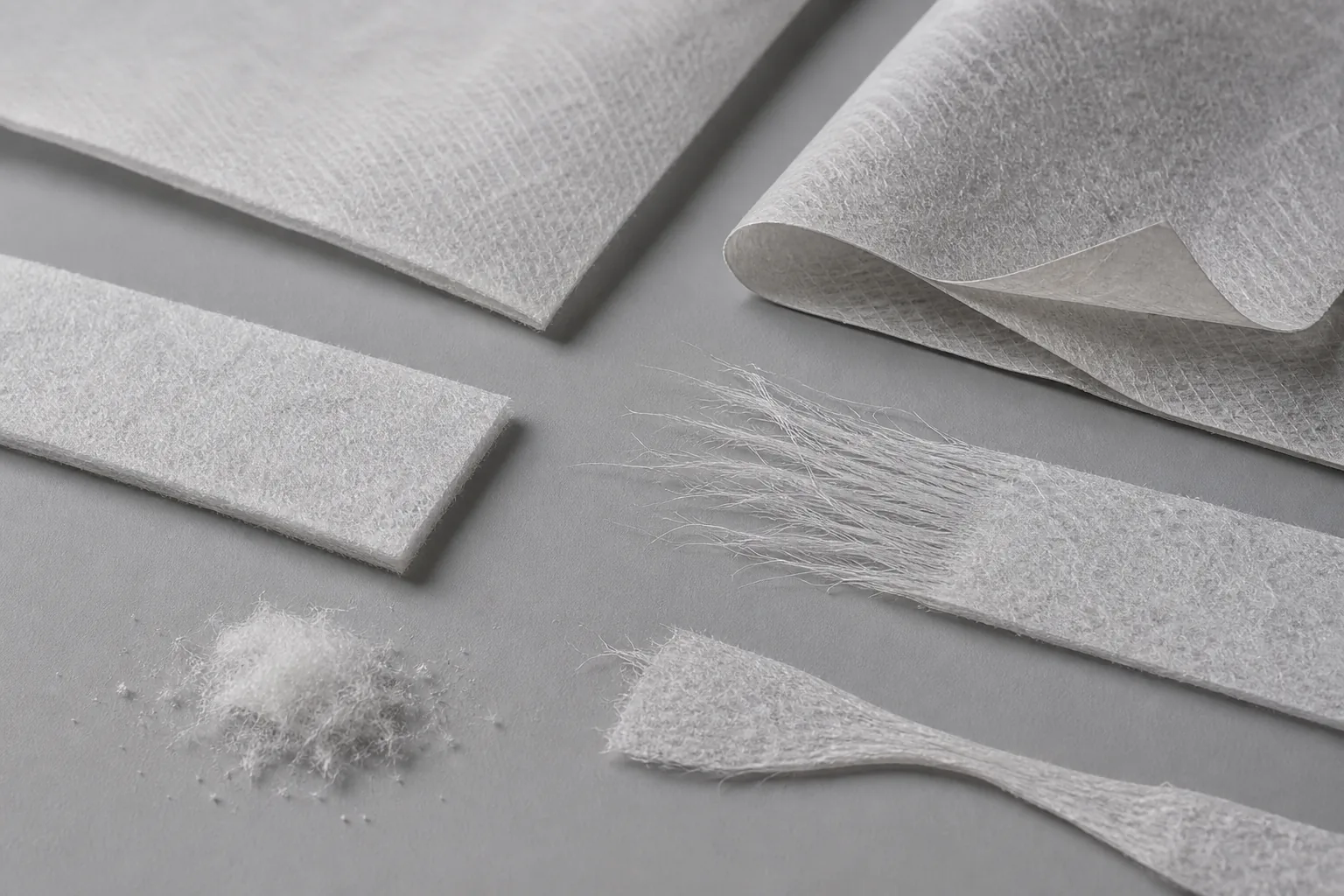
A nonwoven web is a bonded fiber network rather than a continuous film, so loose fibers, local basis-weight variation, and web extensibility govern how it separates. Cutting decisions should use the actual polymer or fiber blend, bond pattern, coating or laminate layer, directionality, and downstream package format.
Updated
Where This Cutting Application Appears
Protective bag and sleeve roll conversion
Lightweight nonwoven stock is slit or cut to widths used for breathable protective bags, sleeves, and wraps before sewing, sealing, or assembly.
Coated nonwoven packaging inserts
Absorbent, cushioning, or surface-treated webs are sheeted to insert dimensions while bonded fibers and any coating remain attached at the edge.
Laminated nonwoven cover-web preparation
Film-backed or paper-backed nonwoven is converted into feeder rolls with the interface supported against peel and the web kept square to its travel direction.
Web Cutting process boundary
web cutting for nonwoven packaging webs is planned around separation across the material flow or part axis to establish a controlled repeat length or finished end; it is not longitudinal width conversion, shaped contour production or particle-size reduction.
Web Cutting setup checkpoint
For nonwoven packaging webs, confirm target length, datum or registration reference, feed indexing, support on both sides, cut timing and post-cut transfer.
Web Cutting acceptance checkpoint
For nonwoven packaging webs, evaluate length distribution, squareness or cutoff angle, both cut faces, deformation, registration drift and stacking or discharge consistency.
Define the Required Cut Result
- Sever bonded and unbonded fibers instead of pulling tufts across the cut line
- Reduce lint and fiber tails that could transfer into later packaging operations
- Control web stretch so finished widths and sheet lengths remain measurable
- Preserve coatings or backing layers without initiating peel at the new edge
Problems to Diagnose Before Changing the Knife
Long fibers bridge the cut and leave a fuzzy edge
Review fiber length and orientation, bond pattern, basis weight, knife sharpness, cut angle, support gap, web tension, and moisture condition.
Lint accumulates rapidly around the cutting zone
Check web abrasion, weakly bonded surface fibers, blade wear, speed, static, extraction location, roller contact, and cleaning frequency.
Soft web stretches and sheets finish at inconsistent lengths
Compare tension before measurement and cutoff, draw between rollers, dancer response, feed slip, bond-direction orientation, acceleration, and relaxation after cutting.
A coating or film backing peels away from the nonwoven edge
Examine layer bond, cure, cut direction, compression, heat, support, edge radius, winding tension, and whether separation starts at a low-bond area.
Knife Forms That May Be Considered
| Possible knife form | When it may be considered | What must be confirmed |
|---|---|---|
| Rotary shear or crush cutting | Consider according to web density, bond structure, backing layers, and the cutting station already used for continuous conversion. | Confirm fiber blend, basis weight, bond pattern, layer stack, anvil or counter-knife, pressure or clearance, speed, and edge acceptance. |
| Serrated guillotine or cutoff knife | Consider for cross cutting resilient or low-density webs when a controlled draw through the thickness helps separate fibers. | Confirm tooth form, blade motion, support gap, hold-down, web tension, sheet length, dust control, and production samples. |
Information to Send for Technical Review
You do not need to know the exact blade name. Send the available workpiece, machine, current-knife and cut-result information so the application can be reviewed against a drawing or sample.
- Fiber or polymer composition, manufacturing method, basis weight, thickness, and bulk density
- Bond type and pattern, machine direction, surface finish, and any calendared zones
- Coating, film, paper, or adhesive backing layers with their orientation and bond condition
- Roll width, diameter, core, winding direction, splices, and incoming tension or curl behavior
- Required widths or sheet lengths, tolerances, edge-fuzz criteria, and allowable dust level
- Continuous slit or cross-cut motion, line speed, acceleration, support, hold-down, and web-path drawing
- Static control, extraction, cleaning procedure, and locations where lint currently collects
- Uncut material, cut-edge samples, defect photographs, current knife interface, and downstream assembly method
Questions About This Cutting Application
Why does a nonwoven edge stay connected by only a few fibers?
Oriented long fibers can bridge a support gap or escape a worn cutting zone even when most of the web separates. Fiber direction, bonding, support, and knife condition matter.
Does a higher basis weight always require more cutting force?
Not by itself. Fiber type, loft, bond density, backing layers, compression, blade geometry, and cutting motion can be more influential than nominal basis weight.
How can sheet-length accuracy be checked on a stretchy nonwoven?
Define whether length is measured under controlled tension or after relaxation, then keep that conditioning time and measurement method consistent across samples.
What distinguishes fiber dust from coating debris?
Inspect color, shape, location, and the affected face under the agreed method. Mapping debris to a layer helps separate weak surface bonding from coating fracture.
Can one nonwoven sample represent every production roll?
Not necessarily. Basis weight, bond pattern, moisture, fiber orientation, coating, and roll tension can vary, so review representative material and defined acceptance limits.
Related product and service information
- Pharmaceutical Strip-Pack Foil Slitting - pharmaceutical strip-pack laminate foil · laminate slitting and rewinding
- Aluminum Foil Roll Slitting Without Edge Cracks - thin aluminum foil rolls · roll slitting
- Blister Lidding Foil Cutting Without Wrinkle Damage - blister lidding foil · profile cutting
Request a Custom Cutting-Knife Review
Send the workpiece details, machine or holder information, current knife photos or sample, required quantity and examples of the present cut problem. Final dimensions, material, edge geometry and tolerances are confirmed from the approved requirements.