
Blade Application Guides / Application Guide / Pharmaceutical packaging converting
Pharmaceutical Strip-Pack Foil Slitting
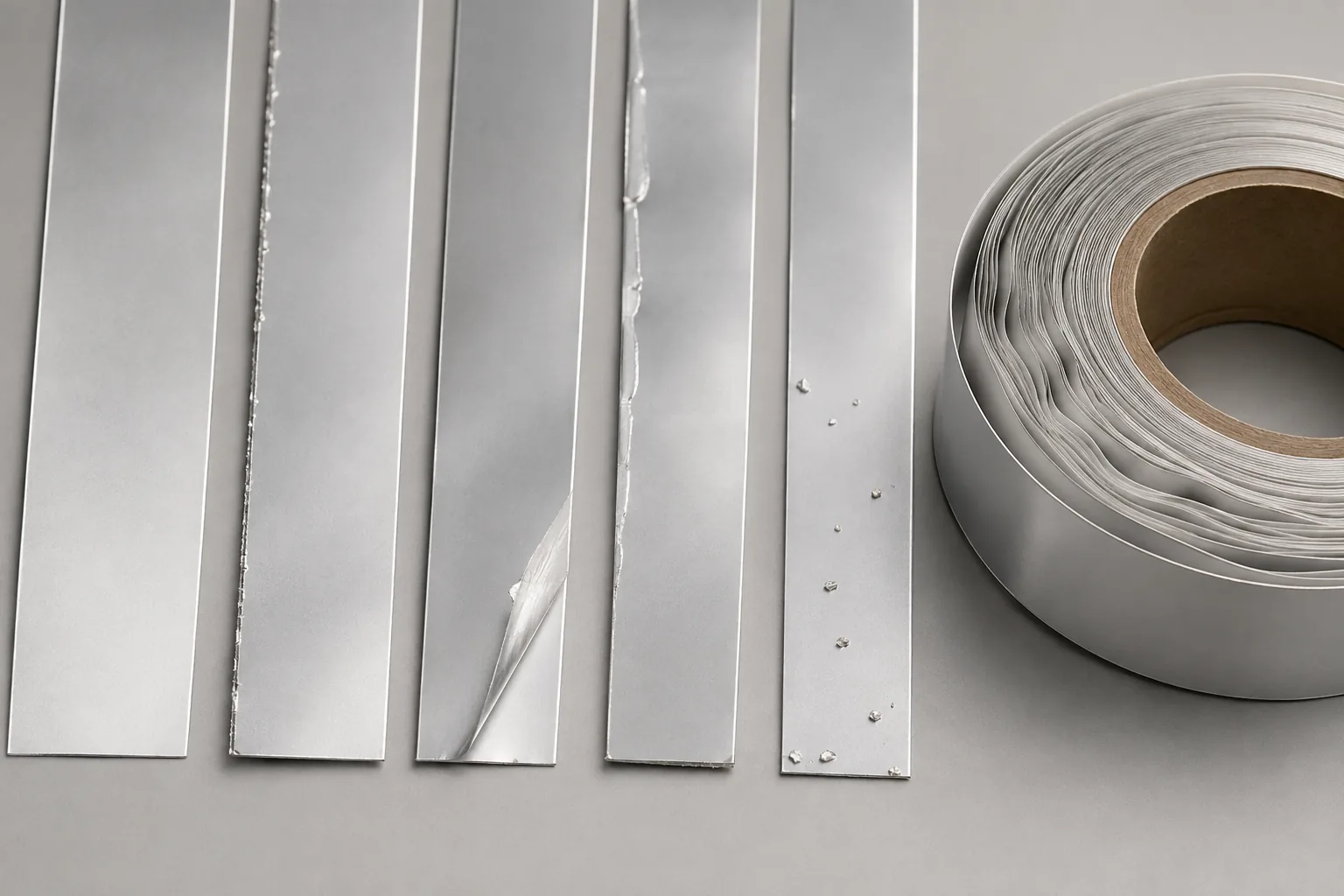
Strip-pack stock is a flexible laminate whose aluminum, polymer, paper, coating, or sealant layers must remain aligned through slitting and rewind. The conversion plan should define the supplied structure and approved packaging specification, then evaluate burr direction, layer separation, debris, curl, and reel build without making a package-performance assumption.
Updated
Where This Cutting Application Appears
Master-roll conversion for strip-pack lanes
Wide approved laminate is slit to the reel widths and trim pattern specified for a strip-pack forming and sealing line.
Printed strip-foil reel preparation
Printed web is converted while registration orientation, protected face, lane identity, and removal of nonconforming edge trim remain traceable.
Small-batch or multi-width packaging supply
One parent roll is divided into documented reel widths and core formats for separate packaging runs without mixing structures or winding directions.
Laminate Slitting And Rewinding process boundary
laminate slitting and rewinding for pharmaceutical strip-pack laminate foil is a linked sequence: the output condition and datum from each operation become the controlled input for the next. It should not be evaluated as one generic cut or accepted only by the final dimension.
Laminate Slitting And Rewinding setup checkpoint
For pharmaceutical strip-pack laminate foil, define the operation order, intermediate dimensions, registration transfer, material support, web or part handling and waste route for every stage of laminate slitting and rewinding.
Laminate Slitting And Rewinding acceptance checkpoint
Verify both intermediate and final results from laminate slitting and rewinding, including dimensions, registration, edge or feature quality, material damage, waste separation and stable transfer between stages.
Define the Required Cut Result
- Control aluminum burr direction and loose slivers at both laminate edges
- Preserve bonded interfaces so paper, film, foil, and sealant do not peel back
- Deliver traceable lane widths without cutting into print or specified trim zones
- Rewind clean, square reels that track consistently at the packaging line
Problems to Diagnose Before Changing the Knife
A metal burr or fine aluminum sliver remains on the edge
Review foil gauge and temper, laminate support, shear direction, overlap or clearance, side load, runout, wear, and the agreed edge-inspection method.
Laminate layers peel back after the slit
Check layer sequence, bond condition, cure history, adhesive distribution, edge heat, blade geometry, cut direction, and whether separation begins before rewinding.
Sealant smears or debris transfers onto the reel face
Examine sealant type, web temperature, knife cleanliness, friction, static, extraction, roller contact, winding pressure, and storage condition before conversion.
Finished strip-foil reels curl, dish, or telescope
Compare cross-web laminate balance, incoming curl, lane width, tension zones, core alignment, taper, nip pressure, finished diameter, and time after slitting.
Knife Forms That May Be Considered
| Possible knife form | When it may be considered | What must be confirmed |
|---|---|---|
| Precision circular shear slitting | Consider for multilayer strip-pack webs where the metal layer and bonded interfaces require supported, repeatable separation. | Confirm the complete laminate specification, foil gauge, overlap or clearance, side load, rotation, sanitation procedure, holder drawing, and edge limits. |
| Supported razor slitting | Consider only for a qualified laminate construction when trials show acceptable burr, delamination, debris, and heat behavior. | Confirm entry support, angle, web tension, speed, sealant response, cleaning method, and approval using the intended material lot. |
Information to Send for Technical Review
You do not need to know the exact blade name. Send the available workpiece, machine, current-knife and cut-result information so the application can be reviewed against a drawing or sample.
- Approved strip-pack laminate structure with each layer material, gauge, and orientation
- Aluminum grade or temper when specified, plus foil thickness and burr acceptance method
- Printed-face, product-contact-face, sealant-side, and unwind-direction identification
- Parent-roll width, diameter, core, splice details, incoming curl, and release documentation
- Lane layout, trim scheme, print margins, finished widths, tolerances, and reel identification plan
- Slitter speed, tension zones, web support, guiding, extraction, and cleaning procedure
- Rewind core, finished diameter, winding direction, taper or torque method, and reel-face criteria
- Defect samples indexed by roll, lane, and side, together with the approved drawing and downstream line requirements
Questions About This Cutting Application
Which laminate details matter before selecting a slitting approach?
Provide every layer, its thickness and orientation, bond condition, sealant side, printed side, total gauge, and the approved edge and cleanliness criteria.
Why can strip-pack foil delaminate only after rewinding?
A cut may initiate a small bond split that grows under winding pressure, curl stress, or storage temperature. Inspect the edge immediately after cutting and again after the reel rests.
How should aluminum burr direction be reported on a strip-foil reel?
Identify the printed and sealant faces, unwind direction, operator and drive sides, lane number, and measurement method so the burr is not described ambiguously.
Can a clean-looking edge confirm package sealing performance?
No. Slit-edge inspection supports conversion control, but sealing and package performance must be verified under the applicable approved packaging process and test plan.
What records should remain with each slit pharmaceutical reel?
Use the purchaser's quality system to retain material and roll identity, lane position, dimensions, winding direction, splice status, inspection result, and relevant process traceability.
Related product and service information
- Pouch Film Cross Cutting for Accurate Bag Length - pouch-making film webs · cross cutting
- Aluminum Foil Roll Slitting Without Edge Cracks - thin aluminum foil rolls · roll slitting
- Blister Lidding Foil Cutting Without Wrinkle Damage - blister lidding foil · profile cutting
Request a Custom Cutting-Knife Review
Send the workpiece details, machine or holder information, current knife photos or sample, required quantity and examples of the present cut problem. Final dimensions, material, edge geometry and tolerances are confirmed from the approved requirements.