
Blade Application Guides / Application Guide / hygiene products
Diaper Topsheet and Backsheet Slitting
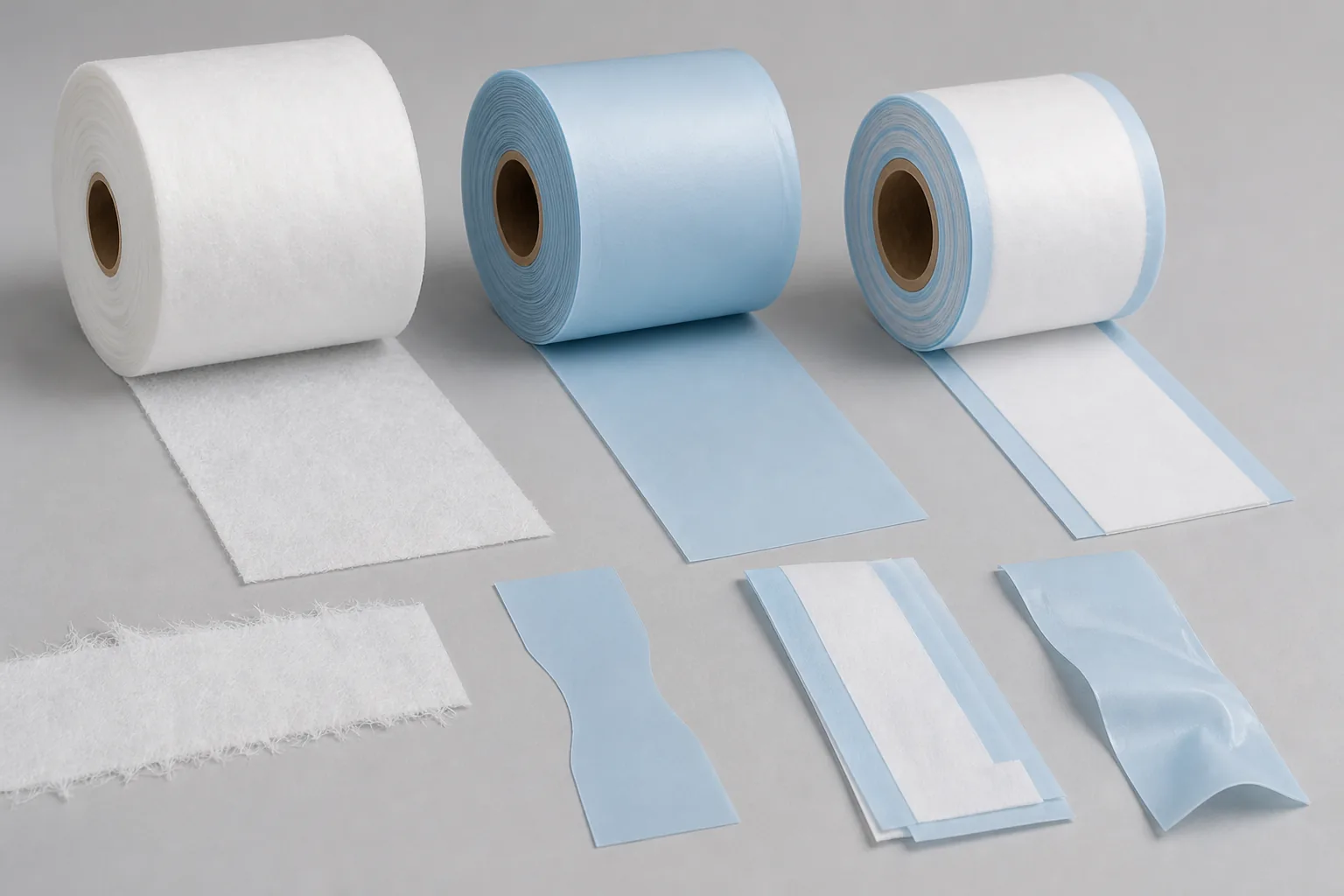
Diaper topsheets and backsheets are both thin webs, but a soft nonwoven cover and an extensible film respond differently to tension and side pressure. If they are slit as separate rolls or in a combined web, the review must identify which layer wrinkles, stretches or clings at the knife.
Updated
Where This Cutting Application Appears
Slitting soft topsheet nonwoven
Prepare skin-contact web widths before alignment with acquisition or absorbent layers.
Trimming breathable backsheet film
Control film width while limiting neck-in, wrinkling and edge tails before lamination or assembly.
Slitting combined hygiene laminates
Separate bonded film-nonwoven structures where both layers must finish at the same edge.
Multilayer Web Slitting process boundary
multilayer web slitting for diaper topsheet and backsheet webs is planned around longitudinal width conversion of a moving roll, web, sheet or strip into controlled lanes or daughter rolls; it is not transverse length cutting, profile formation or removal of only a narrow damaged margin.
Multilayer Web Slitting setup checkpoint
For diaper topsheet and backsheet webs, confirm unwind and rewind tension, lane widths, knife positions, edge guidance, core alignment, trim removal and discharge behavior.
Multilayer Web Slitting acceptance checkpoint
For diaper topsheet and backsheet webs, evaluate lane width, edge condition, camber or wandering, debris, telescoping, interleaving and stable winding or downstream transfer.
Define the Required Cut Result
- Stable finished width without web neck-in
- Low-fuzz nonwoven edges and complete film separation
- Aligned edges through bonded multilayer structures
- No avoidable wrinkles, static cling or edge curling
Problems to Diagnose Before Changing the Knife
Backsheet film narrows near the slit
Check tension, film stretch, thermal condition, knife drag and unsupported web span before and after cutting.
Topsheet fibers form fuzzy edges
Review basis weight, bonding pattern, cutting mode, overlap or penetration, wear and local support.
Film and nonwoven edges do not align
Inspect differential tension, laminate bond, web steering and whether one layer stretches under knife side load.
Narrow strips curl or cling after cutting
Assess residual film stress, static, edge compression, winding tension and the path from knife to rewind.
Knife Forms That May Be Considered
| Possible knife form | When it may be considered | What must be confirmed |
|---|---|---|
| circular slitter | A circular knife can suit separately processed nonwoven or film when the selected cutting mode matches the web and backing. | Confirm material-specific cutting mode, diameter, bore, thickness, bevel, rotation, web speed and lower interface. |
| shear slitter | A matched shear pair may give controlled edges on bonded or stronger webs when overlap and side load are stable. | Confirm upper and lower knife geometry, overlap, clearance, shaft runout, side load and setup repeatability. |
Information to Send for Technical Review
You do not need to know the exact blade name. Send the available workpiece, machine, current-knife and cut-result information so the application can be reviewed against a drawing or sample.
- Whether the web is topsheet, backsheet or a bonded combination
- Polymer and manufacturing process for each layer
- Basis weight, thickness and elastic or breathable characteristics
- Master-roll and finished widths, lane count and tolerance
- Web speed, tension range, guiding and rewind layout
- Machine direction and side of each web facing the knife
- Knife and lower-interface drawings with setup values
- Samples showing neck-in, fuzz, misalignment, curl or static behavior
Questions About This Cutting Application
Why does backsheet width change after slitting?
Tension can stretch film during measurement, followed by recovery. State where and when finished width is checked.
Do topsheet and backsheet need the same knife geometry?
Not necessarily. Fiber deflection and film stretching are different problems, so assess each material and cutting mode.
What causes one layer to project beyond the other?
Differential tension, bond variation or unequal drag can shift the layers. Mark machine direction and layer orientation on samples.
Can increasing side load clean up a fuzzy edge?
Excess side load can heat, distort or accelerate wear. Verify overlap, alignment and material support before changing load.
What roll data should accompany an RFQ?
Provide web construction, width plan, speed and tension ranges, rewind layout, current tooling and labelled edge samples.
Related product and service information
- Medical Adhesive Tape Roll Slitting - medical adhesive tape rolls · roll slitting
- Surgical Drape Laminate Cutting - surgical drape laminates · laminate slitting and sheeting
- Sanitary Pad Absorbent Core Cutting - sanitary pad absorbent cores · core contour cutting
Request a Custom Cutting-Knife Review
Send the workpiece details, machine or holder information, current knife photos or sample, required quantity and examples of the present cut problem. Final dimensions, material, edge geometry and tolerances are confirmed from the approved requirements.