
Blade Application Guides / Application Guide / medical converting
Medical Adhesive Tape Roll Slitting
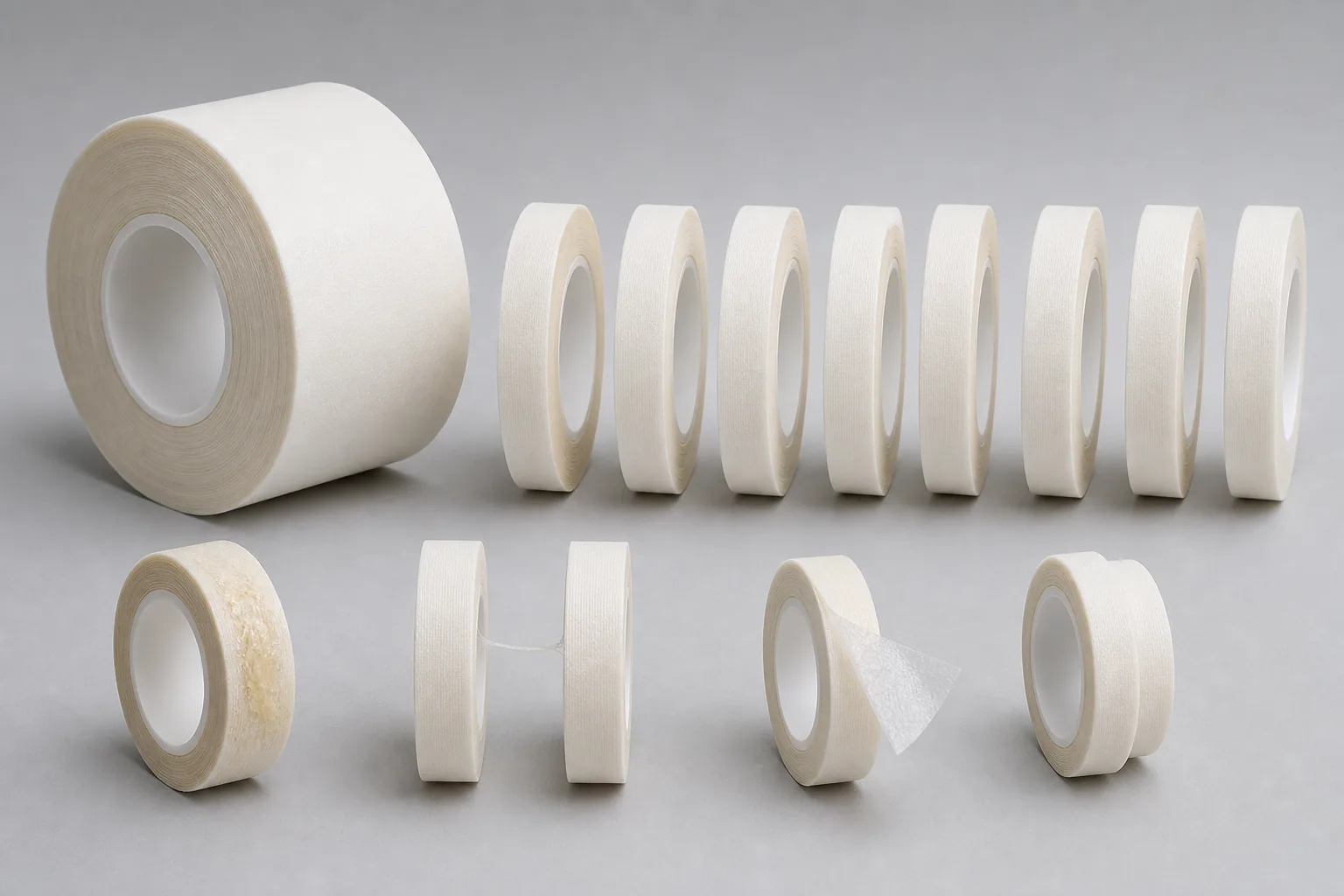
Medical tape rolls pair a flexible backing with a pressure-sensitive adhesive and often a release liner. Slitting can expose adhesive at the edge, transfer it to tooling or telescope narrow rolls, so the review must cover coating layout, roll conditioning and rewind behavior rather than backing thickness alone.
Updated
Where This Cutting Application Appears
Converting jumbo medical tape rolls
Produce narrow rolls for dressing fixation, device assembly or later die cutting while maintaining edge quality.
Slitting liner-backed adhesive laminates
Cut backing, adhesive and release liner together without lifting the liner or leaving connected film tails.
Trimming coated web margins
Remove uneven adhesive edges or uncoated borders before final rewind when the process specification calls for it.
Roll Slitting process boundary
Roll slitting divides a master roll longitudinally into narrower rolls; it does not separate the web transversely into sheets or fixed lengths.
Roll Slitting setup checkpoint
Confirm unwind and rewind tension, slit widths, knife positions, core alignment, trim removal and the winding behavior of every daughter roll.
Roll Slitting acceptance checkpoint
Inspect roll width, edge condition, telescoping, interleaving, debris and whether each rewound roll remains stable at the required diameter.
Define the Required Cut Result
- Straight roll edges without adhesive smear or stringing
- Stable finished width and rewind alignment
- Complete liner and backing separation
- Controlled buildup that supports the defined cleaning interval
Problems to Diagnose Before Changing the Knife
Adhesive accumulates on knife sides
Check adhesive chemistry, coat weight, roll temperature, exposed edge, knife finish, side pressure and cleaning solvent.
Narrow rolls telescope during rewind
Review slit-width consistency, core alignment, rewind tension, web guiding and adhesive blocking between layers.
Release liner lifts from the backing
Inspect peel direction, differential tension, side load, overlap and bond or release variation across the roll.
Sticky strings bridge the slit
Compare adhesive flow, cutting temperature, edge sharpness, web speed and the distance to downstream separation.
Knife Forms That May Be Considered
| Possible knife form | When it may be considered | What must be confirmed |
|---|---|---|
| razor slitter | A razor mode may suit thin, low-toughness constructions when the line supports the web and adhesive does not create unacceptable drag. | Confirm blade holder, penetration, backing support, exposed adhesive, speed and cleaning method with representative roll trials. |
| circular shear knife | A matched shear pair may control tougher backings or multilayer tape where overlap and side load can be maintained. | Confirm upper and lower dimensions, bevels, overlap, clearance, shaft fits and adhesive-facing orientation. |
| score knife | Score slitting may suit constructions that tolerate compression against an anvil without liner fracture or adhesive squeeze-out. | Confirm anvil condition, penetration, pressure, finished-edge appearance and release performance before approval. |
Information to Send for Technical Review
You do not need to know the exact blade name. Send the available workpiece, machine, current-knife and cut-result information so the application can be reviewed against a drawing or sample.
- Backing material, thickness and reinforcement
- Adhesive family, coat weight and coated-side orientation
- Release-liner material, thickness and release direction
- Roll temperature and conditioning before slitting
- Jumbo-roll width, finished widths, lane count and cores
- Slitting mode, web speed, tension and rewind layout
- Current knives, anvil or lower knives and cleaning practice
- Edge and roll samples showing ooze, strings, liner lift or telescoping
Questions About This Cutting Application
Why does adhesive buildup worsen later in a roll?
Roll temperature, edge ooze, debris and accumulated transfer can change during the run. Record roll position and time between cleaning stops.
Can polishing the knife eliminate adhesive transfer?
Finish may influence release, but exposed coating, temperature, pressure and adhesive chemistry remain important. Test the actual construction.
What causes a liner to crack while the tape backing cuts cleanly?
The liner may be more brittle or experience different strain. Review shear mode, bend path and layer orientation.
Should finished tape width be measured under tension?
State the customer's inspection method. Flexible tape can recover after slitting, so measurement location and tension must be consistent.
What compatibility information is needed for cleaning?
Provide approved cleaning agents and procedures. The customer must confirm chemical compatibility with product and process requirements.
Related product and service information
- Surgical Drape Laminate Cutting - surgical drape laminates · laminate slitting and sheeting
- Diaper Topsheet and Backsheet Slitting - diaper topsheet and backsheet webs · multilayer web slitting
- Slitting Carbon Fiber Prepreg Tape - carbon fiber prepreg tape · roll slitting
Request a Custom Cutting-Knife Review
Send the workpiece details, machine or holder information, current knife photos or sample, required quantity and examples of the present cut problem. Final dimensions, material, edge geometry and tolerances are confirmed from the approved requirements.