
Blade Application Guides / Application Guide / meat processing
Meat Skin and Rind Removal
Skinning separates a flexible hide or rind layer from soft meat while the product is guided across a narrow working edge. The decision is not simply sharp versus dull: tooth form, blade straightness, holder fit, product temperature and the machine's gripping action all influence yield and surface damage.
Updated
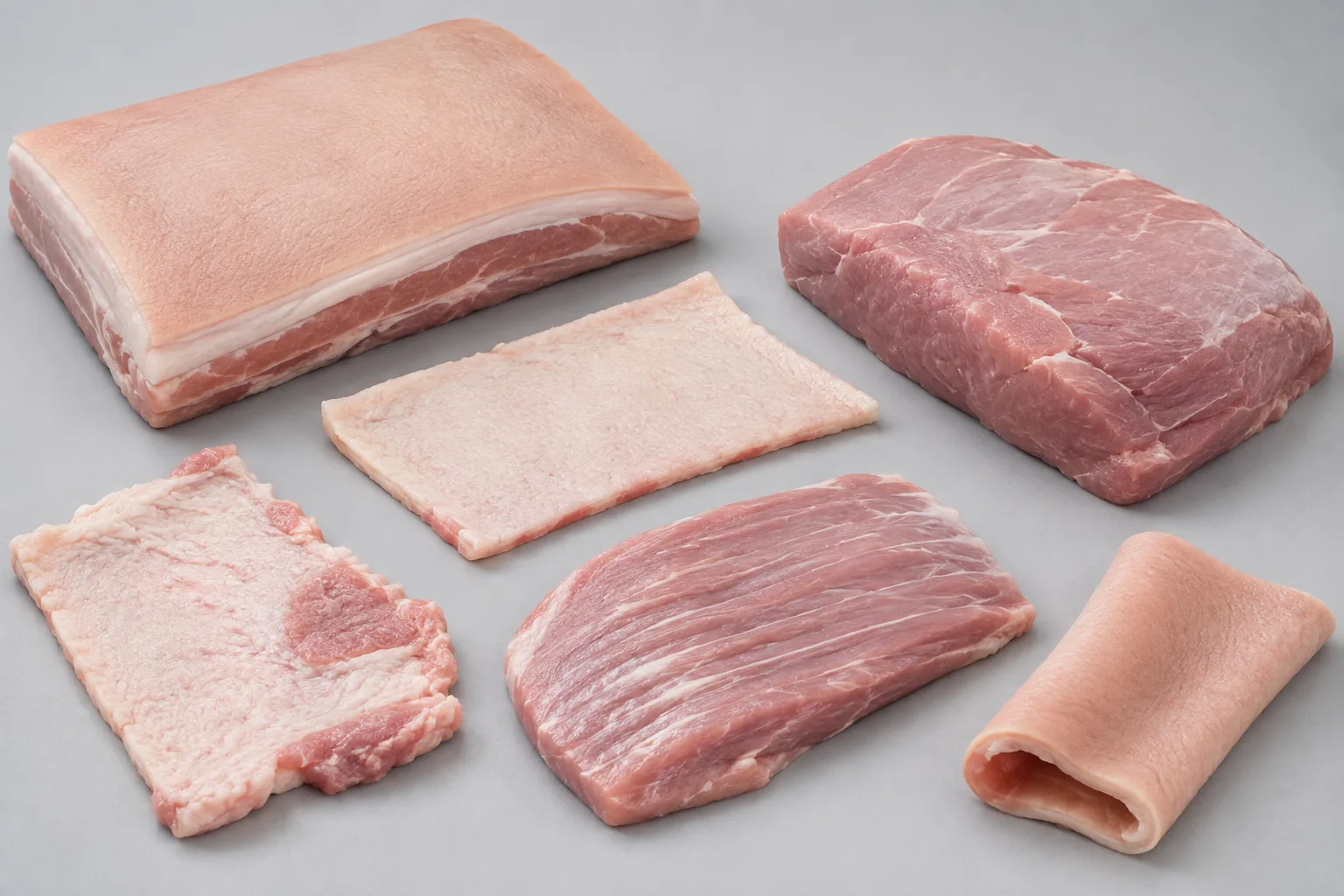
Where This Cutting Application Appears
Pork rind removal
Separate rind while controlling the amount of fat or lean meat carried away with the skin.
Fish or poultry skinning
Remove a thin, flexible skin from delicate flesh without excessive tearing or surface gouging.
Trimming membrane and connective tissue
Use a controlled skinning pass where a flexible layer must be lifted from a softer product surface.
Skin Removal And Trimming process boundary
skin removal and trimming for meat skin and rind is a linked sequence: the output condition and datum from each operation become the controlled input for the next. It should not be evaluated as one generic cut or accepted only by the final dimension.
Skin Removal And Trimming setup checkpoint
For meat skin and rind, define the operation order, intermediate dimensions, registration transfer, material support, web or part handling and waste route for every stage of skin removal and trimming.
Skin Removal And Trimming acceptance checkpoint
Verify both intermediate and final results from skin removal and trimming, including dimensions, registration, edge or feature quality, material damage, waste separation and stable transfer between stages.
Define the Required Cut Result
- Consistent separation depth across the product width
- Low meat loss on the removed skin or rind
- A smooth product surface without grooves or tears
- Reliable feeding without folding the skin layer
Problems to Diagnose Before Changing the Knife
Too much meat remains on the removed skin
Review blade height, tooth engagement, pressure roll setting, product thickness and temperature.
The meat surface shows grooves
Inspect tooth damage, blade flatness, contamination under the blade and uneven holder clamping.
Skin folds instead of feeding
Check leading-edge preparation, gripping roll condition, moisture, product orientation and the gap at the blade.
Cut depth varies across the width
Compare holder straightness, blade projection, pressure distribution and product thickness from side to side.
Knife Forms That May Be Considered
| Possible knife form | When it may be considered | What must be confirmed |
|---|---|---|
| skinner blade | The standard straight skinner format suits machines that draw skin through a controlled gap at the cutting edge. | Confirm length, width, thickness, hole pattern, tooth or edge style, working face and installation orientation from the machine or used sample. |
| toothed skinner blade | A toothed edge may improve engagement in specific rind or skinning systems, but tooth shape affects surface marks and yield. | Confirm tooth pitch, depth, direction and permissible projection through representative product trials and an approved drawing. |
Information to Send for Technical Review
You do not need to know the exact blade name. Send the available workpiece, machine, current-knife and cut-result information so the application can be reviewed against a drawing or sample.
- Product species and the layer being removed
- Fresh, chilled, frozen-tempered or otherwise conditioned product state
- Typical thickness range and width presented to the blade
- Desired separation plane and acceptable meat carryover
- Machine make and model or complete holder dimensions
- Current blade, tooth profile and installation orientation
- Pressure or gripping-roll arrangement and observed feed behavior
- Photos of the removed skin and finished product surface
Questions About This Cutting Application
Why is lean meat being removed with the skin?
Blade projection, gap, product temperature and pressure can shift the separation plane. Compare both the recovered product and removed skin before altering the blade.
Do all meat skinners use the same tooth pattern?
No. Tooth pattern and orientation must match the machine and product. Copying a visually similar blade can change feed and surface finish.
Can a smooth blade replace a toothed skinner blade?
Only if the equipment and product trials support it. The gripping method and holder may depend on the original edge style.
What indicates a bent or poorly seated blade?
Cut depth may vary across the width, with localized grooves or unskinned bands. Check the holder and clamping surfaces as well as the blade.
What hygiene information is relevant to the review?
State the cleaning chemicals, wash temperature and sanitation routine so material and surface-finish decisions can be evaluated for the actual process.
Related product and service information
- Poultry Joint Cutting and Portioning - poultry portions · joint cutting and portioning
- Fish Fillet Trimming and Portioning - fish fillets and portions · fillet trimming and portioning
- Frozen Meat Block Portioning - frozen meat blocks · block portioning
Request a Custom Cutting-Knife Review
Send the workpiece details, machine or holder information, current knife photos or sample, required quantity and examples of the present cut problem. Final dimensions, material, edge geometry and tolerances are confirmed from the approved requirements.