
Blade Technology / Application Guide / poultry processing
Poultry Joint Cutting and Portioning
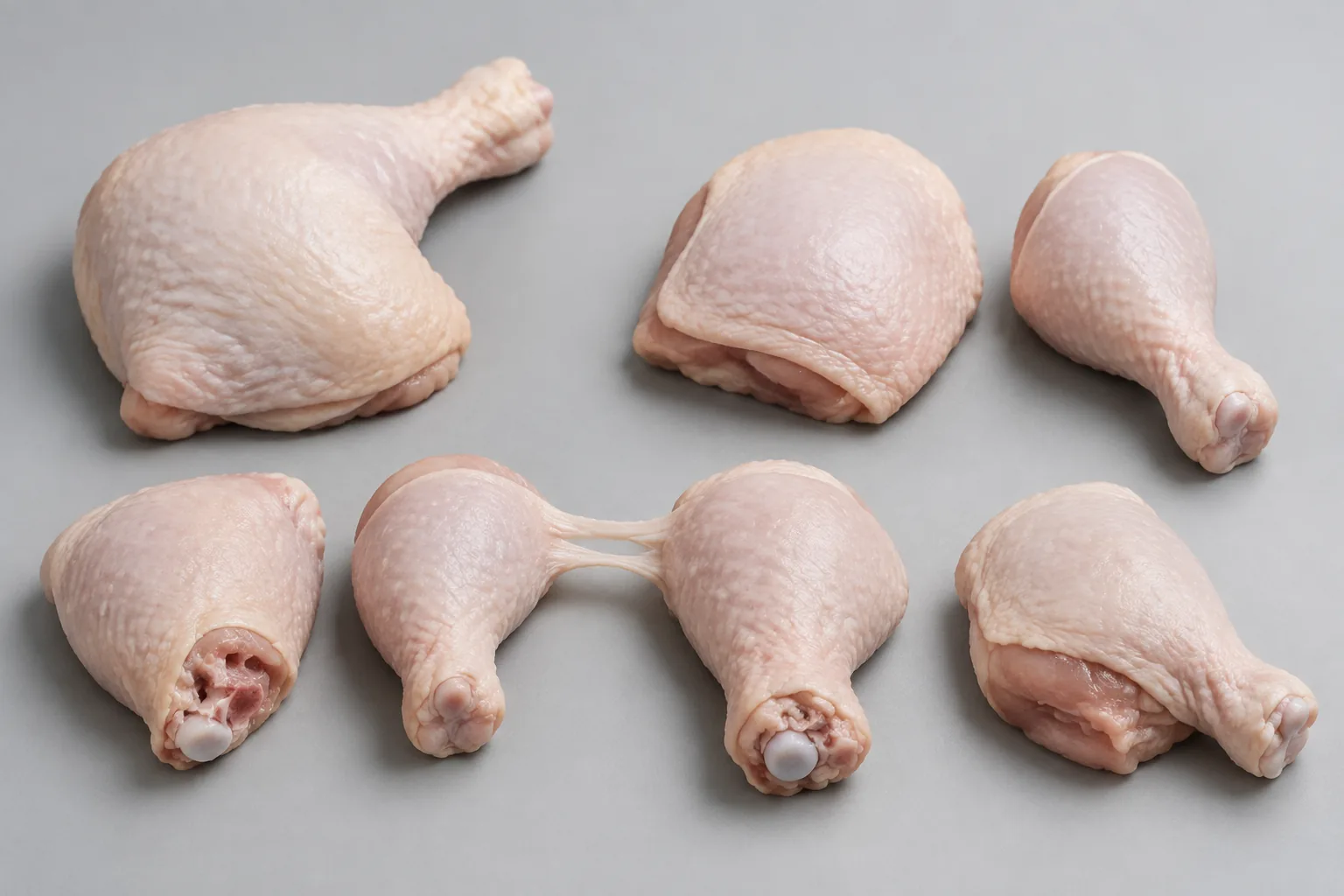
Poultry portioning can cross soft muscle, elastic skin, cartilage and sometimes bone within one product. The cutting system must control the joint location and support the portion; otherwise force is diverted into bone splintering, skin tearing or crushed tissue.
Where This Cutting Application Appears
Separating anatomical joints
Cut through or beside identified joints for legs, wings or other portions while limiting bone fragments.
Dividing bone-in poultry sections
Portion supported product where bone size and orientation are declared as part of the application.
Cutting skin-on boneless portions
Complete the cut through flesh and elastic skin without leaving connected tabs between pieces.
Common Ways to Describe This Cutting Problem
- poultry joint cutting knife
- industrial chicken portioning blade
- reduce bone splinters poultry cutting
- knife for chicken joint separation
- poultry skin tearing during portioning
- custom poultry processing knife
- rotary poultry portioning blade
- clean poultry joint cut
Define the Required Cut Result
- Accurate cut placement relative to the joint
- Low bone fragmentation and cartilage crushing
- Complete skin separation without ragged tails
- Consistent portion shape with limited tissue compression
Problems to Diagnose Before Changing the Knife
Bone splinters appear at the cut
Check whether the cut intersects bone or joint space, plus product support, temperature, edge damage and impact speed.
Skin stretches between portions
Review edge continuity, skin orientation, cutting depth, backing condition and whether flesh moves before the skin separates.
The cut misses the intended joint
Inspect product locating, size variation, guide wear, timing and how anatomical orientation is maintained.
The knife develops localized chips
Relate each chip location to bone contact, holder support, alignment and any hard foreign material; do not assume uniform wear.
Knife Forms That May Be Considered
| Possible knife form | When it may be considered | What must be confirmed |
|---|---|---|
| straight portioning knife | A straight knife may suit indexed poultry positioned against a support before a controlled stroke. | Confirm cutting line, bevel, thickness, mounting, support and whether the duty includes cartilage or bone. |
| circular portioning knife | A rotary knife may suit continuous or indexed equipment designed to guide poultry past a circular cutting plane. | Confirm diameter, bore, thickness, rotation, guarding, product guide and allowable bone contact from the machine documentation. |
| serrated knife | Progressive tooth engagement may help with skin or connective tissue in certain holders, but can affect fragment and surface appearance. | Confirm tooth geometry and direction with representative portions, sanitation requirements and an approved drawing. |
Information to Send for Technical Review
You do not need to know the exact blade name. Send the available workpiece, machine, current-knife and cut-result information so the application can be reviewed against a drawing or sample.
- Poultry species, portion type and anatomical cutting point
- Bone-in, joint-line, cartilage-only or boneless duty
- Fresh, chilled, frozen or tempered product condition
- Size and weight range entering the cutting station
- How the product is oriented, located and supported
- Machine motion, holder interface and current knife drawing
- Acceptable bone-fragment, skin and cut-surface criteria
- Photos of both sides of the cut and any chipped area on the used knife
Questions About This Cutting Application
Should a poultry knife cut through the joint or the bone?
That is an application decision. Identify the intended anatomical path, because joint separation and bone division impose different loads and quality criteria.
Why does skin stay connected after the meat is cut?
Skin can stretch away from an incomplete or damaged edge. Check cutting depth, backing support and skin orientation across the portion.
Can a serrated knife reduce bone splintering?
Not as a general rule. Bone fragmentation depends on cut location, support, impact and edge geometry; evaluate the actual portion and machine.
What does localized knife chipping suggest?
It can indicate repeated bone impact, misalignment, insufficient support or foreign material. Map chip positions before selecting a different material.
What samples are useful for a portioning review?
Provide intact incoming portions, accepted and rejected cuts, and the used knife where possible. Mark product orientation and cut direction on the packaging or accompanying notes.
Request a Custom Cutting-Knife Review
Send the workpiece details, machine or holder information, current knife photos or sample, required quantity and examples of the present cut problem. Final dimensions, material, edge geometry and tolerances are confirmed from the approved requirements.