
Blade Application Guides / Application Guide / Flexible packaging
BOPP Film Slitting With Stable Edges and Tension
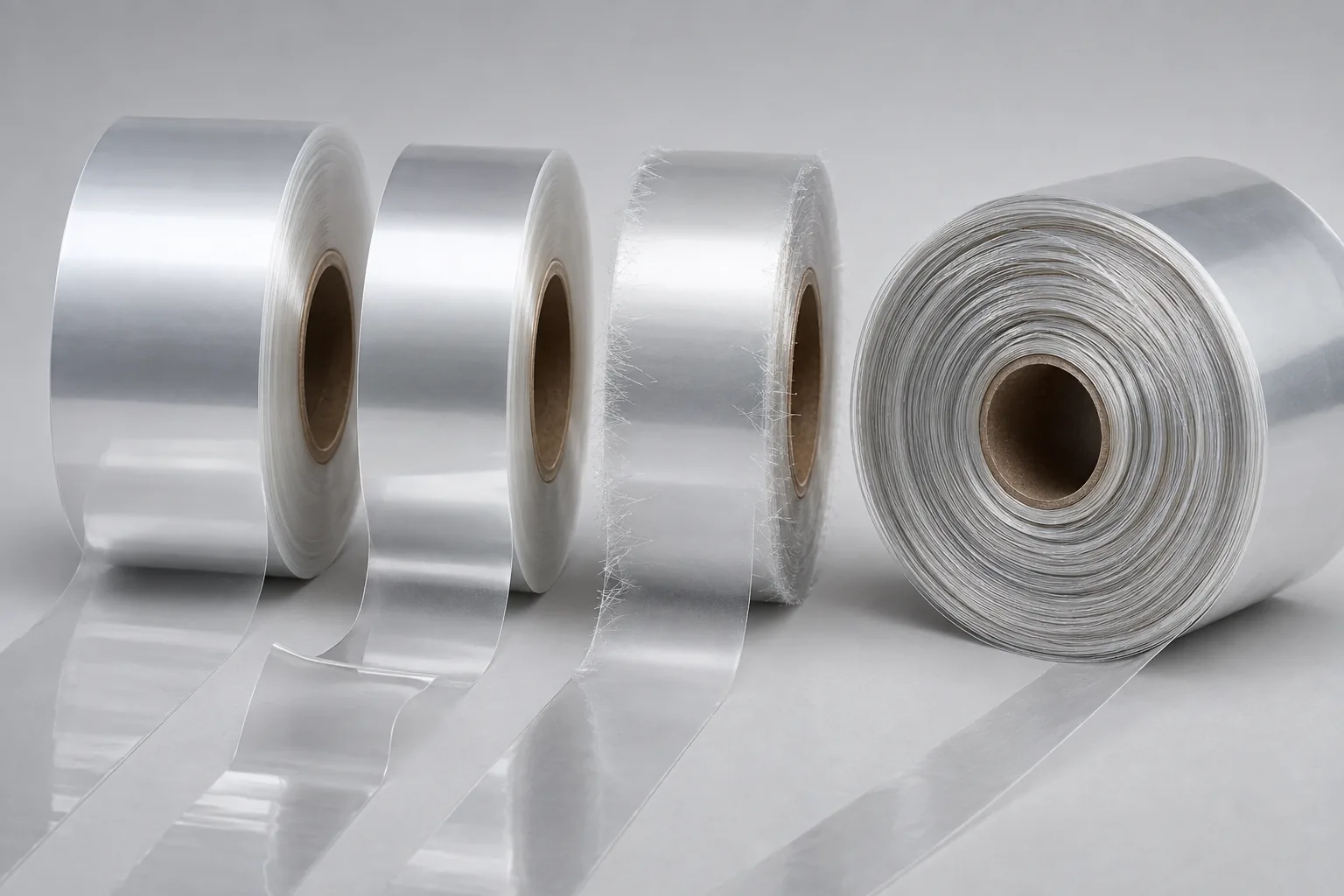
BOPP film is thin, oriented, and sensitive to tension imbalance, edge heat, and static during width conversion. A useful slitting review connects film gauge and treatment with web path, finished lane width, winding method, and the exact location of edge curl or fracture.
Updated
Where This Cutting Application Appears
Printed packaging-web lane separation
Printed BOPP lanes are slit to finished reel width while the edge remains outside artwork, register marks, and seal areas.
Lamination-grade BOPP roll preparation
Clear or treated film is converted before adhesive lamination, where surface condition and edge debris can affect the following bond.
Narrow label and overwrap reel conversion
Master rolls are divided into narrow reels that must track and unwind without edge curl, blocking, or telescoping.
Web Slitting process boundary
web slitting for BOPP film webs is planned around longitudinal width conversion of a moving roll, web, sheet or strip into controlled lanes or daughter rolls; it is not transverse length cutting, profile formation or removal of only a narrow damaged margin.
Web Slitting setup checkpoint
For BOPP film webs, confirm unwind and rewind tension, lane widths, knife positions, edge guidance, core alignment, trim removal and discharge behavior.
Web Slitting acceptance checkpoint
For BOPP film webs, evaluate lane width, edge condition, camber or wandering, debris, telescoping, interleaving and stable winding or downstream transfer.
Define the Required Cut Result
- Keep slit edges flat enough for the next printing, laminating, or sealing step
- Hold lane width while low-gauge film tension changes across the web
- Limit static-attracted particles on clear and treated surfaces
- Build narrow reels with aligned faces and controlled tension
Problems to Diagnose Before Changing the Knife
Edge curl develops immediately after separation
Compare orientation direction, gauge, surface treatment, web tension, slit width, cutting-side load, and curl direction on each lane.
The web wanders relative to printed register
Review edge-guide reference, unwind alignment, roller condition, tension isolation, splice passage, and lateral movement before the slit point.
Fine film whiskers or edge fracture appear
Inspect film brittleness, gauge profile, treatment, edge support, overlap or penetration, speed, static, and the start location of each defect.
Narrow reels telescope during or after winding
Check core alignment, differential winding, tension taper, nip, slit-width sequence, roll hardness, and storage temperature.
Knife Forms That May Be Considered
| Possible knife form | When it may be considered | What must be confirmed |
|---|---|---|
| Circular shear slitting | Consider for supported continuous separation where overlap and side load can be kept stable. | Confirm film gauge, web direction, overlap, holder runout, rotation, and approved interface dimensions. |
| Razor-style slitting | Consider only where the installed web path provides suitable support and low drag for the BOPP grade. | Confirm entry geometry, support arrangement, film treatment, speed, debris limits, and representative production reels. |
Information to Send for Technical Review
You do not need to know the exact blade name. Send the available workpiece, machine, current-knife and cut-result information so the application can be reviewed against a drawing or sample.
- BOPP type, orientation, gauge range, and gauge profile
- Treated, coated, printed, or plain surface on each side
- Master-roll width, diameter, core, and roll-hardness range
- Lane layout, finished widths, tolerances, and register margins
- Line speed, web tension, guide position, and web-path drawing
- Rewind method, tension taper, nip, and target reel diameter
- Photos of curl, whiskers, fracture, or telescoping by lane
- Current slitting interface, cleaning and static controls, volume, and acceptance samples
Questions About This Cutting Application
Why do alternate BOPP lanes curl in different directions?
Each lane can inherit different tension, treatment, gauge profile, or cutting-side forces. Mark lane position and curl direction across the master roll before changing the setup.
How should printed-web trim margin be specified?
Use the artwork datum, measured register variation, lateral web movement, and finished-width tolerance. A nominal unprinted border alone does not define a safe slit position.
Does corona treatment affect a slitting review?
Treatment can change surface friction and static behavior, especially near winding and guide surfaces. Provide treated-side orientation and the material condition at conversion.
What should be recorded during a narrow-reel winding trial?
Record lane width, edge curl, reel-face alignment, roll hardness, telescoping, blocking, tension settings, and unwind behavior at the next process.
Can one BOPP setting cover every gauge and coating?
No. Gauge, orientation, treatment, coating, speed, winding, and equipment interface must be compared with production samples before the drawing is approved.
Related product and service information
- Food Packaging Film Trimming for Seal-Area Cleanliness - food packaging film webs · edge trimming
- Metallized Film Slitting Without Layer Damage - metallized plastic film · web slitting
- Laminated Packaging Web Slitting Across Bonded Layers - laminated flexible packaging webs · web slitting
Request a Custom Cutting-Knife Review
Send the workpiece details, machine or holder information, current knife photos or sample, required quantity and examples of the present cut problem. Final dimensions, material, edge geometry and tolerances are confirmed from the approved requirements.