
Blade Application Guides / Application Guide / Flexible packaging
Metallized Film Slitting Without Layer Damage
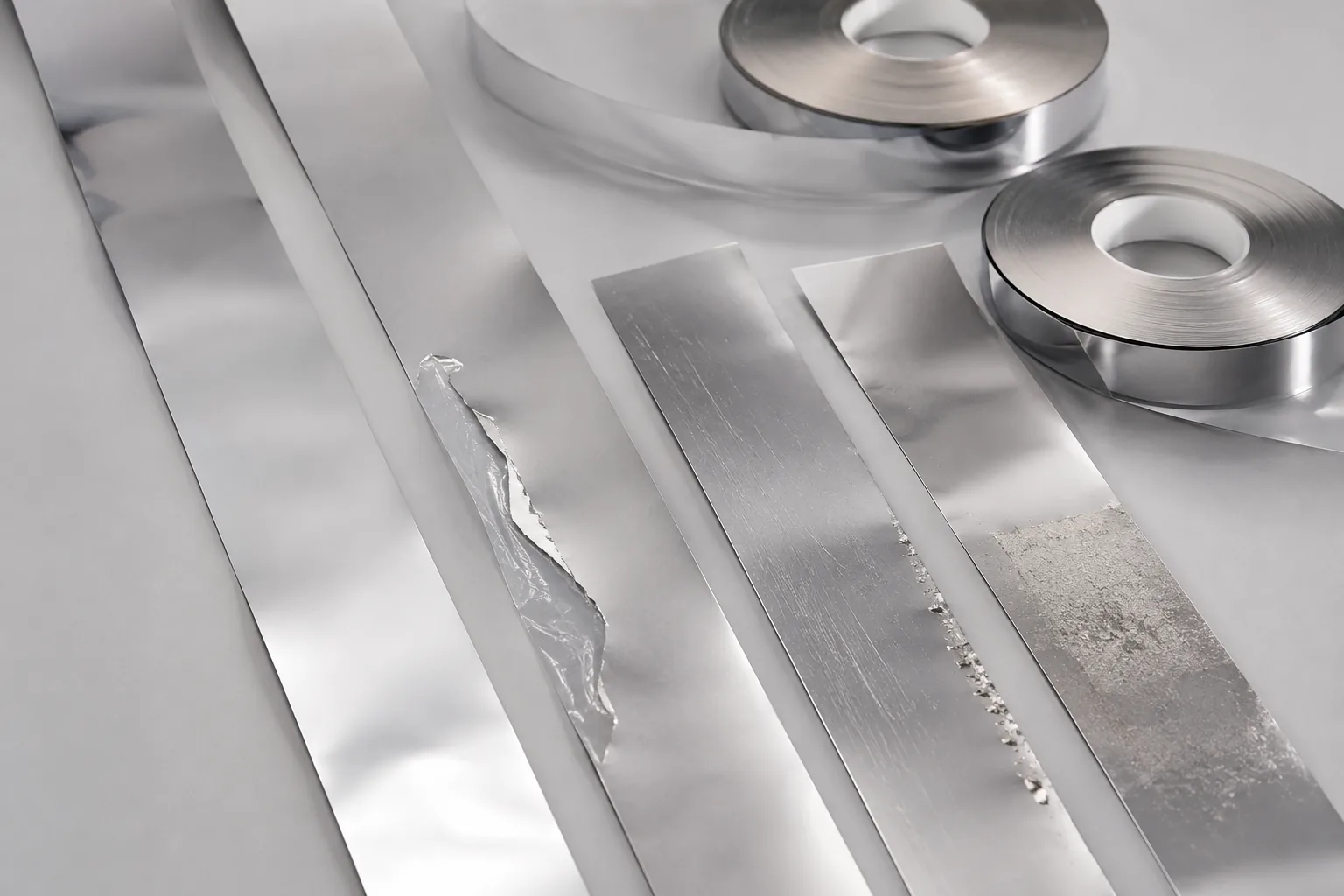
Metallized film combines a flexible polymer web with a very thin reflective layer that makes scratches, rubbing, and edge lift highly visible. Slitting must be reviewed with metallized-side orientation, coatings, web contact, tension, static, and winding pressure.
Updated
Where This Cutting Application Appears
Metallized packaging reel conversion
Barrier and decorative master rolls are slit into printing, laminating, or pouch-making widths while preserving the reflective layer.
Decorative film lane preparation
Metallized webs for labels, gift wrap, or visual laminates are separated with strict control of contact scratches and edge appearance.
Insulation laminate feed-roll sizing
Reflective polymer film is width-converted for later bonding to foam, paper, or woven layers without wrinkles or loose surface debris.
Web Slitting process boundary
web slitting for metallized plastic film is planned around longitudinal width conversion of a moving roll, web, sheet or strip into controlled lanes or daughter rolls; it is not transverse length cutting, profile formation or removal of only a narrow damaged margin.
Web Slitting setup checkpoint
For metallized plastic film, confirm unwind and rewind tension, lane widths, knife positions, edge guidance, core alignment, trim removal and discharge behavior.
Web Slitting acceptance checkpoint
For metallized plastic film, evaluate lane width, edge condition, camber or wandering, debris, telescoping, interleaving and stable winding or downstream transfer.
Define the Required Cut Result
- Protect the metallized face from scratches and roller rub
- Keep the deposited layer attached at the fresh slit edge
- Control static so particles do not mark reflective surfaces
- Build aligned reels without blocking or edge abrasion
Problems to Diagnose Before Changing the Knife
Metallized layer lifts or feathers at the edge
Review base film, deposition and topcoat, bond condition, slit direction, edge support, tension, and which surface faces the deformation.
Long travel-direction scratches appear
Trace roller contact, guides, web flutter, trapped particles, cleaning, metallized-side orientation, and the exact point where scratches begin.
Static attracts visible particles after slitting
Check humidity, ionization, winding, extraction, film treatment, cleaning materials, and particle distribution by lane.
Reel edges abrade or block in storage
Compare winding pressure, core alignment, roll hardness, edge protrusion, coating, temperature, packing, and storage duration.
Knife Forms That May Be Considered
| Possible knife form | When it may be considered | What must be confirmed |
|---|---|---|
| Circular shear slitting | Consider for supported metallized webs with controlled contact and side load. | Confirm base film, metallized side, topcoat, overlap, rotation, holder accuracy, and approved interface drawing. |
| Razor-style slitting | Consider only where the film grade and web path provide low-drag separation without unacceptable surface or edge damage. | Confirm support, entry angle, speed, static controls, surface orientation, and accepted production samples. |
Information to Send for Technical Review
You do not need to know the exact blade name. Send the available workpiece, machine, current-knife and cut-result information so the application can be reviewed against a drawing or sample.
- Base film type, gauge, orientation, and surface treatment
- Metallized side, deposition type, topcoat, and protective coating
- Master-roll width, diameter, core, hardness, and incoming surface condition
- Lane widths, tolerances, visible-edge and barrier-area requirements
- Web path, contact rollers, line speed, tension, and static controls
- Rewind method, core alignment, tension taper, and interleaf if used
- Photos of edge lift, scratches, particles, blocking, and abrasion by lane
- Current slitting interface, cleaning materials, downstream lamination, and inspection method
Questions About This Cutting Application
Why is a scratch more visible on metallized film than clear film?
The reflective layer highlights fine surface disruption and may itself be damaged by contact. Record lighting, metallized side, scratch direction, and lane.
How can edge lift be distinguished from loose particles?
Use magnified edge inspection and gentle handling under the agreed method. Edge lift remains attached to the layer, while free debris may relocate with static or wiping.
Should the metallized side face away from all rollers?
The correct path depends on the converter and coating protection. Map every contact surface and use the production orientation rather than assuming one universal route.
What should be assessed after metallized reels are stored?
Recheck blocking, face abrasion, edge protrusion, telescoping, surface marks, and unwind behavior at the normal storage time and temperature.
Can a clear-film slitting drawing be reused for metallized film?
Only after surface orientation, coating, tension, static, edge criteria, and equipment contact are reviewed with actual metallized samples.
Related product and service information
- PE Film Edge Trimming Without Stretching - PE film webs · edge trimming
- BOPP Film Slitting With Stable Edges and Tension - BOPP film webs · web slitting
- Laminated Packaging Web Slitting Across Bonded Layers - laminated flexible packaging webs · web slitting
Request a Custom Cutting-Knife Review
Send the workpiece details, machine or holder information, current knife photos or sample, required quantity and examples of the present cut problem. Final dimensions, material, edge geometry and tolerances are confirmed from the approved requirements.