
Blade Application Guides / Application Guide / Flexible packaging
Laminated Packaging Web Slitting Across Bonded Layers
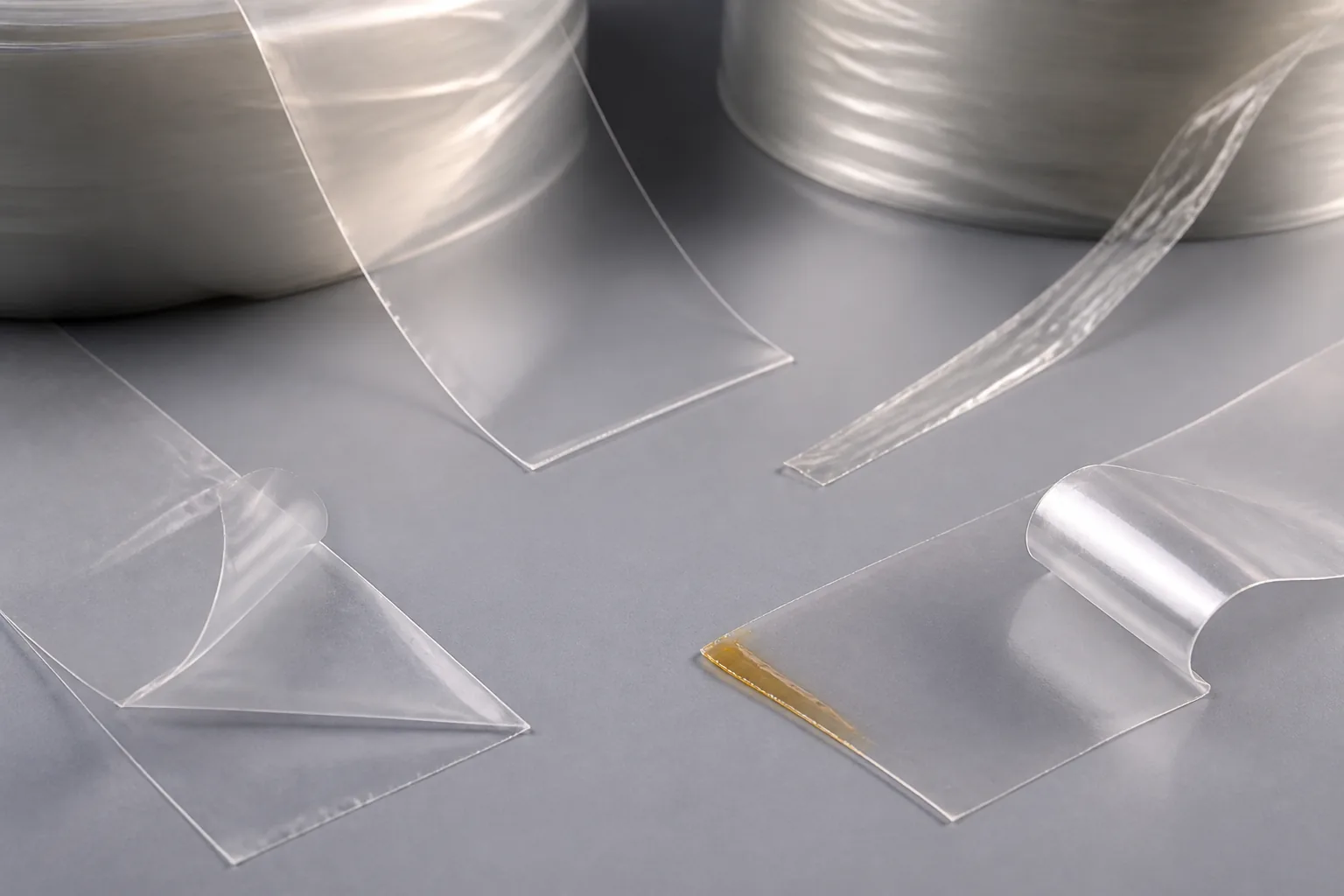
Flexible packaging laminates may join printed film, barrier film, foil, paper, and sealant through adhesive or extrusion bonding. A slit edge is acceptable only when all layers separate together, remain bonded, and preserve the print and seal margins required downstream.
Updated
Where This Cutting Application Appears
Printed pouch-stock lane separation
Multilayer printed webs are slit into pouch-making reels while artwork, registration, and sealant margins remain correctly positioned.
Barrier laminate roll conversion
Film-and-foil or multi-film structures are width-converted without edge lift, barrier-layer cracking, or loose fragments.
Form-fill-seal feed reel preparation
Finished laminate reels are prepared for packing lines where edge flatness, reel build, and seal-area cleanliness affect tracking.
Web Slitting process boundary
web slitting for laminated flexible packaging webs is planned around longitudinal width conversion of a moving roll, web, sheet or strip into controlled lanes or daughter rolls; it is not transverse length cutting, profile formation or removal of only a narrow damaged margin.
Web Slitting setup checkpoint
For laminated flexible packaging webs, confirm unwind and rewind tension, lane widths, knife positions, edge guidance, core alignment, trim removal and discharge behavior.
Web Slitting acceptance checkpoint
For laminated flexible packaging webs, evaluate lane width, edge condition, camber or wandering, debris, telescoping, interleaving and stable winding or downstream transfer.
Define the Required Cut Result
- Separate every laminate layer into one aligned edge
- Keep print registration and seal margins within the approved lane layout
- Prevent adhesive or sealant pickup during extended runs
- Control layer-tension imbalance that causes curl or telescoping
Problems to Diagnose Before Changing the Knife
One laminate layer stretches beyond the others
Review layer modulus and orientation, adhesive bond, sealant thickness, web tension, cut direction, support, and which side projects.
Edge delamination grows after rewinding
Compare bond age, cure, retained solvent if known, layer tension, winding pressure, edge contact, and storage time.
Adhesive or sealant deposits form at the slit
Identify exposed layer, temperature, pressure, speed, cleaning interval, laminate age, and deposit location by lane.
Printed or seal margin shifts from the finished edge
Check artwork datum, register control, web guiding, lateral movement, lane layout, splice passage, and actual finished widths.
Knife Forms That May Be Considered
| Possible knife form | When it may be considered | What must be confirmed |
|---|---|---|
| Circular shear slitting | Consider for bonded multilayer webs needing supported separation and controlled side load. | Confirm full layer stack, web orientation, overlap, holder accuracy, lane layout, and approved converting drawing. |
| Razor-style slitting | Consider only for compatible thin laminates where support and entry geometry prevent drag, stretch, or layer lift. | Confirm laminate bond, sealant response, tension, speed, support, debris limit, and production-equivalent samples. |
Information to Send for Technical Review
You do not need to know the exact blade name. Send the available workpiece, machine, current-knife and cut-result information so the application can be reviewed against a drawing or sample.
- Complete laminate structure in web-side order
- Thickness and orientation of each film, foil, paper, or sealant layer
- Adhesive or extrusion-bond system, cure age, and bond data if available
- Print layout, register marks, lane widths, and seal-margin positions
- Master-roll dimensions, core, incoming flatness, and roll history
- Line speed, tension zones, guide datum, slit sequence, and web path
- Rewind method, tension taper, core alignment, and finished diameter
- Samples and photos of stretch, lift, deposits, curl, or margin shift by lane
Questions About This Cutting Application
Why can a sealant layer project beyond the other laminate layers?
A soft sealant may stretch while stiffer layers fracture, especially with poor support or tension imbalance. Mark layer orientation and the projecting side.
How long after lamination should slit-edge bond be checked?
Use the normal cure and converting schedule for that adhesive system. Inspect immediately and after the specified conditioning period because edge lift may develop later.
What register data should accompany a printed laminate sample?
Provide artwork and lane datums, measured print variation, web-guide reference, seal margins, splice locations, and accepted finished reels.
How can adhesive pickup be linked to one layer?
Document the deposit position, web side, temperature, run length, and laminate stack. Laboratory identification may help when several adhesives or sealants are present.
Can one setting cover different laminate structures at the same thickness?
No. Equal total thickness can hide different stiffness, bond, friction, and stretch behavior. Review each layer stack and confirm the intended drawing.
Related product and service information
- Metallized Film Slitting Without Layer Damage - metallized plastic film · web slitting
- BOPP Film Slitting With Stable Edges and Tension - BOPP film webs · web slitting
- Food Packaging Film Trimming for Seal-Area Cleanliness - food packaging film webs · edge trimming
Request a Custom Cutting-Knife Review
Send the workpiece details, machine or holder information, current knife photos or sample, required quantity and examples of the present cut problem. Final dimensions, material, edge geometry and tolerances are confirmed from the approved requirements.