
Blade Application Guides / Application Guide / Industrial sack manufacturing
Woven Sack Mouth Cutting Without Yarn Unraveling
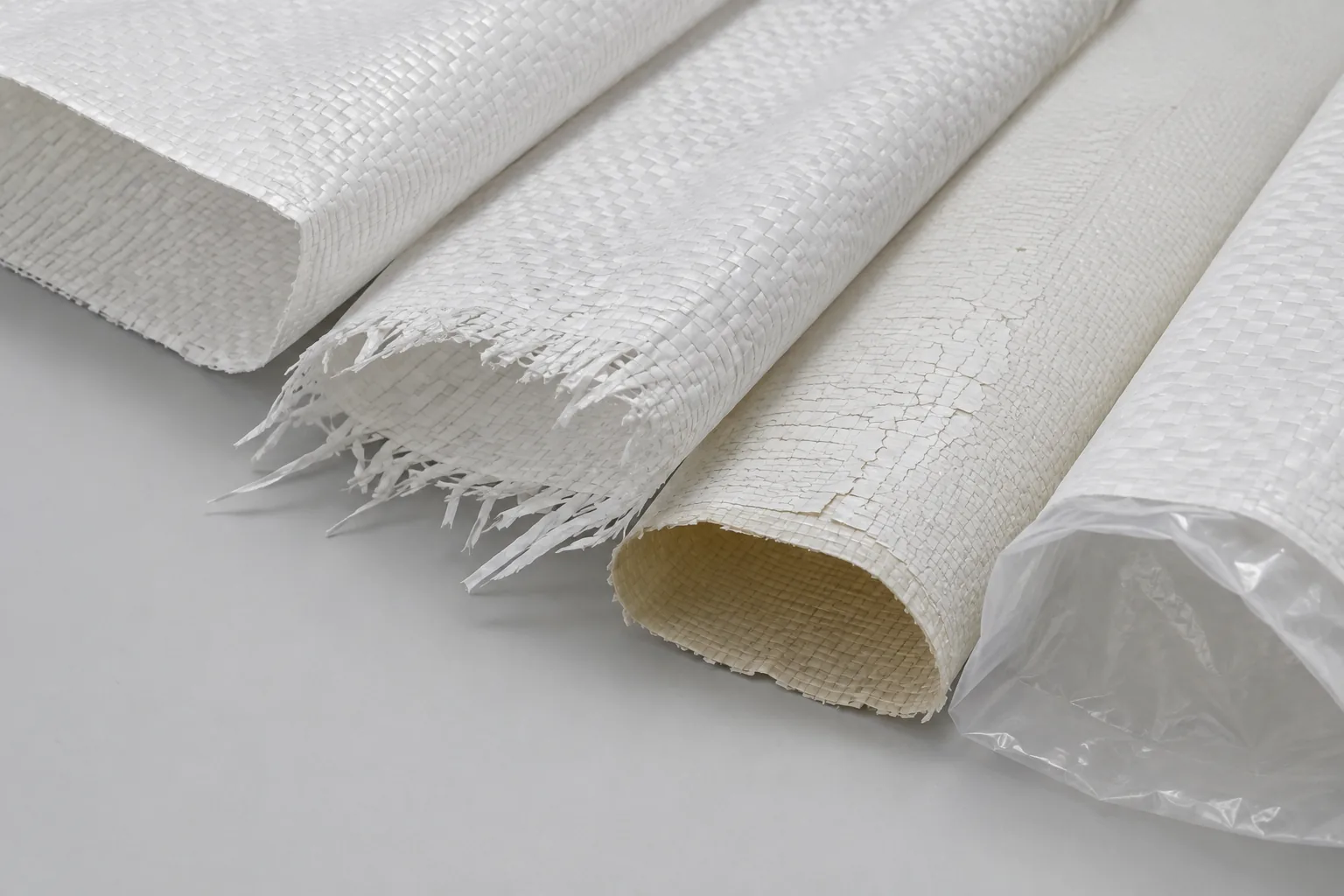
A woven sack mouth contains intersecting tapes that can pull free when the edge is cut, and coated or lined constructions add more layers to separate. The target edge depends on whether the mouth will be hemmed, sewn, heat cut, folded, or formed into a valve.
Updated
Where This Cutting Application Appears
Open-mouth sack finishing before sewing
The top edge is cut to length before filling and closure, with enough stability for folding, hemming, or stitching.
Valve-sack opening preparation
Woven and laminated layers are shaped around the valve area without loose tapes entering the product path.
Lined industrial bag mouth sizing
Outer weave and inner film liner are separated together so neither layer leaves a tail that obstructs filling or sealing.
Mouth Cutting process boundary
mouth cutting for woven packaging sacks is planned around a defined industrial cutting operation with its own feed condition, datum, finished geometry and downstream handling requirement; it is not an interchangeable generic cut without a documented process objective.
Mouth Cutting setup checkpoint
For woven packaging sacks, confirm incoming material condition, finished requirement, reference datum, restraint, feed sequence, waste path and downstream handling.
Mouth Cutting acceptance checkpoint
For woven packaging sacks, evaluate finished dimensions, edge or feature quality, material damage, repeatability, yield and readiness for the next production step.
Define the Required Cut Result
- Stop warp and weft tapes from pulling out at the open edge
- Keep coated or laminated surfaces from splitting beside the cut
- Align outer sack and inner liner at the finished mouth
- Provide a square edge suitable for hemming, sewing, or valve forming
Problems to Diagnose Before Changing the Knife
Polypropylene tapes unravel from the mouth edge
Map warp and weft direction, weave density, tape width, coating, cut orientation, edge handling, and time until unraveling appears.
Outer coating cracks or peels beside the cut
Review coating polymer, thickness, adhesion, temperature, fold direction, local stretch, and whether peeling follows a woven tape.
Inner liner projects beyond the outer sack
Check liner tension, bag layflat alignment, static, layer slip, feed registration, and whether the liner stretches during separation.
Mouth edge is angled or scalloped
Inspect bag tracking, layflat wrinkles, side gussets, feed timing, support, cut motion, and length measurements across the opening.
Knife Forms That May Be Considered
| Possible knife form | When it may be considered | What must be confirmed |
|---|---|---|
| Straight shear cutoff form | Consider where the laid-flat sack is indexed and supported across its full width. | Confirm sack layers, width, gussets, support, stroke, mounting, and approved cutoff drawing. |
| Serrated cutoff form | Consider only where penetration helps separate woven tapes and the existing equipment supports the required motion. | Confirm tooth direction, profile, coating response, liner behavior, cycle rate, and accepted mouth samples. |
Information to Send for Technical Review
You do not need to know the exact blade name. Send the available workpiece, machine, current-knife and cut-result information so the application can be reviewed against a drawing or sample.
- Woven polymer, tape width, weave density, and fabric weight
- Coating or lamination polymer, thickness, and bond condition
- Inner-liner material, thickness, attachment, and free length
- Bag layflat width, gusset geometry, and mouth construction
- Warp and weft orientation relative to the cutoff line
- Cut-to-sew, hem, fold, seal, or valve-forming sequence
- Accepted limits for unraveling, liner tail, angle, and coating peel
- Current cutting-part sample, motion, support, speed, and defect photos
Questions About This Cutting Application
Why does unraveling continue after a woven sack is cut?
A severed tape can pull through neighboring intersections during handling. Weave density, coating, orientation, cut condition, and delay before hemming or sewing all matter.
How should the inner liner be evaluated at the mouth?
Measure projection or recession across the width, inspect folds and static cling, and check whether the liner interferes with filling, sealing, or valve formation.
Does coated woven fabric always cut more cleanly?
Not always. Coating may stabilize tapes, but it can also crack, peel, soften, or create deposits. Review the actual coating and production temperature.
What sample should be sent for a gusseted sack?
Send full-width laid-flat sections showing gussets, liner, seams, print orientation, and accepted and rejected mouth edges, not only a small flat coupon.
Can a cutoff form be confirmed from sack width?
No. Weave, coating, liner, gussets, feed, support, motion, and closure process must be reviewed with the interface and approved drawing.
Related product and service information
- Shrink Film Perforation and Cutoff Consistency - shrink film · perforating and cutoff
- Corrugated Carton Slotting Without Liner Tear - corrugated carton blanks · slotting
- Masking Tape Log Cutting With Clean Roll Faces - masking tape logs · log cutting
Request a Custom Cutting-Knife Review
Send the workpiece details, machine or holder information, current knife photos or sample, required quantity and examples of the present cut problem. Final dimensions, material, edge geometry and tolerances are confirmed from the approved requirements.