
Blade Application Guides / Application Guide / Adhesive tape converting
Masking Tape Log Cutting With Clean Roll Faces
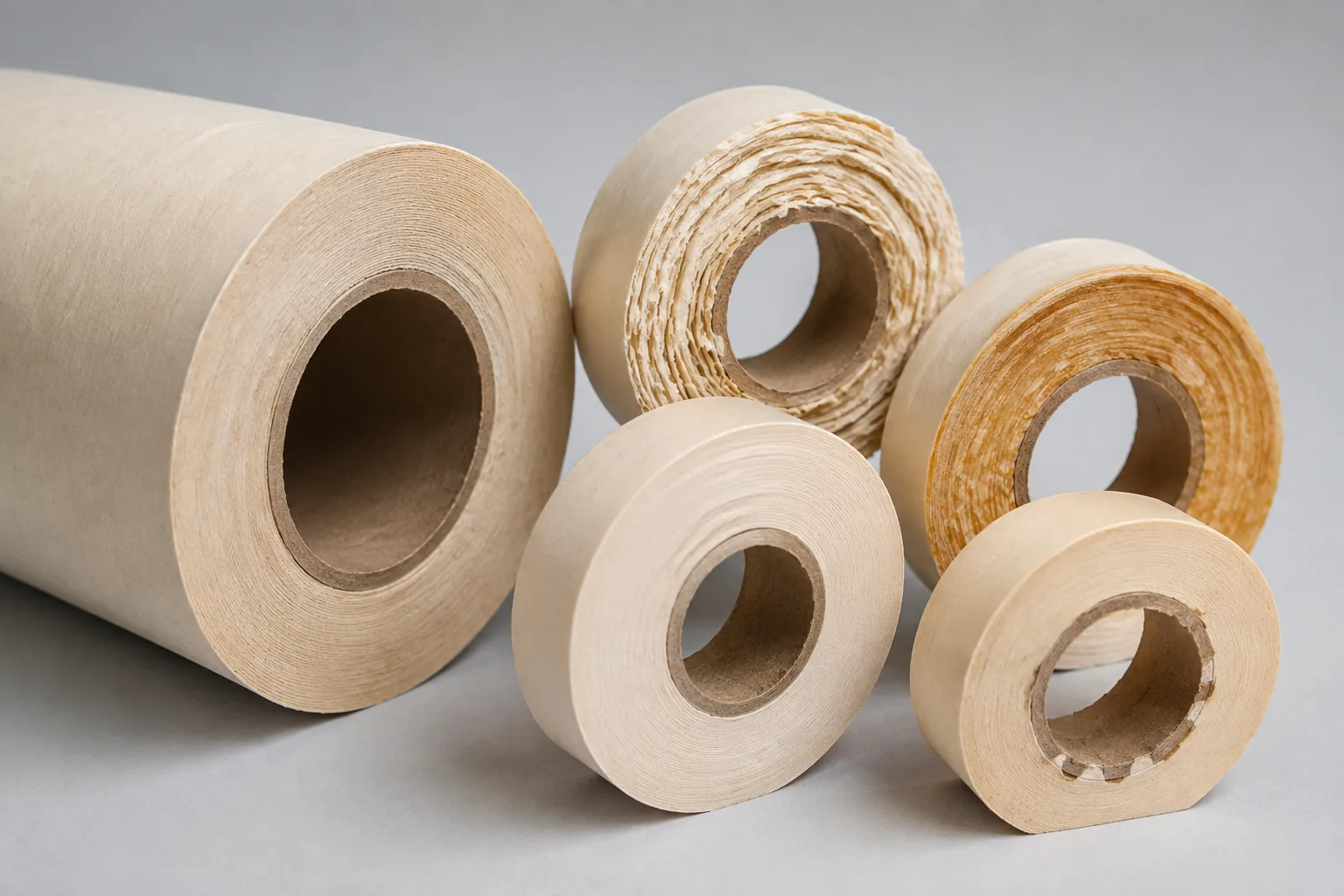
A masking tape log combines a compressible paper backing, pressure-sensitive adhesive, and a rigid core. Cutting through the wound pack requires control of log support, indexing, face compression, paper tearing, and adhesive transfer.
Updated
Where This Cutting Application Appears
Painter's masking tape roll slicing
Jumbo logs are indexed into retail roll widths while the creped paper edge must remain clean enough for smooth hand dispensing.
High-temperature masking tape conversion
Special backing and adhesive systems are cut into process rolls without overheating, face smear, or loss of core geometry.
Industrial masking roll preparation
Wider finished rolls are sliced for coating, assembly, or surface-protection work where face alignment and unwind behavior matter.
Log Cutting process boundary
log cutting for masking tape logs is planned around production of repeated sections governed mainly by thickness or axial length from a block, log, loaf or layered structure; it is not portioning by mass, outline profiling or random size reduction.
Log Cutting setup checkpoint
For masking tape logs, confirm target thickness, product condition, orientation, support, feed indexing and clearing between successive sections.
Log Cutting acceptance checkpoint
For masking tape logs, evaluate thickness distribution, face quality, compression, tearing, product loss and clean separation of consecutive sections.
Define the Required Cut Result
- Sever the wound paper layers without pulling a feathered face
- Keep pressure-sensitive adhesive from glazing the cut surface
- Hold roll width across the full indexed log
- Protect the core bore and both finished roll faces
Problems to Diagnose Before Changing the Knife
Crepe-paper backing tears across the roll face
Compare backing stretch, crepe direction, log density, cut entry, support, feed rate, and where torn layers first appear.
Adhesive smears into a glossy face band
Review adhesive type, log temperature, cutting speed, dwell, cleaning condition, face pressure, and deposit transfer between cuts.
Core bore chips or collapses
Check core material, wall thickness, internal support, log clamping, final cut position, and bore condition before cutting.
Finished roll widths change along the log
Audit index calibration, axial log movement, face datum, kerf allowance, core straightness, and width measurement after relaxation.
Knife Forms That May Be Considered
| Possible knife form | When it may be considered | What must be confirmed |
|---|---|---|
| Circular log-cutting form | Consider where the tape log rotates or the cutting path traverses a supported wound pack. | Confirm log diameter, rotation, feed motion, support, core clearance, section, and approved mounting drawing. |
| Serrated log-cutting form | Consider only when the existing equipment uses a compatible sawing action and face finish is proven on the actual paper backing. | Confirm tooth profile, direction, pitch, motion, extraction, adhesive response, and production log samples. |
Information to Send for Technical Review
You do not need to know the exact blade name. Send the available workpiece, machine, current-knife and cut-result information so the application can be reviewed against a drawing or sample.
- Masking-paper grade, crepe level, thickness, and tensile direction
- Adhesive type, coat weight, service temperature, and log age
- Log outside diameter, width, core diameter, and winding firmness
- Finished roll widths, tolerances, face appearance, and unwind criteria
- Log rotation, cutting feed, indexing method, and cycle rate
- External clamping, internal core support, and final-end cutoff arrangement
- Photos of torn layers, smear, heat marks, and damaged bores
- Existing cutting-part sample or drawing, mounting interface, volume, and cleaning practice
Questions About This Cutting Application
Why does creped masking paper tear more on one side of the log?
Cut direction, support, backing stretch direction, winding density, and entry or exit conditions may differ across the face. Mark the damaged side and log orientation.
How can heat-related adhesive smear be identified?
Record face temperature, glossy bands, odor or discoloration, deposit growth, and changes with feed rate or cleaning. Compare freshly cut rolls with cooled rolls.
What should be inspected inside the finished core?
Check bore diameter, roundness, chips, inward paper or adhesive tags, and whether the roll mounts and unwinds on its intended holder.
Does masking tape log age affect cutting?
It can. Adhesive flow, winding stress, moisture, and temperature history may change during storage, so note coating date and conditioning before the trial.
Can dimensions be copied from another log-cutting part?
Use an existing sample only as a starting reference. Confirm the holder, motion, core clearance, log range, rotation, and approved drawing for the target equipment.
Related product and service information
- Woven Sack Mouth Cutting Without Yarn Unraveling - woven packaging sacks · mouth cutting
- Corrugated Carton Slotting Without Liner Tear - corrugated carton blanks · slotting
- Carton Sealing Tape Cutoff for Reliable Cycle Separation - carton sealing tape · cutoff
Request a Custom Cutting-Knife Review
Send the workpiece details, machine or holder information, current knife photos or sample, required quantity and examples of the present cut problem. Final dimensions, material, edge geometry and tolerances are confirmed from the approved requirements.