
Blade Application Guides / Application Guide / Printing and labels
Shrink Sleeve Label Web Rotary Die-Cutting Blades
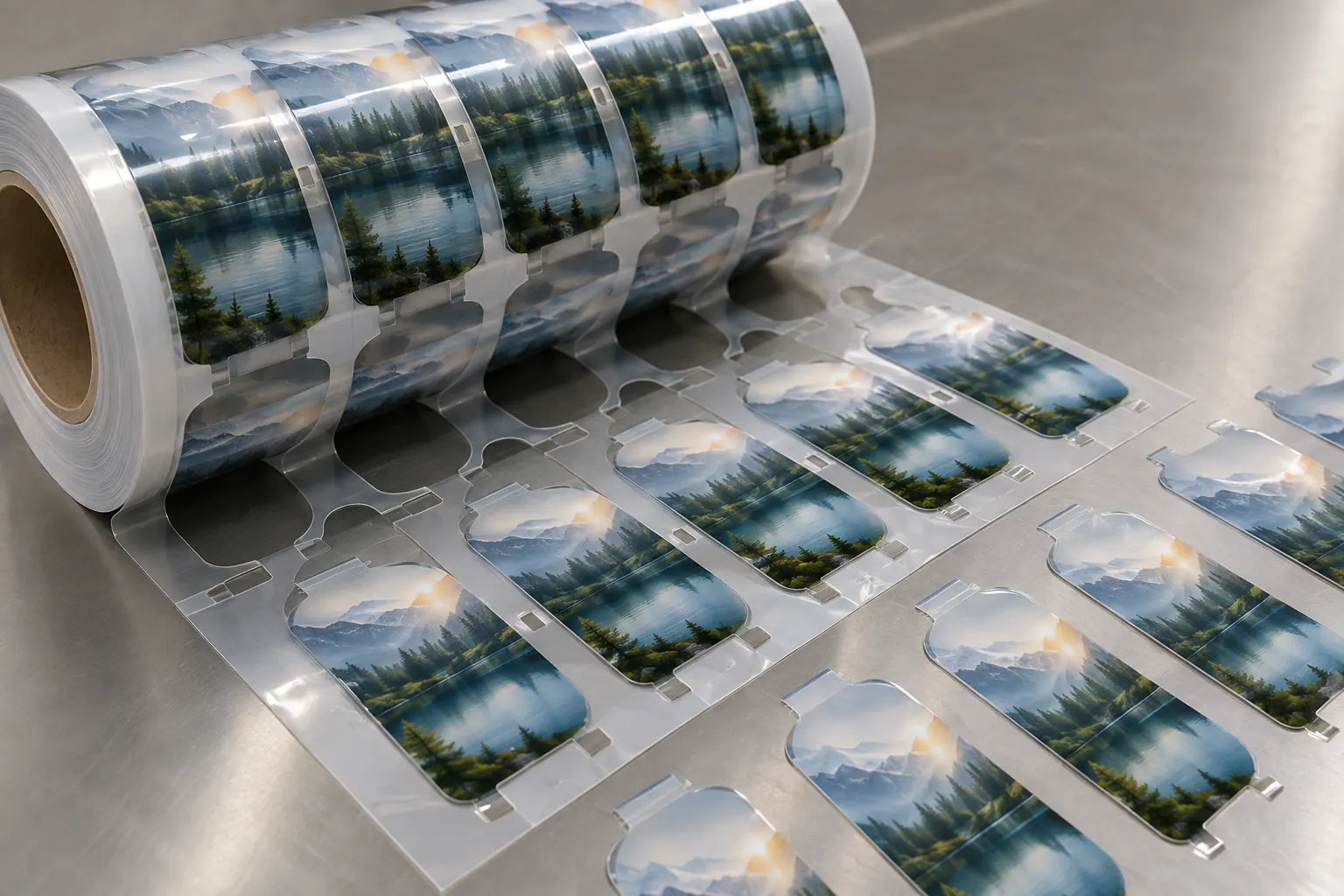
Rotary die cutting adds openings, tamper features, perforations or shaped edges to printed shrink sleeve film. Because oriented film can tear from small notches and distortion can shift printed registration, the feature drawing must be checked through handling, application and shrinking.
Where This Cutting Application Appears
Tamper-evident perforations
Creates controlled tear paths that must survive conversion yet open as intended by the package design.
Registered sleeve openings
Cuts holes or windows aligned to printed graphics or container features.
Shaped sleeve-edge features
Produces declared contours or tabs before seaming and sleeve application.
Common Ways to Describe This Cutting Problem
- shrink sleeve label web rotary die-cutting blades
- shrink film perforation rotary die
- sleeve label tamper feature cutting
- printed shrink web hole punching
- PETG sleeve profile die cutting
- oriented film tear notch control
- shrink label rotary cut registration
- custom rotary tooling for sleeve film
Define the Required Cut Result
- Features registered accurately to print repeat
- Clean geometry without unintended tear starters
- Slugs or waste removed without clinging to the web
- Sleeve survives seaming, application and specified shrink conditions
Problems to Diagnose Before Changing the Knife
Perforation tears during rewinding
- Review tie geometry and film orientation
- Measure web and rewind tension
- Inspect corner shape and feature direction
Small slugs remain attached
- Check profile completion and ejection
- Review static and waste path
- Compare film thickness and surface treatment
Feature distorts after shrinking
- Identify shrink direction and ratio
- Map feature position on the container
- Compare laboratory and production thermal conditions
Rotary profile drifts from print
- Check print repeat and sensor control
- Measure web stretch and cylinder synchronization
- Compare lateral and machine-direction error separately
Knife Forms That May Be Considered
| Possible knife form | When it may be considered | What must be confirmed |
|---|---|---|
| solid rotary die arrangement | May suit repeated sleeve-film features where the press, repeat and support system are defined. | Confirm cylinder interface, repeat, profile, anvil relationship, film path and approved drawing before manufacture. |
| flexible rotary die arrangement | May suit compatible magnetic-cylinder systems for selected perforations and profiles. | Confirm magnetic cylinder, plate size, feature geometry, support, speed and film construction from actual press data. |
Information to Send for Technical Review
You do not need to know the exact blade name. Send the available workpiece, machine, current-knife and cut-result information so the application can be reviewed against a drawing or sample.
- Film polymer, thickness, orientation and shrink ratio
- Print, varnish, coating and seam construction
- Feature drawing, tolerances and print datum
- Perforation function or slug-removal requirement
- Press, cylinder, anvil and repeat information
- Speed, tension, registration and static control
- Rewind, seaming, application and shrink conditions
- Samples of premature tear, retained slug and distortion
Questions About This Cutting Application
Why can a perforation fail before use?
Tie geometry, orientation, edge notches and web tension may combine to propagate a tear during conversion.
Should shrink ratio affect feature placement?
Yes. Feature size and position can change differently around the container according to film orientation and local restraint.
Why do tiny slugs cling to film?
Low mass and static charge can keep fully or partly separated waste attached to the web.
Can visual inspection replace a shrink test?
No. Oriented-film stress and feature distortion may appear only during application and heating.
What prevents unsupported tooling assumptions?
Provide press and cylinder data, film construction, approved feature drawing and representative trials.
Request a Custom Cutting-Knife Review
Send the workpiece details, machine or holder information, current knife photos or sample, required quantity and examples of the present cut problem. Final dimensions, material, edge geometry and tolerances are confirmed from the approved requirements.