
Blade Application Guides / Application Guide / Printing and labels
Self-Adhesive Labelstock Edge-Trimming Blades
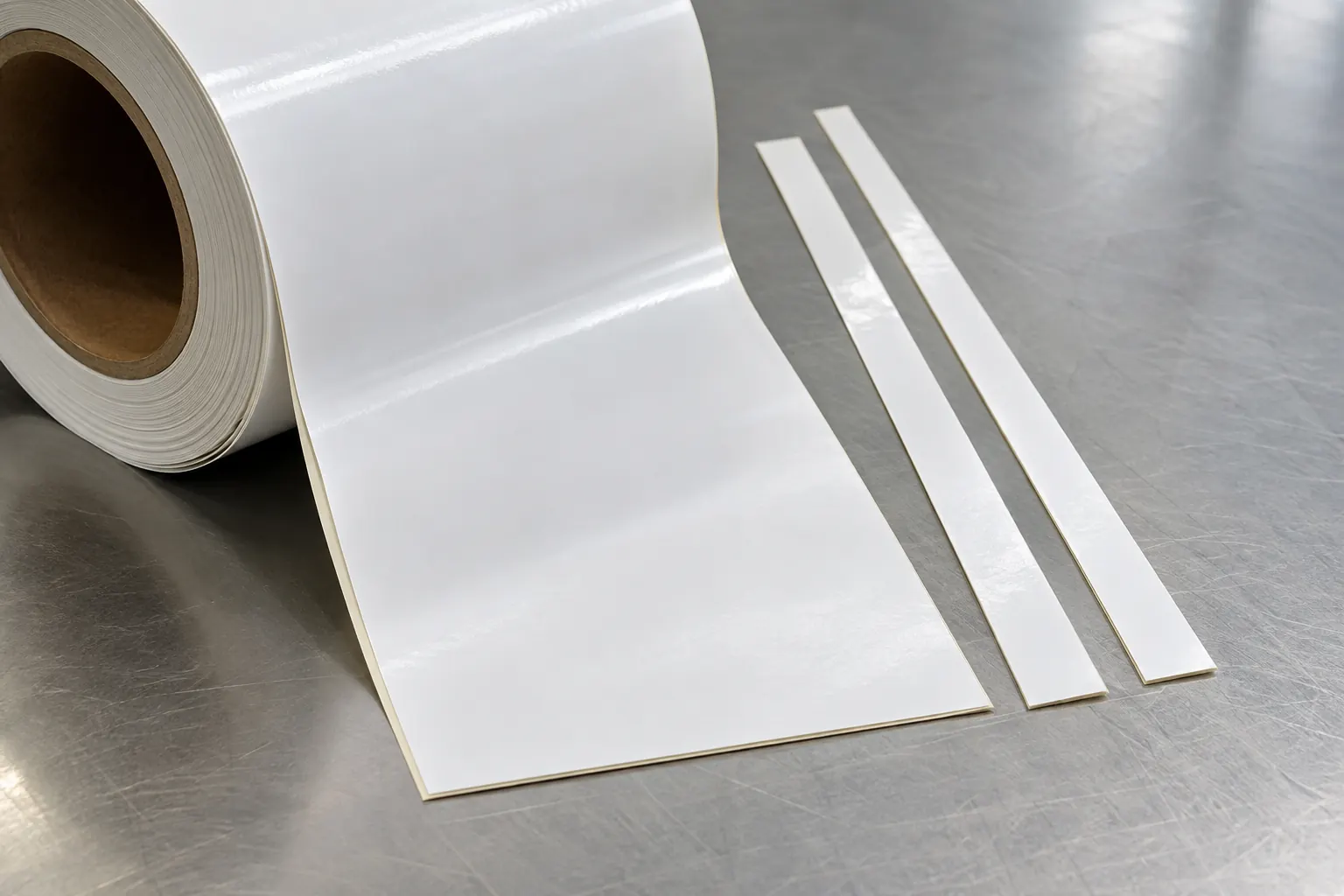
Width edge trimming removes coating or lamination margins from self-adhesive labelstock. Narrow sticky waste can wrap, stretch or break, and exposed pressure-sensitive adhesive can transfer to nearby surfaces, so edge quality and waste-path stability must be assessed as one system.
Updated
Where This Cutting Application Appears
Adhesive-coating margin removal
Removes irregular coated edges before rewinding, printing or laminating.
Laminated web width finishing
Brings facestock and liner to a common controlled width.
Printed label-web side trimming
Creates straight margins referenced to graphics and subsequent die-cutting lanes.
Width Edge Trimming process boundary
Width edge trimming removes controlled side margins to establish parallel finished edges and final web width; it is not a transverse length cut.
Width Edge Trimming setup checkpoint
Define both finished edge positions, centerline control, side guidance, trim width and reliable removal of the two continuous edge strips.
Width Edge Trimming acceptance checkpoint
Measure finished width across the run and inspect parallelism, camber, burr or fray, surface damage and trim-break frequency.
Define the Required Cut Result
- Constant finished width and straight web edges
- Facestock and liner cut flush
- Minimal exposed adhesive and residue transfer
- Continuous narrow-trim transport without wrapping
Problems to Diagnose Before Changing the Knife
Sticky trim wraps instead of entering collection
- Review adhesive exposure and strip width
- Record waste tension and route angles
- Inspect static, temperature and surface contact
Liner edge cracks inward
- Compare liner material and moisture
- Inspect support and cutting action
- Review edge bending after trimming
Adhesive contaminates the finished edge
- Identify coating margin and squeeze-out
- Measure rewind pressure and temperature
- Record buildup location and cleaning interval
Web width changes during the roll
- Check guide correction and incoming-edge variation
- Measure lateral web movement
- Inspect mounting runout and trim position
Knife Forms That May Be Considered
| Possible knife form | When it may be considered | What must be confirmed |
|---|---|---|
| circular shear-trimming arrangement | May suit multilayer label webs where rotary support and stable lateral control are available. | Confirm mounting, diameters, overlap, side load, rotation and laminate path from the actual line. |
| razor edge-trimming arrangement | May suit selected thin webs on equipment specifically designed for supported or in-air razor trimming. | Confirm holder, exposure, support, speed, waste route, adhesive behavior and safety provisions before use. |
Information to Send for Technical Review
You do not need to know the exact blade name. Send the available workpiece, machine, current-knife and cut-result information so the application can be reviewed against a drawing or sample.
- Facestock, adhesive, release coating and liner details
- Incoming and finished widths
- Trim width on each side and tolerance
- Coated margin or adhesive-free edge design
- Speed, tension, edge guiding and rewind conditions
- Current trimming action and mounting interface
- Waste extraction, winding or vacuum route
- Samples of wrapping, cracks, buildup and width drift
Questions About This Cutting Application
Why does trim waste become harder to handle when narrower?
Narrow strips have less stiffness and are more affected by tack, static, flutter and route geometry.
Can adhesive-free margins improve trimming?
They may reduce tack in the waste path, but coating registration and final product requirements must support that design.
Why does the liner crack after the trim point?
A weakened edge can open later as it bends over rollers or enters the rewind.
How is width drift separated from web wander?
Record incoming edge, guide correction and both finished edges at the same time.
Can knife dimensions be estimated from trim width?
No. The holder, mating geometry and actual equipment drawing determine required dimensions.
Related product and service information
- Cork Sheet and Roll Cutting - cork sheets and rolls · sheet slitting and profiling
- RFID Paper Label Inlay Edge Trimming Blades: Circuit and Register Control - RFID paper label inlay · width edge trimming
- Shrink Sleeve Label Web Edge-Trimming Blades - shrink sleeve label web · width edge trimming
Request a Custom Cutting-Knife Review
Send the workpiece details, machine or holder information, current knife photos or sample, required quantity and examples of the present cut problem. Final dimensions, material, edge geometry and tolerances are confirmed from the approved requirements.