
Blade Application Guides / Application Guide / Commercial printing
Printed Paper Web Edge Trimming and Register Protection
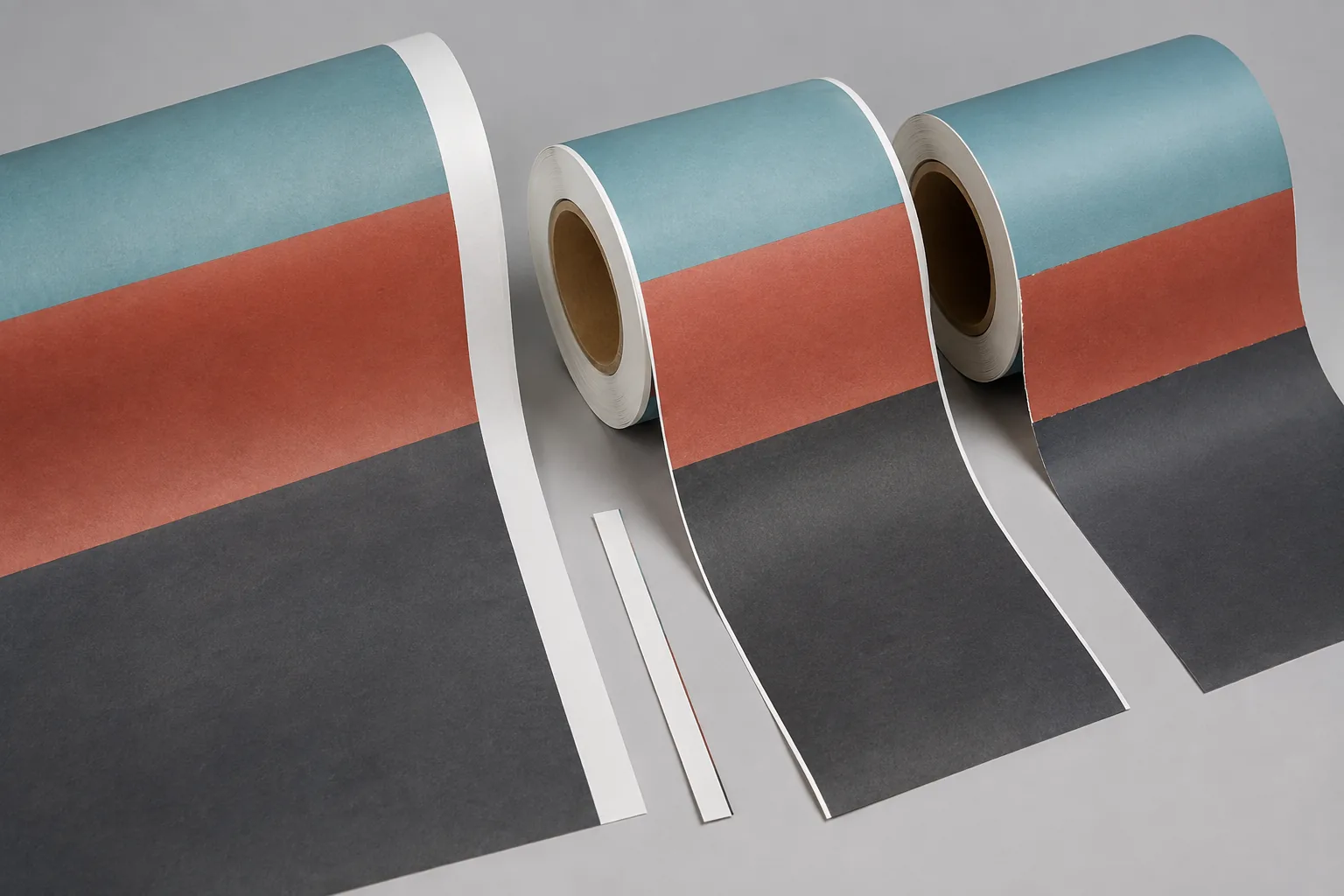
Edge trim on a printed web is both a cutting and register-control operation. The acceptable result depends on the distance from artwork, web tracking, ink or varnish condition, and reliable removal of the narrow waste strip.
Updated
Where This Cutting Application Appears
Web-offset press margin removal
Unprinted side margins are removed after the print section while the trim line must remain outside register and control marks.
Printed packaging-paper width correction
Decorated kraft or coated paper is trimmed before laminating, coating or bag making so the next station receives a stable web width.
Post-print reel preparation
Wide printed reels are edge-finished before rewinding or further conversion, with visible edge quality and roll build under review.
Web Edge Trimming process boundary
web edge trimming for printed paper webs is planned around removal of a defined excess allowance to establish a finished edge, end or perimeter without changing the intended main part geometry; it is not multi-width slitting, primary blank formation or general material size reduction.
Web Edge Trimming setup checkpoint
For printed paper webs, confirm trim allowance, finished datum, local support, positional control, part orientation and reliable removal of narrow or irregular waste.
Web Edge Trimming acceptance checkpoint
For printed paper webs, evaluate final dimension and edge position, straightness or contour continuity, burr or fray, surface damage and uninterrupted waste removal.
Define the Required Cut Result
- Keep the trim line clear of printed artwork
- Maintain the required geometry for web-offset press margin removal
- Protect material integrity during web edge trimming
- Deliver a cut condition accepted by the next production step
Problems to Diagnose Before Changing the Knife
Trim line moves into printed artwork
Compare register control, edge guide response, lateral web movement, trim position and the minimum artwork clearance.
Narrow waste strip breaks or wraps
Review waste width, paper strength, moisture, trim continuity, extraction path and the point where the strip loses tension.
Wet ink, varnish or coating deposits near the cut
Confirm cure state, print-side orientation, contact surfaces, temperature, cleaning interval and deposit location.
Dust or feathering contaminates the printed web
Inspect paper furnish, coating, extraction, edge support and whether particles transfer to rollers or later finishing steps.
Knife Forms That May Be Considered
| Possible knife form | When it may be considered | What must be confirmed |
|---|---|---|
| Circular shear trim pair | Consider for continuous printed webs with adjustable lateral trim position. | Confirm this form only from the printed paper webs sample, equipment interface, operating motion and approved drawing. |
| Score trim form | Consider only where the printed web and anvil arrangement support score cutting without marking the usable area. | Confirm this form only from the printed paper webs sample, equipment interface, operating motion and approved drawing. |
Information to Send for Technical Review
You do not need to know the exact blade name. Send the available workpiece, machine, current-knife and cut-result information so the application can be reviewed against a drawing or sample.
- Paper grade, basis weight, coating and moisture range
- Print process plus ink, varnish or coating cure condition
- Web width, finished width and minimum distance from artwork
- Register-mark location and edge-guide reference
- Line speed, web tension and direction through the trim station
- Waste-strip width, extraction or winding method and break history
- Current trim interface, lateral adjustment range and defect photos
- Downstream laminating, folding or bag-making acceptance requirements
Questions About This Cutting Application
How much clearance should be left between artwork and the trim line?
The required margin comes from print-register capability, web wander and finished-product tolerance. Provide the artwork reference and measured lateral variation rather than relying on a generic allowance.
Why does a narrow trim strip break repeatedly?
The strip may be too weak for the extraction path, or it may contain perforations, wet coating or an unstable edge. Record where the break starts and the web condition at that moment.
Can uncured ink affect the cutting review?
Yes. Ink or varnish can transfer to contact surfaces and change cleaning frequency or edge appearance. Samples should match the cure state at the actual trim station.
What data is needed when register drift is intermittent?
Provide time-linked records of edge-guide position, web tension, speed, roll location and defect photos. This helps separate cutting position from upstream web movement.
Does a clean edge prove the setup is suitable for printed production?
Not by itself. The trial must also protect artwork, maintain finished width, remove waste reliably and avoid transferring dust or coating into downstream processes.
Related product and service information
- Thermal Paper Roll Slitting Without Coating Damage - thermal paper rolls · roll slitting
- Kraft Paper Roll Slitting: Edge Quality and Dust - kraft paper rolls · roll slitting
- Lightweight Paper Web Slitting With Stable Edges - lightweight cigarette paper webs · web slitting
Request a Custom Cutting-Knife Review
Send the workpiece details, machine or holder information, current knife photos or sample, required quantity and examples of the present cut problem. Final dimensions, material, edge geometry and tolerances are confirmed from the approved requirements.