
Blade Application Guides / Application Guide / Paper and converting
Kraft Paper Roll Slitting: Edge Quality and Dust
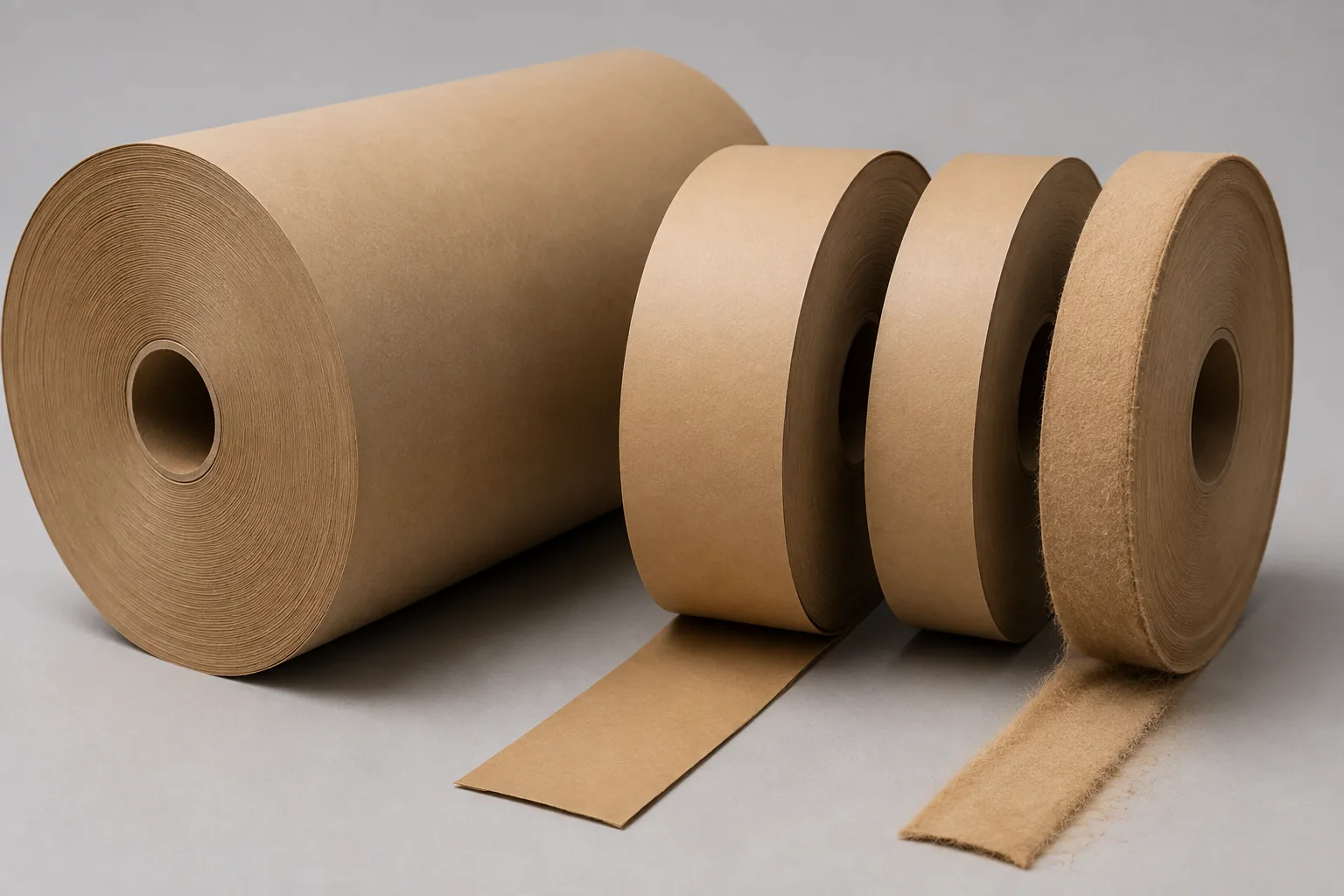
Kraft paper can release long fibers and dust when a master roll is slit, while moisture variation and winding tension may change how the edge behaves. Buyers should define the acceptable reel edge, dust level and width control before discussing a cutting setup.
Updated
Where This Cutting Application Appears
Sack and bag paper reel conversion
Master rolls are slit into narrower reels for sack, shopping-bag or wrapping-paper lines, where loose fibers can interfere with printing and forming.
Corrugating and laminating feed rolls
Kraft liners and laminating webs are width-converted before bonding, so edge straightness and reel build affect the downstream web path.
Protective paper and interleaving rolls
Narrow kraft reels are prepared for wrapping, pallet protection or interleaving, with emphasis on clean handling and consistent finished width.
Roll Slitting process boundary
Roll slitting divides a master roll longitudinally into narrower rolls; it does not separate the web transversely into sheets or fixed lengths.
Roll Slitting setup checkpoint
Confirm unwind and rewind tension, slit widths, knife positions, core alignment, trim removal and the winding behavior of every daughter roll.
Roll Slitting acceptance checkpoint
Inspect roll width, edge condition, telescoping, interleaving, debris and whether each rewound roll remains stable at the required diameter.
Define the Required Cut Result
- Control fiber dust along the slit edge
- Maintain the required geometry for sack and bag paper reel conversion
- Protect material integrity during roll slitting
- Deliver a cut condition accepted by the next production step
Problems to Diagnose Before Changing the Knife
Fiber dust along the slit edge
Compare paper furnish, basis weight, moisture, blade-side support, overlap or penetration, speed and dust extraction at accepted and rejected positions.
Wavy or feathered reel edges
Review cross-web moisture profile, tension, roll hardness, slit direction and whether waviness appears immediately or after rewinding.
Finished width drift across the roll
Check web guiding, shaft runout, spacer stack, lateral load, unwind alignment and the method used to verify reel width.
Telescoping or loose winding after slitting
Separate a cutting-edge issue from winding tension, core alignment and nip control by recording when reel layers begin to shift.
Knife Forms That May Be Considered
| Possible knife form | When it may be considered | What must be confirmed |
|---|---|---|
| Circular shear slitting | Consider where a driven or web-powered shear pair already controls kraft reel width. | Confirm this form only from the kraft paper rolls sample, equipment interface, operating motion and approved drawing. |
| Score slitting | Consider only where the line supports a score action against a compatible anvil surface. | Confirm this form only from the kraft paper rolls sample, equipment interface, operating motion and approved drawing. |
Information to Send for Technical Review
You do not need to know the exact blade name. Send the available workpiece, machine, current-knife and cut-result information so the application can be reviewed against a drawing or sample.
- Kraft grade, recycled-fiber content and basis-weight range
- Moisture range or conditioning practice before slitting
- Master-roll width, outside diameter, core size and roll hardness
- Required slit widths, width tolerances and edge acceptance samples
- Unwind and rewind direction, line speed and tension range
- Current slitting arrangement, mounting dimensions and side-load method
- Dust collection method and photos of feathering or edge wave
- Order quantity, roll destination, packing method and inspection plan
Questions About This Cutting Application
Why does a kraft reel produce more dust at some positions?
Fiber furnish, moisture, coating or sizing variation, local roll hardness and support at the cut can all change dust generation. Compare samples from the drive side, center and operator side before attributing the cause to one component.
Can edge waviness be corrected only by changing the knife?
Not necessarily. Cross-web moisture, unwind tension, roll hardness, web guidance and winding conditions should be checked with the cutting geometry because each can create a wavy edge.
What should be measured on a trial slit reel?
Record reel width at defined positions, edge feathering, dust level, roll build, telescoping, core alignment and the result during the next printing, laminating or bag-making step.
Is a kraft paper sample enough for technical review?
A material sample helps evaluate fiber behavior, but the review also needs roll data, speed, tension, mounting details and the current cut edge. Final dimensions must follow confirmed equipment data or an approved drawing.
Which cutting form should be quoted for this kraft line?
The form cannot be selected from the paper name alone. Confirm whether the line uses score, shear or another slitting action and provide the holder interface, rotation, overlap or penetration and an existing sample.
Related product and service information
- Laminated Paperboard Slitting Across Multiple Layers - laminated paperboard rolls · roll slitting
- Thermal Paper Roll Slitting Without Coating Damage - thermal paper rolls · roll slitting
- Printed Paper Web Edge Trimming and Register Protection - printed paper webs · web edge trimming
Request a Custom Cutting-Knife Review
Send the workpiece details, machine or holder information, current knife photos or sample, required quantity and examples of the present cut problem. Final dimensions, material, edge geometry and tolerances are confirmed from the approved requirements.