
Blade Application Guides / Application Guide / Specialty paper converting
Lightweight Paper Web Slitting With Stable Edges
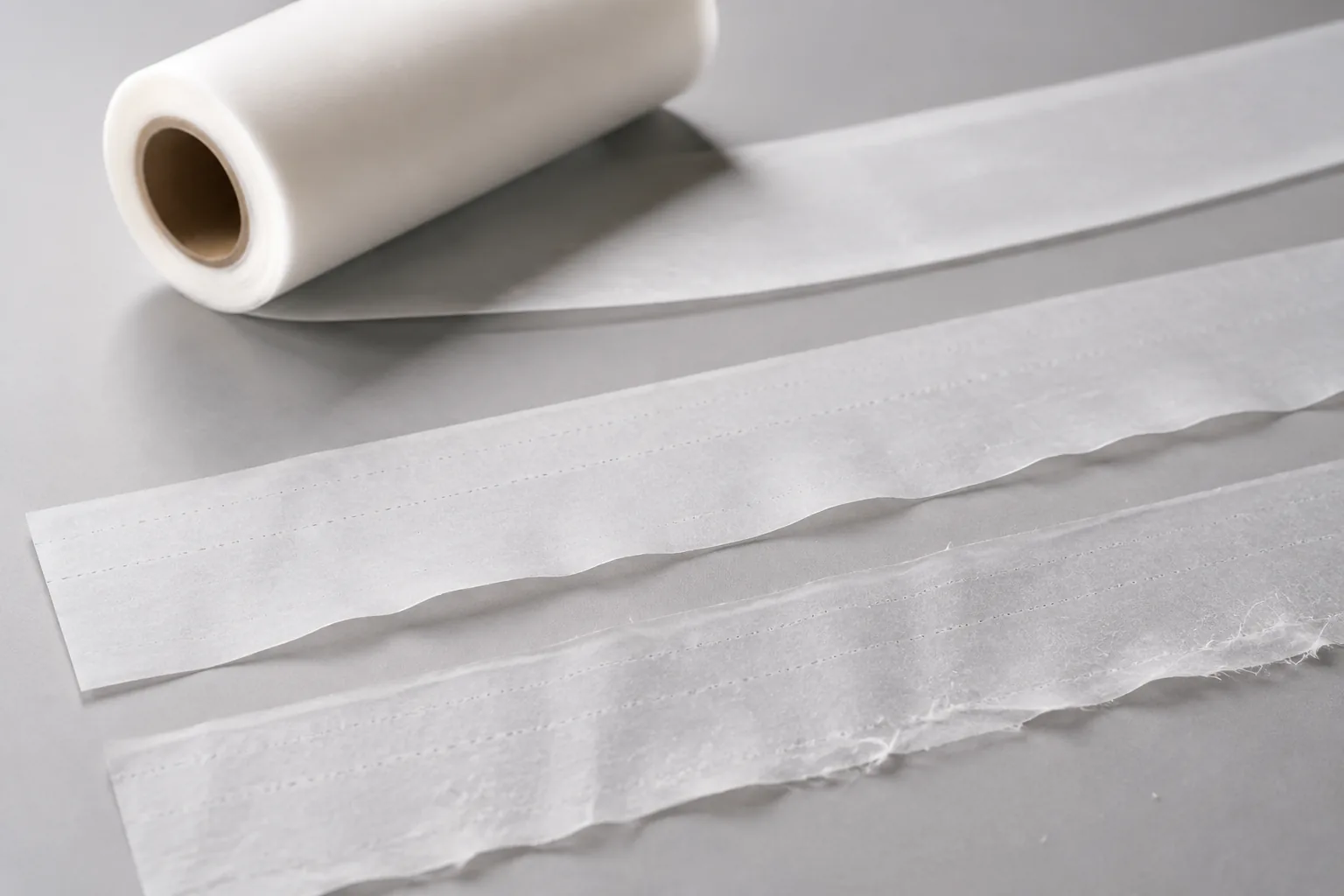
Lightweight cigarette paper has low tensile reserve and can react quickly to tension changes at a slit point. Width conversion should be reviewed together with porosity, perforation, print location, moisture, waste-strip handling, and finished-reel build.
Updated
Where This Cutting Application Appears
Cigarette paper reel width conversion
Master webs are slit into narrow reels for rod-making lines, where reel width, edge stability, and low break frequency support uninterrupted feeding.
Perforated paper lane separation
Perforated zones are divided into specified lanes without moving the slit into the functional porosity pattern or weakening the narrow web.
Printed cigarette paper finishing
Printed webs are trimmed to register margins while keeping ink, seam zones, and narrow waste strips under control.
Web Slitting process boundary
web slitting for lightweight cigarette paper webs is planned around longitudinal width conversion of a moving roll, web, sheet or strip into controlled lanes or daughter rolls; it is not transverse length cutting, profile formation or removal of only a narrow damaged margin.
Web Slitting setup checkpoint
For lightweight cigarette paper webs, confirm unwind and rewind tension, lane widths, knife positions, edge guidance, core alignment, trim removal and discharge behavior.
Web Slitting acceptance checkpoint
For lightweight cigarette paper webs, evaluate lane width, edge condition, camber or wandering, debris, telescoping, interleaving and stable winding or downstream transfer.
Define the Required Cut Result
- Maintain a stable edge on low-basis-weight paper
- Keep the slit outside printed and perforated functional areas
- Produce narrow reels without edge looseness or telescoping
- Minimize dust that could enter rod-making or inspection systems
Problems to Diagnose Before Changing the Knife
Web breaks beginning at the slit edge
Map the break origin against basis weight, moisture, perforation, print, splice position, tension spike, edge nick, and waste-strip removal.
Fluttering or wandering narrow lanes
Review unsupported span, air movement, tension isolation, guide response, slit width, and whether instability starts before or after separation.
Dust or fine fibers on the finished reel
Compare furnish, filler content, moisture, cutting action, extraction point, static charge, and buildup over the running length.
Loose or telescoped narrow reels
Check core alignment, differential winding, tension taper, lateral slit position, reel hardness, and storage immediately after conversion.
Knife Forms That May Be Considered
| Possible knife form | When it may be considered | What must be confirmed |
|---|---|---|
| Circular shear slitting | Consider where lightweight webs are continuously separated with controlled side load. | Confirm overlap, side force, holder accuracy, web direction, and actual paper samples on the intended line. |
| Score slitting | Consider only where the anvil system and paper response allow penetration without crushing or excessive dust. | Confirm anvil condition, penetration setting, tension, porosity zone, and the approved machine-interface drawing. |
Information to Send for Technical Review
You do not need to know the exact blade name. Send the available workpiece, machine, current-knife and cut-result information so the application can be reviewed against a drawing or sample.
- Paper basis weight, furnish, filler, and moisture range
- Porosity specification and perforated-zone layout
- Printed pattern, seam margin, and register references
- Master width, slit widths, core size, and finished reel diameter
- Line speed, unwind tension, rewind method, and tension taper
- Splice frequency, web-break map, and waste-strip route
- Dust acceptance and extraction or static-control arrangement
- Current slitting samples, holder interface, rotation, and drawing status
Questions About This Cutting Application
Why can a web break start beside a perforated zone?
Perforation reduces the remaining load-bearing section, and lateral tension or a nearby slit defect can concentrate stress there. Provide the zone layout and break-origin photos with line conditions.
How should edge flutter be investigated?
Record when flutter begins, unsupported span, lane width, air flow, tension before and after separation, and guide correction. Video can show whether the disturbance comes from cutting or transport.
Do printed cigarette papers need separate trials?
They may. Ink, varnish, register margin, and cure condition can affect friction, deposits, and allowable trim position, so production-equivalent printed samples are preferable.
What proves that a narrow reel is winding correctly?
Check width, edge alignment, reel hardness, telescoping, core location, and unwind behavior at the next process rather than judging the outer appearance alone.
Can a slit configuration be chosen only from paper basis weight?
No. Porosity, perforation, moisture, speed, tension, winding, and machine interface also matter. Confirm the setup with samples and an approved drawing.
Related product and service information
- Printed Paper Web Edge Trimming and Register Protection - printed paper webs · web edge trimming
- Kraft Paper Roll Slitting: Edge Quality and Dust - kraft paper rolls · roll slitting
- Thermal Paper Roll Slitting Without Coating Damage - thermal paper rolls · roll slitting
Request a Custom Cutting-Knife Review
Send the workpiece details, machine or holder information, current knife photos or sample, required quantity and examples of the present cut problem. Final dimensions, material, edge geometry and tolerances are confirmed from the approved requirements.