
Blade Application Guides / Application Guide / Pouch manufacturing
Pouch Film Cross Cutting for Accurate Bag Length
Cross cutting turns a moving pouch laminate into discrete blanks or separates a repeated web at a defined position. Accuracy depends on how print registration, web tension, feed measurement, laminate stiffness, sealing features, and the cutoff motion interact during acceleration and stopping.
Updated
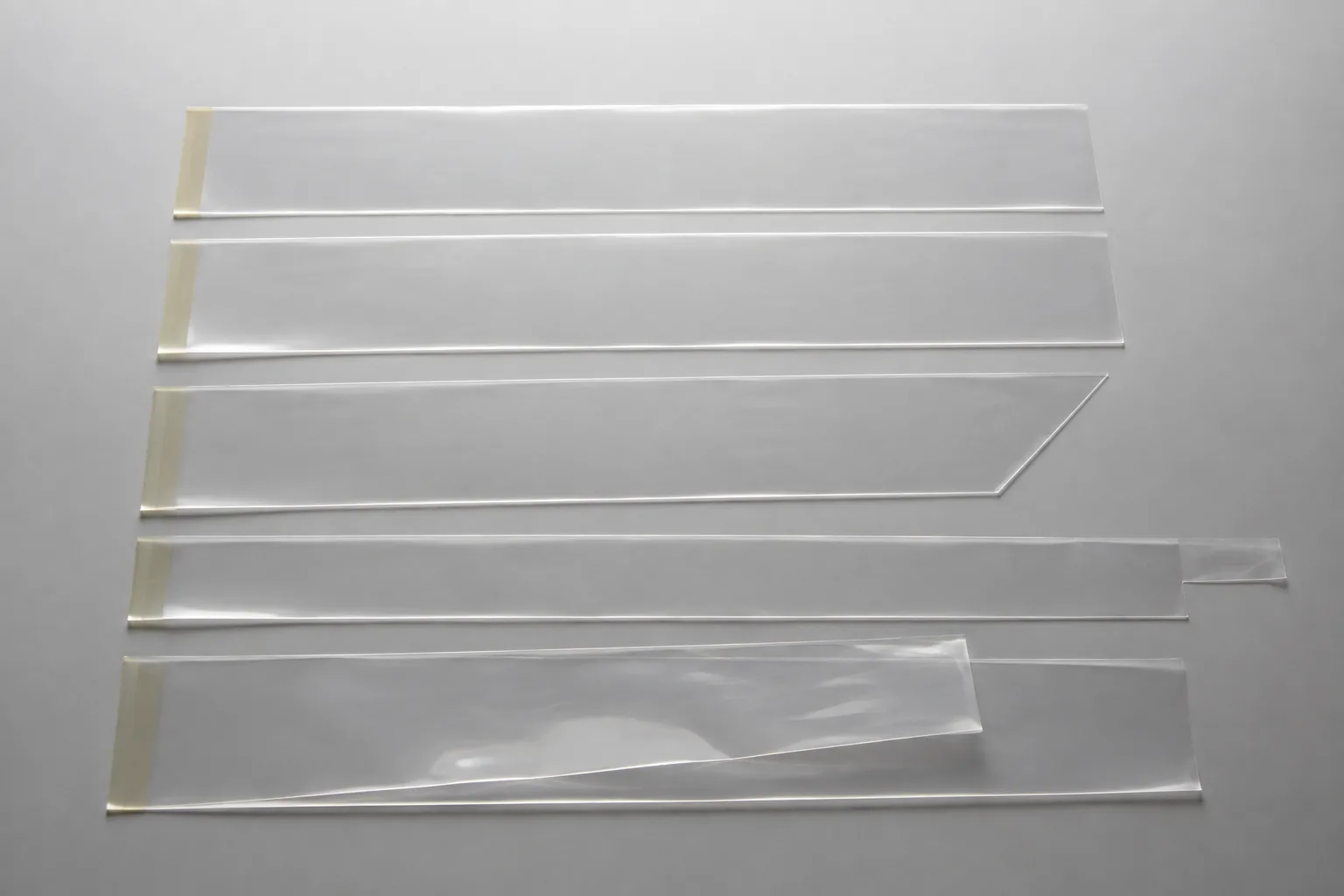
Where This Cutting Application Appears
Registered blanks for printed pouch panels
Printed laminate is cross cut relative to an eye mark or artwork datum so the blank length and graphic position meet the converting drawing.
Cutoff after gusset forming or web folding
Folded or gusseted web sections are separated to length while multiple plies remain aligned and thick transitions pass the cutting zone.
Unprinted roll stock converted to loose sheets
Barrier or sealant film is sheeted for later pouch prototyping, manual assembly, or another batch process with stack and static behavior controlled.
Cross Cutting process boundary
cross cutting for pouch-making film webs is planned around separation across the material flow or part axis to establish a controlled repeat length or finished end; it is not longitudinal width conversion, shaped contour production or particle-size reduction.
Cross Cutting setup checkpoint
For pouch-making film webs, confirm target length, datum or registration reference, feed indexing, support on both sides, cut timing and post-cut transfer.
Cross Cutting acceptance checkpoint
For pouch-making film webs, evaluate length distribution, squareness or cutoff angle, both cut faces, deformation, registration drift and stacking or discharge consistency.
Define the Required Cut Result
- Place each transverse cut at the specified print or dimensional repeat
- Keep the end square across flat, folded, or gusseted web sections
- Separate every laminate ply without tails, chips, or bond-line peel
- Discharge and stack light blanks without static-driven misalignment
Problems to Diagnose Before Changing the Knife
Blank length changes during acceleration or roll-diameter changes
Review encoder location, feed-roll slip, web tension, dancer response, registration correction, acceleration profile, roll inertia, and measurement under relaxation.
The cutoff is angled relative to the pouch print
Check web guiding, roller squareness, differential tension, print skew, knife alignment, hold-down timing, folded-edge thickness, and the selected reference datum.
One laminate layer stretches into a tail or delaminates
Examine layer structure, bond and cure, sealant toughness, knife speed, support gap, penetration, temperature, and whether the web moves during the stroke.
Cut blanks cling together or scatter at discharge
Review static charge, film face, humidity, air movement, discharge speed, stack support, surface treatment, and contact with belts or guides.
Knife Forms That May Be Considered
| Possible knife form | When it may be considered | What must be confirmed |
|---|---|---|
| Straight guillotine cutoff knife | Consider for indexed pouch web or sheet stacks where hold-down and a supported full-width stroke are available. | Confirm web state, maximum ply count, blade motion, support gap, hold-down, width, length tolerance, cycle rate, and interface drawing. |
| Rotary cross-cut knife | Consider for continuous or synchronized feed where cut timing must follow a repeated length or print registration signal. | Confirm repeat range, web speed, encoder and eye-mark control, cylinder interface, cut phase, laminate stack, and discharge arrangement. |
Information to Send for Technical Review
You do not need to know the exact blade name. Send the available workpiece, machine, current-knife and cut-result information so the application can be reviewed against a drawing or sample.
- Pouch-film laminate structure, total gauge, bond condition, sealant side, and web stiffness
- Flat, folded, tubular, or gusseted web state at the cutoff plus the maximum local ply count
- Print repeat, eye-mark dimensions, registration logic, artwork datum, and permissible cut-position error
- Blank length and width, squareness method, edge criteria, and relaxation time before measurement
- Feed speed, acceleration, stop-start or continuous motion, tension zones, dancer, and encoder location
- Knife stroke or rotary motion, support, hold-down timing, cycle rate, and equipment interface drawing
- Static-control and discharge arrangement, stack height, blank orientation, and observed handling defects
- Representative web, printed samples, failed cut ends, splice behavior, and downstream pouch-forming step
Questions About This Cutting Application
Why is pouch blank length correct at low speed but variable in production?
Feed slip, web stretch, dancer response, registration correction, roll inertia, and cutoff timing may change during acceleration. Record these signals at production speed.
How should a cross-cut squareness error be measured?
Reference the approved web edge, centerline, or printed datum and measure after the laminate has relaxed for the defined time; otherwise tension can mask the angle.
What makes a gusseted section harder to cut than flat film?
The knife crosses abrupt ply-count and stiffness changes. Local hold-down, support, cut motion, fold position, and layer alignment need review at those transitions.
Can a sharper edge alone eliminate laminate tails?
Not always. Bond condition, elastic sealant layers, support gap, blade velocity, penetration, web motion, and temperature can still stretch one ply beyond the cut.
What helps loose pouch blanks stack consistently?
Control static, discharge velocity, air movement, guide spacing, surface orientation, and blank flatness, then verify that the cutoff does not introduce curl.
Related product and service information
- Aluminum Foil Roll Slitting Without Edge Cracks - thin aluminum foil rolls · roll slitting
- Pharmaceutical Strip-Pack Foil Slitting - pharmaceutical strip-pack laminate foil · laminate slitting and rewinding
- Blister Lidding Foil Cutting Without Wrinkle Damage - blister lidding foil · profile cutting
Request a Custom Cutting-Knife Review
Send the workpiece details, machine or holder information, current knife photos or sample, required quantity and examples of the present cut problem. Final dimensions, material, edge geometry and tolerances are confirmed from the approved requirements.