
Blade Application Guides / Application Guide / Paper bag manufacturing
Paper Bag Patch Trimming for Consistent Bond Areas
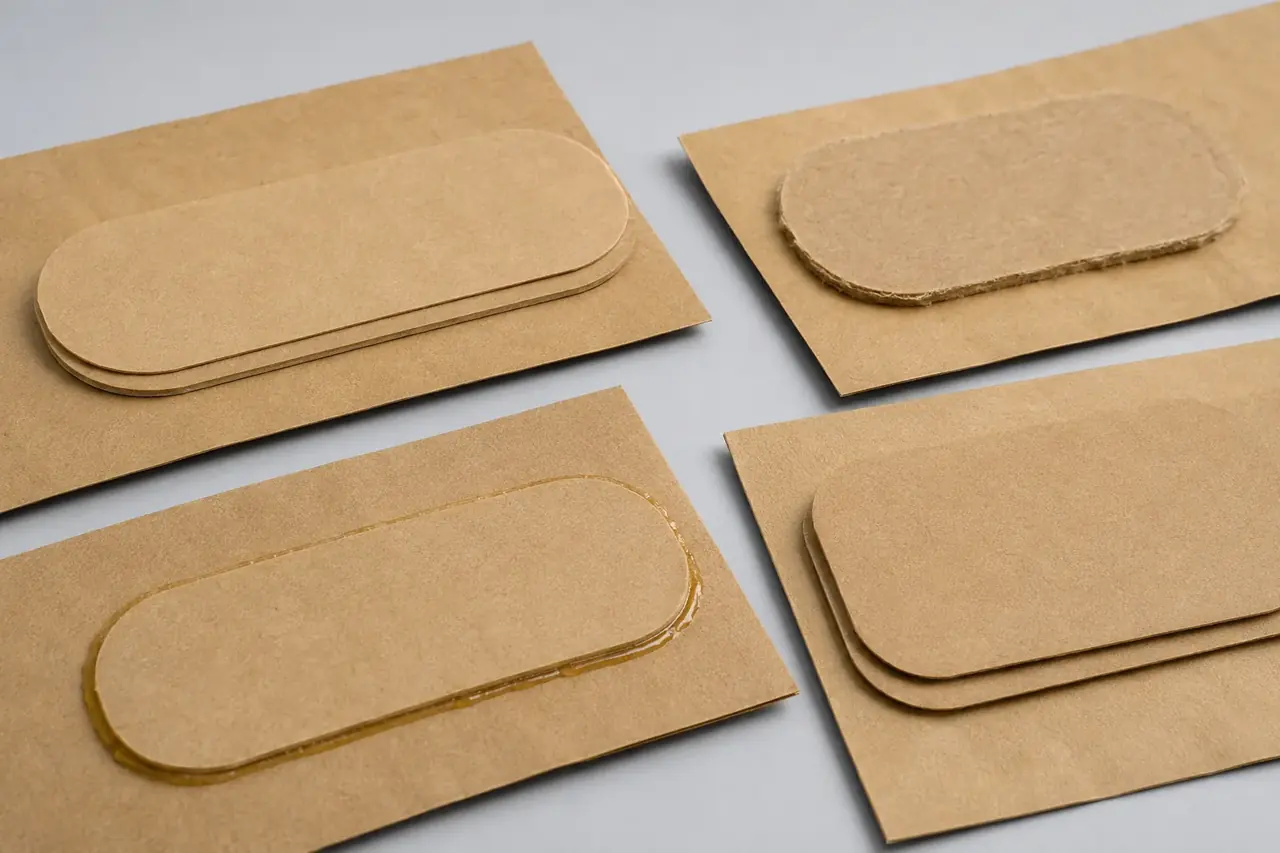
Reinforcement patches strengthen handles, valves, or bag bottoms only when their size and position cover the intended load path. Trimming should be reviewed with paper grain, adhesive state, registration, patch transfer, and the following folding or punching step.
Updated
Where This Cutting Application Appears
Handle reinforcement patch preparation
Paper patches are cut and placed behind handle openings so the bonded area supports the intended lifting zone.
Valve and spout patch conversion
Shaped patches are prepared for industrial sack valves where size, fold clearance, and adhesive coverage influence assembly.
Bottom and side-seam reinforcement
Rectangular or profiled paper pieces reinforce high-stress bag regions without obstructing folds, gussets, or sealing paths.
Patch Trimming process boundary
patch trimming for paper bag reinforcement patches is planned around removal of a defined excess allowance to establish a finished edge, end or perimeter without changing the intended main part geometry; it is not multi-width slitting, primary blank formation or general material size reduction.
Patch Trimming setup checkpoint
For paper bag reinforcement patches, confirm trim allowance, finished datum, local support, positional control, part orientation and reliable removal of narrow or irregular waste.
Patch Trimming acceptance checkpoint
For paper bag reinforcement patches, evaluate final dimension and edge position, straightness or contour continuity, burr or fray, surface damage and uninterrupted waste removal.
Define the Required Cut Result
- Hold patch area around the handle, valve, or seam load path
- Keep paper grain and cut orientation consistent for folding
- Produce fiber-clean edges that bond without raised tails
- Maintain registration between patch, adhesive, and bag feature
Problems to Diagnose Before Changing the Knife
Patch dimensions vary and reduce bond coverage
Check web feed, registration sensor, cut timing, paper stretch, moisture, datum, and measurements relative to the bag feature.
Loose fibers lift from the bonded patch edge
Review paper furnish, grain direction, moisture, edge support, adhesive contact, and whether fibers rise during transfer or pressing.
Adhesive accumulates around the patch outline
Identify pre-applied or in-line adhesive, coat pattern, tack, temperature, squeeze-out, cleaning interval, and deposit position.
Patch twists or misregisters during transfer
Trace static, vacuum or pickup method, cut release, patch curl, conveyor timing, orientation, and placement reference.
Knife Forms That May Be Considered
| Possible knife form | When it may be considered | What must be confirmed |
|---|---|---|
| Straight cutoff form | Consider for rectangular patches cut from a registered paper web. | Confirm patch length, web width, cut timing, paper grain, holder interface, and approved bag layout. |
| Profiled cutting form | Consider for handle, valve, or seam patches with shaped clearances. | Confirm CAD profile, radii, adhesive zone, transfer method, waste release, and production paper samples. |
Information to Send for Technical Review
You do not need to know the exact blade name. Send the available workpiece, machine, current-knife and cut-result information so the application can be reviewed against a drawing or sample.
- Patch paper grade, basis weight, grain direction, and moisture
- Patch shape, finished dimensions, radii, and tolerance priorities
- Handle, valve, seam, or bottom feature that the patch reinforces
- Bag web direction, gusset and fold positions, and registration marks
- Adhesive type, application stage, coat pattern, and open time
- Patch feed, pickup, transfer, and placement method
- Photos of low coverage, fiber lift, deposits, and misregistration
- Current cutting-part sample or drawing, cycle rate, volume, and bond test
Questions About This Cutting Application
How large should a handle reinforcement patch be?
Its size should follow the bag design, handle opening, load path, adhesive area, folds, and material strength. Use the approved bag layout rather than a generic patch allowance.
Why do fibers rise after the patch has been bonded?
A fuzzy edge can absorb or release unevenly under adhesive and pressure. Paper furnish, grain, cut direction, coat pattern, and transfer handling should be checked.
What causes a patch to rotate before placement?
Static, curl, incomplete cut release, pickup geometry, air flow, and timing can disturb orientation. Record the patch position immediately after cutting and at placement.
Should valve patches and handle patches share one profile rule?
No. Their load paths, folds, clearances, paper grades, and adhesive areas differ. Each approved bag construction needs its own controlled profile.
Can patch-cutting dimensions be taken from a finished bag?
A finished bag helps locate function, but folds and adhesive can hide the original blank. Provide the flat layout, material samples, interface, and approved drawing.
Related product and service information
- Paperboard Edge Protector Cutting for Square Ends - paperboard edge protectors · length cutting
- Folding Carton Die Cutting and Crease-Area Integrity - folding carton blanks · die cutting
- Solid Board Guillotine Cutting for Square Stacks - solid paperboard sheets · guillotine cutting
Request a Custom Cutting-Knife Review
Send the workpiece details, machine or holder information, current knife photos or sample, required quantity and examples of the present cut problem. Final dimensions, material, edge geometry and tolerances are confirmed from the approved requirements.