
Blade Application Guides / Application Guide / Folding carton production
Folding Carton Die Cutting and Crease-Area Integrity
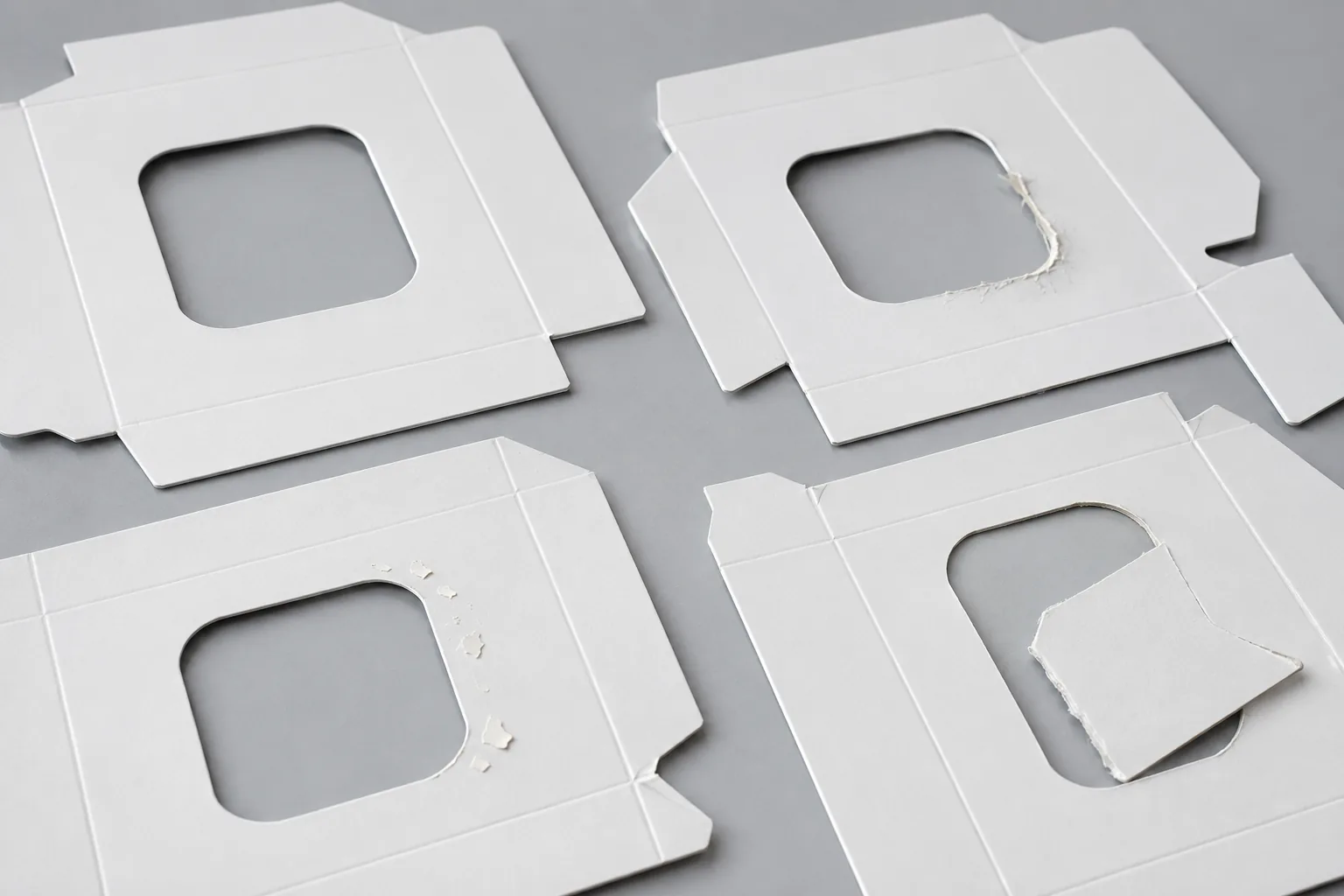
A folding-carton blank combines perimeter cuts, tabs, windows, nicks, and crease intersections in one registered layout. Technical review should protect printed surfaces and folding strength while ensuring that waste strips cleanly from small features.
Updated
Where This Cutting Application Appears
Retail folding-box blanking
Printed paperboard is cut into tuck-end, lock-bottom, or sleeve blanks where perimeter accuracy and visible-edge quality affect final assembly.
Window and display-carton profiling
Openings and display features are cut near printed or laminated areas, with small-radius quality and complete waste removal under review.
Pharmaceutical and cosmetic carton conversion
Closely registered panels, tabs, and code areas are die cut with tight attention to fiber debris, coating marks, and repeatable folding geometry.
Die Cutting process boundary
die cutting for folding carton blanks is planned around repeatable full or controlled-depth formation of a defined shape using registered tooling and a managed waste path; it is not straight slitting, simple length separation or narrow edge cleanup.
Die Cutting setup checkpoint
For folding carton blanks, confirm finished geometry, clearance or cutting depth, tool-to-anvil support, registration, feed orientation and waste or part release.
Die Cutting acceptance checkpoint
For folding carton blanks, evaluate complete geometry, dimensions, registration, burr or fiber pull, corner integrity, waste separation and part flatness.
Define the Required Cut Result
- Produce a smooth perimeter without fiber tags on visible panels
- Keep cuts aligned with printed artwork and crease datums
- Preserve board strength where cuts terminate beside creases
- Strip windows, holes, and narrow waste without damaging tabs
Problems to Diagnose Before Changing the Knife
Cracking where a cut meets a crease
Review fiber direction, board caliper, coating, crease depth, cut-to-crease distance, corner radius, and folding direction.
Fuzzy perimeter or uncut fiber tags
Compare board furnish, moisture, support, make-ready, wear location, and whether tags cluster on entry, exit, or grain-aligned edges.
Window waste remains attached
Inspect profile closure, small bridges, waste size, ejection or stripping arrangement, board warp, and the location of incomplete separation.
Printed coating scuffs or chips around features
Trace clamp or platen contact, trapped debris, ink and varnish cure, local pressure, and handling between cutting and stripping.
Knife Forms That May Be Considered
| Possible knife form | When it may be considered | What must be confirmed |
|---|---|---|
| Profiled straight cutting form | Consider for closed carton perimeters, windows, tabs, and locking features. | Confirm the complete CAD profile, radii, nicks, crease relationships, board range, and approved blank drawing. |
| Perforating form | Consider where a carton feature must tear predictably rather than separate completely. | Confirm cut-to-tie pattern, tear direction, board orientation, safety requirement, and representative opening trials. |
Information to Send for Technical Review
You do not need to know the exact blade name. Send the available workpiece, machine, current-knife and cut-result information so the application can be reviewed against a drawing or sample.
- Carton style and approved flat-blank CAD file
- Board grade, caliper, coating, laminate, and grain direction
- Printed artwork, register marks, varnish, and critical visible zones
- Cut, crease, perforation, and nick layers identified separately
- Minimum radii, narrow waste, small holes, and locking-tab dimensions
- Press or die-cutting method, support, make-ready, speed, and stripping system
- Fold test, edge, crack, debris, and waste-release acceptance samples
- Existing tooling reference, drawing revision, quantity, and inspection plan
Questions About This Cutting Application
Why can a carton crack where the cut meets a crease?
The intersection concentrates strain and may oppose the board grain or coating flexibility. Review the exact geometry, crease depth, fold direction, caliper, and production sample.
How should small window waste be evaluated?
Record whether waste releases in the press or stripping stage, where bridges remain, and whether removal distorts the surrounding panel or printed surface.
Do nicks belong in the cutting drawing?
Yes. Their position and purpose should be controlled because they affect blank handling and later stripping. Do not rely on undocumented shop-floor placement.
What production material is needed for a printed-carton trial?
Use the actual board with representative ink, varnish, laminate, grain direction, and moisture. Plain uncoated stock may hide cracking or scuffing risks.
Can a similar carton outline use the same cutting specification?
Only after comparing board, crease layout, radii, small features, register and equipment interface. Final compatibility must follow the approved blank and tooling drawings.
Related product and service information
- Molded Fiber Tray Inline Trimming and Die-Cutting Blades - Formed natural-fiber trays, lids, bowls and cups · Inline perimeter trimming and die-cutting
- Solid Board Guillotine Cutting for Square Stacks - solid paperboard sheets · guillotine cutting
- Label Kiss Cutting Without Damaging the Release Liner - self-adhesive labels · kiss cutting
Request a Custom Cutting-Knife Review
Send the workpiece details, machine or holder information, current knife photos or sample, required quantity and examples of the present cut problem. Final dimensions, material, edge geometry and tolerances are confirmed from the approved requirements.