
Blade Application Guides / Application Guide / Packaging board converting
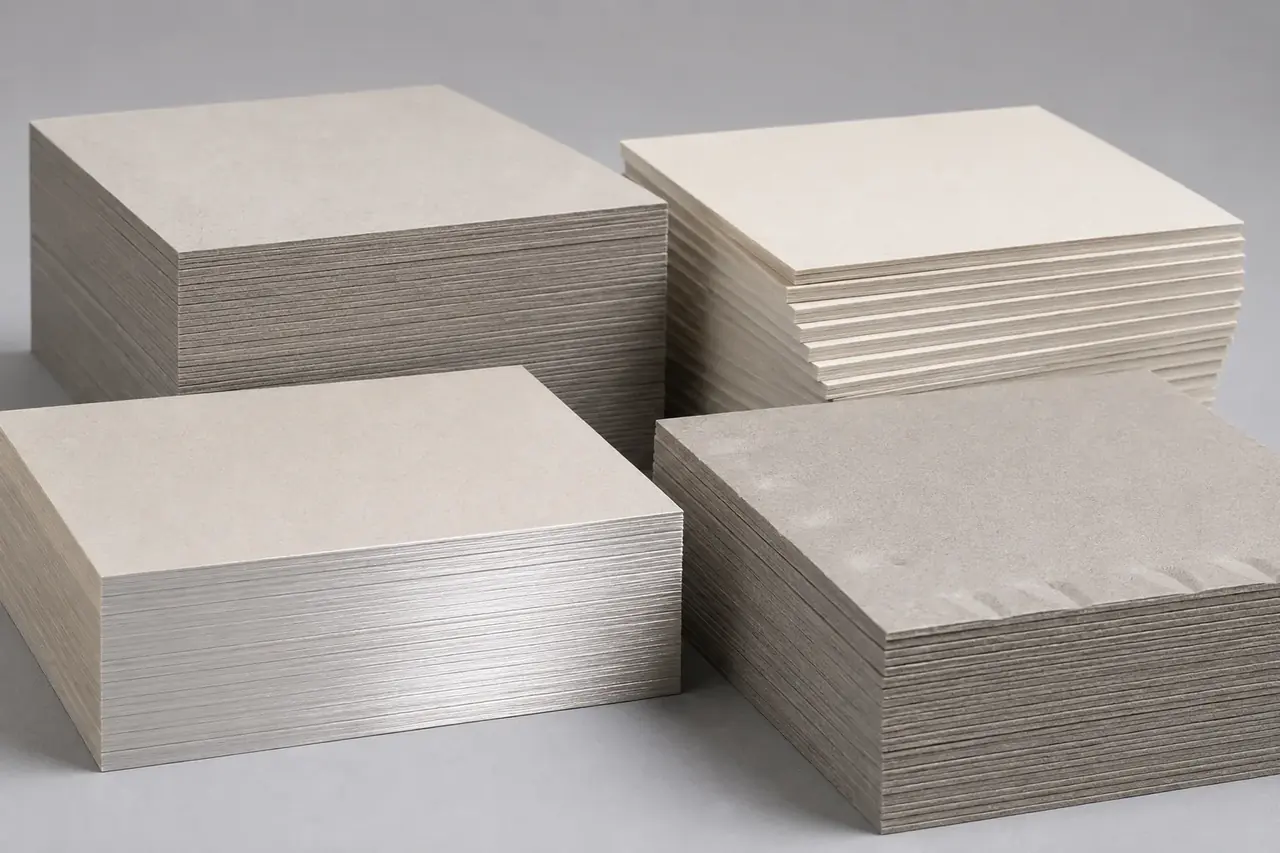
Solid Board Guillotine Cutting for Square Stacks
Guillotine cutting converts a pile of solid board in one stroke, so the top and bottom sheets may not experience the same support or movement. Stack height, board curl, grain direction, clamp loading, and back-gauge datum should be reviewed together.
Updated
Where This Cutting Application Appears
Boxboard sheet-format preparation
Large solid-board sheets are squared to press or die-cutter formats, where dimensional consistency supports registration in later operations.
Display and backing-board sizing
Thick or laminated boards are cut into panels with visible edges that must remain square and free from surface pressure marks.
Divider and insert blank preparation
Board stacks are portioned for packaging inserts before profiling, with reliable separation and low edge debris required for handling.
Guillotine Cutting process boundary
guillotine cutting for solid paperboard sheets is planned around separation across the material flow or part axis to establish a controlled repeat length or finished end; it is not longitudinal width conversion, shaped contour production or particle-size reduction.
Guillotine Cutting setup checkpoint
For solid paperboard sheets, confirm target length, datum or registration reference, feed indexing, support on both sides, cut timing and post-cut transfer.
Guillotine Cutting acceptance checkpoint
For solid paperboard sheets, evaluate length distribution, squareness or cutoff angle, both cut faces, deformation, registration drift and stacking or discharge consistency.
Define the Required Cut Result
- Keep the entire pile aligned through the cutting stroke
- Deliver square formats referenced to a consistent back-gauge datum
- Prevent coated sheets from fusing or sticking at the edge
- Avoid clamp impressions on visible board surfaces
Problems to Diagnose Before Changing the Knife
Top-to-bottom sheet size variation
Measure defined sheets through the pile and compare clamp pressure, stack height, sheet slip, board curl, back-gauge contact, and cutting sequence.
Out-of-square finished formats
Check incoming sheet squareness, side lay, back gauge, stack rotation between cuts, datum cleanliness, and diagonal measurements.
Polished or fused coated edges
Review coating type, stack compression, local heat, board moisture, cut speed, and how easily sheets separate after cutting.
Clamp bars mark or crack the board surface
Inspect clamp-face condition, pressure distribution, protective sheets, coating brittleness, trapped particles, and mark position.
Knife Forms That May Be Considered
| Possible knife form | When it may be considered | What must be confirmed |
|---|---|---|
| Straight guillotine form | Consider for pile cutting against the equipment's specified bed and clamp system. | Confirm length, section, bevel, mounting holes, cutting direction, machine interface, and the approved drawing. |
| Special straight form for heavy board | Consider only when thick or laminated board and the existing holder require a nonstandard section. | Confirm holder clearance, stack range, stroke, board samples, deflection concerns, and inspection datums. |
Information to Send for Technical Review
You do not need to know the exact blade name. Send the available workpiece, machine, current-knife and cut-result information so the application can be reviewed against a drawing or sample.
- Solid-board grade, fiber furnish, caliper, and grain direction
- Coating, lamination, surface finish, and moisture condition
- Incoming sheet size, curl, and squareness
- Maximum and typical stack height per cut
- Clamp type, pressure practice, bed, and back-gauge datum
- Cut sequence, stack rotation, format sizes, and tolerances
- Top, middle, and bottom sheet measurements with defect photos
- Existing guillotine-part drawing or sample, mounting, volume, and finish requirements
Questions About This Cutting Application
Why are bottom sheets a different size from top sheets?
Pile movement, clamp-pressure distribution, stack lean, curl, or cutting deflection may vary through the height. Label and measure sheets from several levels in the same cut.
How should squareness be verified after multiple guillotine cuts?
Use the same datum sequence as production, record adjacent-side lengths and diagonals where appropriate, and note every stack rotation between cuts.
What causes coated board edges to appear polished?
Compression, friction, local heating, soft coating, or a tall stack can create a shiny band. Check whether sheets also stick together or show coating transfer.
Should clamp marks be treated as a cutting-edge problem?
They should first be traced to clamp face, pressure, debris, protective sheets, and coating response. Their position relative to the cut helps separate the causes.
Can mounting dimensions be estimated from a paperboard sample?
No. The workpiece sample explains material behavior but not the machine interface. Provide the existing part or an approved equipment drawing before manufacture.
Related product and service information
- Abrasive Paper Cutting With Controlled Grit Shedding - abrasive paper sheets · sheet cutting
- Folding Carton Die Cutting and Crease-Area Integrity - folding carton blanks · die cutting
- Label Kiss Cutting Without Damaging the Release Liner - self-adhesive labels · kiss cutting
Request a Custom Cutting-Knife Review
Send the workpiece details, machine or holder information, current knife photos or sample, required quantity and examples of the present cut problem. Final dimensions, material, edge geometry and tolerances are confirmed from the approved requirements.