
Blade Application Guides / Application Guide / Adhesive tape converting
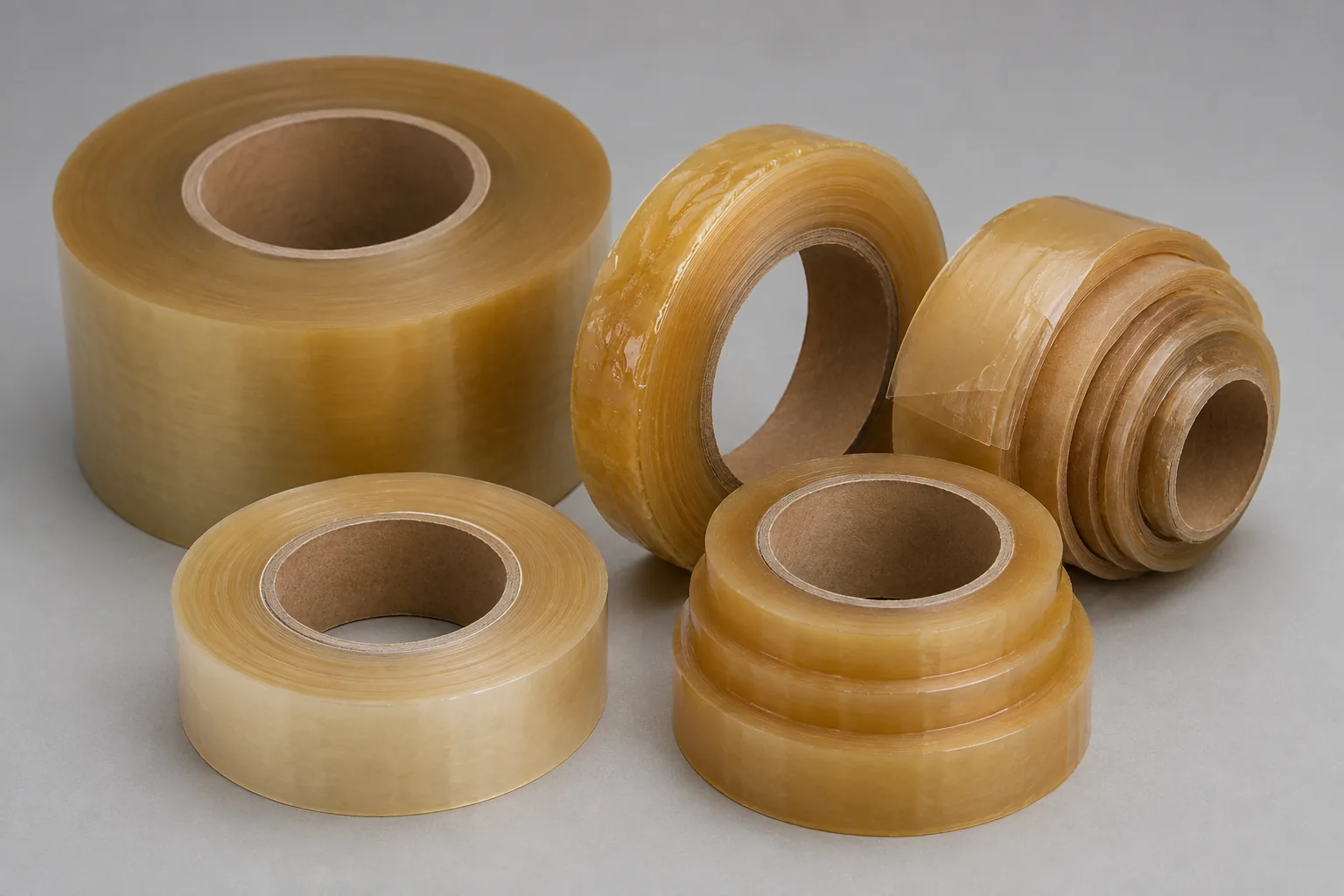
Packaging Tape Roll Slitting and Adhesive Buildup
Packaging tape slitting separates a pressure-sensitive laminate while the adhesive remains exposed at every new edge. Film backing, adhesive flow, roll temperature, side pressure, winding tension, and cleaning intervals should be reviewed as one operating system.
Updated
Where This Cutting Application Appears
BOPP carton-sealing tape conversion
Wide coated webs are slit into standard packing-tape reels, where adhesive deposits and film stretch can change edge quality during a long run.
Printed packaging-tape lane separation
Branded tape lanes are divided after printing while slit position must stay outside artwork and registration margins.
Machine-roll tape preparation
Long-length reels are prepared for automatic case sealers, with reel build, core alignment, and unwind stability checked before packing.
Roll Slitting process boundary
Roll slitting divides a master roll longitudinally into narrower rolls; it does not separate the web transversely into sheets or fixed lengths.
Roll Slitting setup checkpoint
Confirm unwind and rewind tension, slit widths, knife positions, core alignment, trim removal and the winding behavior of every daughter roll.
Roll Slitting acceptance checkpoint
Inspect roll width, edge condition, telescoping, interleaving, debris and whether each rewound roll remains stable at the required diameter.
Define the Required Cut Result
- Keep adhesive within the tape edge rather than smeared across the reel face
- Hold reel width as film tension and roll diameter change
- Produce aligned roll faces that unwind without edge snagging
- Extend stable run time between planned adhesive-cleaning stops
Problems to Diagnose Before Changing the Knife
Adhesive rings build on the cutting zone
Identify adhesive chemistry, coat weight, web temperature, side pressure, speed, cleaning agent, and deposit growth by running length.
Sticky or blocked finished reel faces
Review adhesive cold flow, winding pressure, storage temperature, edge smear, release treatment, and time between slitting and inspection.
Telescoped or dished tape reels
Check core position, differential winding, tension taper, film gauge, slit width, shaft expansion, and roll handling after conversion.
Nicked or stretched BOPP edges
Compare backing thickness, web tension, lateral load, overlap or penetration, holder runout, and whether edge damage worsens near splices.
Knife Forms That May Be Considered
| Possible knife form | When it may be considered | What must be confirmed |
|---|---|---|
| Circular shear slitting | Consider for continuous coated-film webs where overlap and side load can be controlled. | Confirm backing, adhesive, coated-side path, rotation, holder dimensions, and approved interface drawing. |
| Score slitting | Consider only where the anvil system and penetration do not cause unacceptable adhesive squeeze or film stretch. | Confirm anvil condition, penetration range, tape temperature, web tension, and production-equivalent samples. |
Information to Send for Technical Review
You do not need to know the exact blade name. Send the available workpiece, machine, current-knife and cut-result information so the application can be reviewed against a drawing or sample.
- Backing film type, gauge, treatment, and tensile direction
- Adhesive chemistry, coat weight, service range, and laminate age
- Master-roll width, diameter, core size, and roll hardness
- Finished reel widths, tolerances, lengths, and face-quality criteria
- Line speed, unwind tension, rewind method, and tension taper
- Current overlap, side force or penetration and holder interface
- Deposit photographs by run length plus cleaning method and frequency
- Printed status, downstream dispenser, volume, packing, and inspection needs
Questions About This Cutting Application
Why does adhesive buildup accelerate near the end of a run?
Heat, deposit transfer, changing roll diameter, pressure, and adhesive flow can accumulate over time. Record deposit position and reel temperature at defined running lengths.
How should a sticky reel face be evaluated?
Inspect immediately after slitting and after normal storage. Note blocking, adhesive squeeze, unwind force, edge transfer, temperature, and whether the condition differs across the master roll.
Can printed packing tape use the same slit positions as plain tape?
Only if artwork, register variation, backing, adhesive, and acceptable trim margins match. Send the printed lane layout and measured lateral web movement.
What causes a tape reel to telescope after it leaves the winder?
Core alignment, tension taper, film stretch, winding pressure, temperature, and handling may all contribute. Mark when and where layer movement first appears.
Can a slitting specification be selected from tape width alone?
No. The backing, adhesive, web path, winding, equipment interface, and accepted reel samples are also required before a drawing is approved.
Related product and service information
- Labelstock Roll Slitting With Liner and Adhesive Control - pressure-sensitive labelstock rolls · roll slitting
- Acrylic Foam Tape Roll Slitting Blades - acrylic foam tape · roll slitting
- Butyl Waterproof Tape Roll Slitting Blades - butyl waterproof tape · roll slitting
Request a Custom Cutting-Knife Review
Send the workpiece details, machine or holder information, current knife photos or sample, required quantity and examples of the present cut problem. Final dimensions, material, edge geometry and tolerances are confirmed from the approved requirements.