
Blade Application Guides / Application Guide / Label converting
Labelstock Roll Slitting With Liner and Adhesive Control
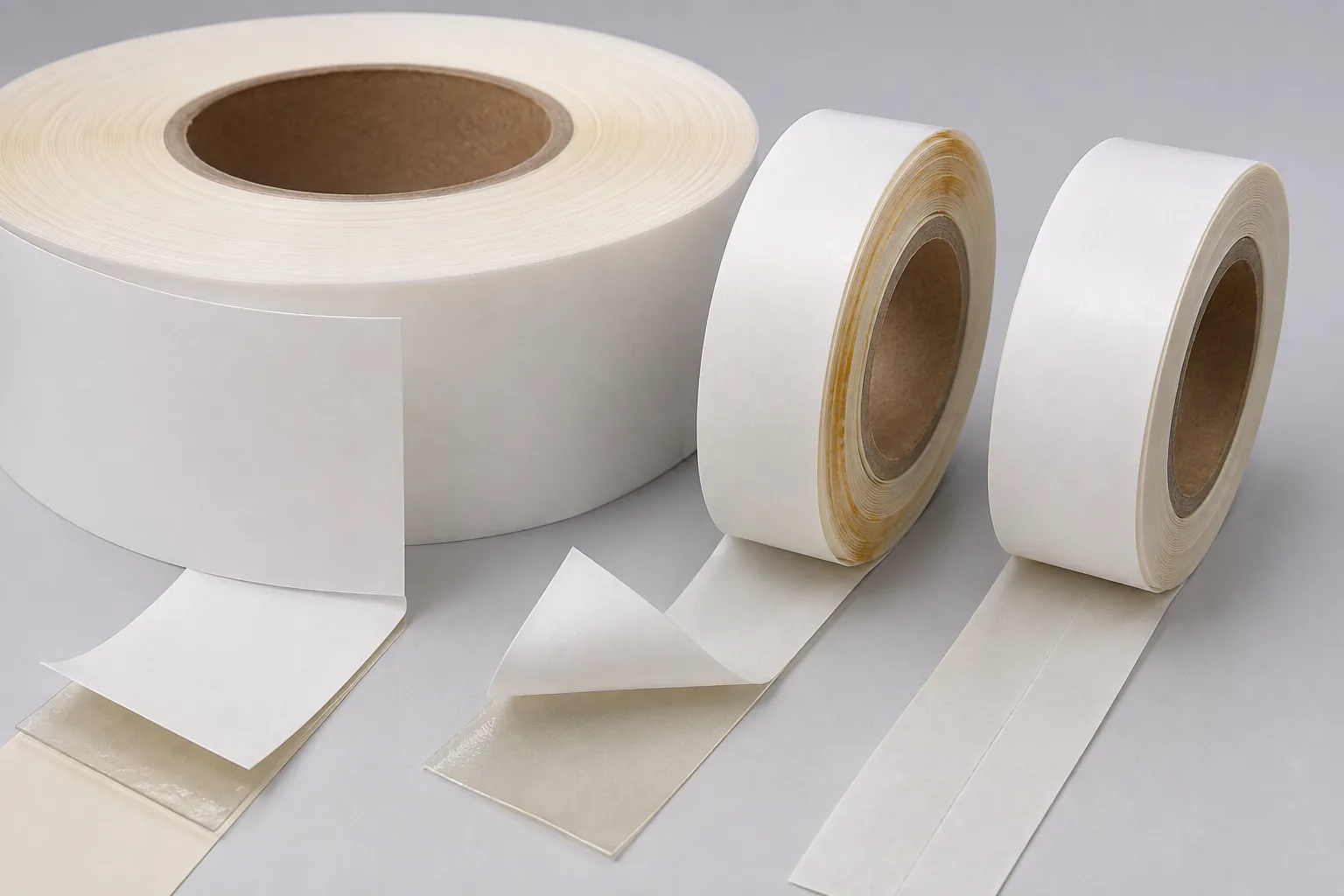
Pressure-sensitive labelstock is a layered web of face material, adhesive, and release liner. Slitting must keep those layers aligned while limiting adhesive pickup, liner damage, edge lift, and winding defects that affect printing or die cutting.
Updated
Where This Cutting Application Appears
Print-ready label reel preparation
Master labelstock is slit to press width while reel edges, liner integrity, and adhesive cleanliness must support reliable web transport.
Post-print lane separation
Printed lanes are separated before finishing, with slit position controlled against artwork, register marks, and matrix-removal zones.
Narrow-roll preparation for die cutting
Labelstock is converted to the width needed by rotary or flatbed finishing equipment without scoring the release liner or lifting the face stock.
Roll Slitting process boundary
Roll slitting divides a master roll longitudinally into narrower rolls; it does not separate the web transversely into sheets or fixed lengths.
Roll Slitting setup checkpoint
Confirm unwind and rewind tension, slit widths, knife positions, core alignment, trim removal and the winding behavior of every daughter roll.
Roll Slitting acceptance checkpoint
Inspect roll width, edge condition, telescoping, interleaving, debris and whether each rewound roll remains stable at the required diameter.
Define the Required Cut Result
- Keep face stock, adhesive, and release liner aligned at the reel edge
- Prevent adhesive from transferring to cutting and guide surfaces
- Avoid liner scoring that causes web breaks or premature release
- Hold slit width and register margin for printing and die cutting
Problems to Diagnose Before Changing the Knife
Adhesive ooze and deposit buildup
Identify adhesive type and coat weight, web temperature, edge pressure, line speed, storage age, cleaning interval, and deposit position.
Release liner scoring or fracture
Review liner material, caliper, penetration or overlap, side load, tension, splice condition, and whether damage appears continuously or locally.
Face-stock lift or edge curl
Compare paper or film face stock, adhesive bond, laminate tension, slit direction, narrow width, winding direction, and conditioning.
Reel width drift or telescoping
Check edge guiding, master-roll alignment, core position, differential winding, tension taper, holder runout, and width by reel position.
Knife Forms That May Be Considered
| Possible knife form | When it may be considered | What must be confirmed |
|---|---|---|
| Circular shear slitting | Consider when layered labelstock requires supported separation with controlled side load. | Confirm face stock, adhesive, liner, overlap, rotation, holder interface, and approved slitting dimensions. |
| Score slitting | Consider only where the anvil system and penetration can cut the full laminate without unacceptable liner damage. | Confirm liner response, anvil condition, penetration range, web tension, and production-equivalent samples. |
Information to Send for Technical Review
You do not need to know the exact blade name. Send the available workpiece, machine, current-knife and cut-result information so the application can be reviewed against a drawing or sample.
- Face-stock material, thickness, coating, and print status
- Adhesive chemistry, coat weight, service temperature, and laminate age
- Release-liner material, caliper, release coating, and orientation
- Master-roll width and diameter, core size, and roll hardness
- Required reel widths, register margins, and tolerance priorities
- Line speed, web tension, winding method, and coated-side path
- Photos of adhesive deposits, liner scoring, edge lift, and telescoping
- Existing slitting setup or sample, downstream press, and inspection criteria
Questions About This Cutting Application
Why does adhesive buildup increase during a long labelstock run?
Web temperature, pressure at the edge, adhesive flow, contamination, and cleaning interval can change during production. Record deposit growth by running length and reel position.
How can hidden release-liner damage be detected?
Inspect the liner under controlled peel and bending, map score lines, and test unwind through the next process. A face stock that looks intact may conceal a weakened liner.
Do paper and film face stocks need different trials?
Usually they should be compared because stiffness, stretch, curl, adhesive bond, static, and heat response differ. Use the actual face-stock and liner combinations.
What data connects slitting to later matrix stripping?
Provide slit position relative to label lanes, liner condition, matrix width, die-cut layout, web tension, and where breaks or edge lift occur during stripping.
Can a labelstock knife be selected only from total laminate thickness?
No. Layer materials, adhesive behavior, liner limits, winding, cutting action, and equipment interface also require review before approving a drawing.
Related product and service information
- Tamper-Evident Tear Tape Narrow-Roll Slitting Blades - Tamper-evident and easy-open tear tape jumbo rolls · Precision narrow-web slitting and rewinding
- Packaging Tape Roll Slitting and Adhesive Buildup - packaging tape rolls · roll slitting
- Double-Sided Tape Slitting With Release-Liner Control - double-sided adhesive tape · slitting
Request a Custom Cutting-Knife Review
Send the workpiece details, machine or holder information, current knife photos or sample, required quantity and examples of the present cut problem. Final dimensions, material, edge geometry and tolerances are confirmed from the approved requirements.