
Blade Application Guides / Application Guide / Adhesive tape converting
Acrylic Foam Tape Roll Slitting Blades
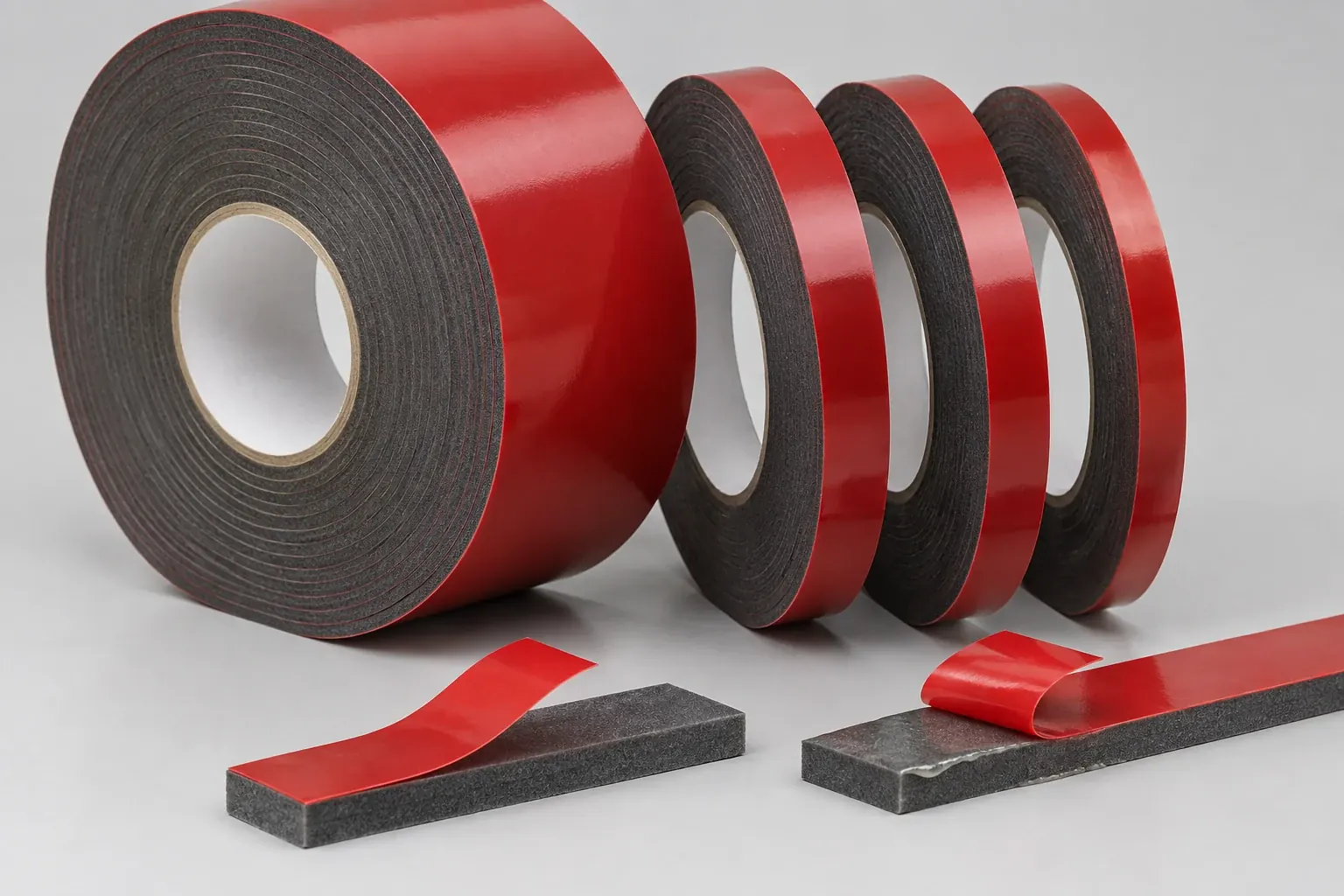
Acrylic Foam Tape combines a viscoelastic acrylic foam core with pressure-sensitive adhesive and release liner. During roll slitting, its layers can respond differently to pressure, tension and temperature. A useful technical review connects the accepted cut condition with material construction, machine interface, production speed and downstream bonding requirements.
Updated
Where This Cutting Application Appears
Automotive trim mounting
Prepare stable-width rolls, strips or shaped pads for bonding badges, moldings and exterior trim.
Electronic assembly bonding
Convert clean pads and frames for displays, housings and components that require controlled bond-line thickness.
Sign and panel attachment
Produce mounting formats with consistent edges for signs, panels, glazing bars and architectural profiles.
Roll Slitting process boundary
Roll slitting divides a master roll longitudinally into narrower rolls; it does not separate the web transversely into sheets or fixed lengths.
Roll Slitting setup checkpoint
Confirm unwind and rewind tension, slit widths, knife positions, core alignment, trim removal and the winding behavior of every daughter roll.
Roll Slitting acceptance checkpoint
Inspect roll width, edge condition, telescoping, interleaving, debris and whether each rewound roll remains stable at the required diameter.
Define the Required Cut Result
- Hold slit width and straightness across the full master roll.
- Build stable rewind rolls with clean, parallel faces.
- Limit compression and preserve foam-cell structure.
- Keep adhesive and release-liner edges aligned.
Problems to Diagnose Before Changing the Knife
Width drifts from operator side to drive side
Check web guiding, shaft runout, spacer stack, side load, roll hardness and the width-measurement method.
Foam compresses or necks at the cut
Compare tape thickness, temperature, support, feed pressure and recovery time before measuring the finished geometry.
Adhesive transfers or squeezes beyond the edge
Review adhesive rheology, liner condition, roll temperature, contact pressure and cleaning interval.
Release liner lifts or shifts
Check liner stiffness, winding direction, differential tension, support and separation angle.
Knife Forms That May Be Considered
| Possible knife form | When it may be considered | What must be confirmed |
|---|---|---|
| Circular shear slitting arrangement | For supported, precision width conversion where a paired rotary shear station is available. | Confirm only from the actual acrylic foam tape sample, equipment interface, operating motion and approved drawing. |
| Crush or score slitting arrangement | Only where the material construction and compatible anvil system support controlled score penetration. | Confirm only from the actual acrylic foam tape sample, equipment interface, operating motion and approved drawing. |
Information to Send for Technical Review
You do not need to know the exact blade name. Send the available workpiece, machine, current-knife and cut-result information so the application can be reviewed against a drawing or sample.
- Acrylic chemistry, foam density, color and nominal thickness
- Adhesive coat on one or both faces and release-liner construction
- Master-roll width, outside diameter, core size and winding direction
- Required slit widths, width tolerance, rewind diameter and roll-face acceptance
- Line speed, tension, temperature, support and cleaning practice
- Current cutting arrangement, holder drawing, setup dimensions and used sample
- Accepted and rejected samples with edge, adhesive, liner and dimensional limits
- Downstream bonding process, packing method, order quantity and inspection plan
Questions About This Cutting Application
Why must acrylic foam tape be reviewed as a complete construction?
The carrier, adhesive, liner and any facing have different stiffness, friction and recovery. Their interaction determines the cut edge and finished geometry.
Can the knife form be chosen from the tape name alone?
No. Confirm the roll slitting motion, support, holder interface, speed, dimensions and accepted samples before selecting a configuration.
Why does adhesive buildup change during a production run?
Temperature, dwell time, contact pressure, adhesive rheology, contamination and cleaning intervals can progressively change transfer at the cutting edge.
When should converted dimensions be measured?
Record immediate results and conditioned results because elastic recovery, liner stress and adhesive flow can change dimensions after cutting.
What should a conversion trial record?
Record speed, tension, temperature, setup, dimensions, edge condition, liner integrity, waste behavior and performance in the next bonding or assembly step.
Related product and service information
- Acrylic Foam Tape Edge-Trimming Blades - acrylic foam tape · width edge trimming
- Butyl Waterproof Tape Roll Slitting Blades - butyl waterproof tape · roll slitting
- Copper Foil EMI Tape Roll Slitting Blades - copper foil EMI tape · roll slitting
Request a Custom Cutting-Knife Review
Send the workpiece details, machine or holder information, current knife photos or sample, required quantity and examples of the present cut problem. Final dimensions, material, edge geometry and tolerances are confirmed from the approved requirements.