
Blade Application Guides / Application Guide / Easy-open and tamper-evident packaging
Tamper-Evident Tear Tape Narrow-Roll Slitting Blades
Tamper-evident tear tape slitting blades convert wider tape stock into narrow rolls used to open cartons, overwraps and flexible packages. The web may include oriented polymer film, printed features, coatings or pressure-sensitive adhesive, so review should cover the construction, finished width, web orientation, tension path, edge requirement and rewinding behavior rather than treating it as ordinary packaging tape.
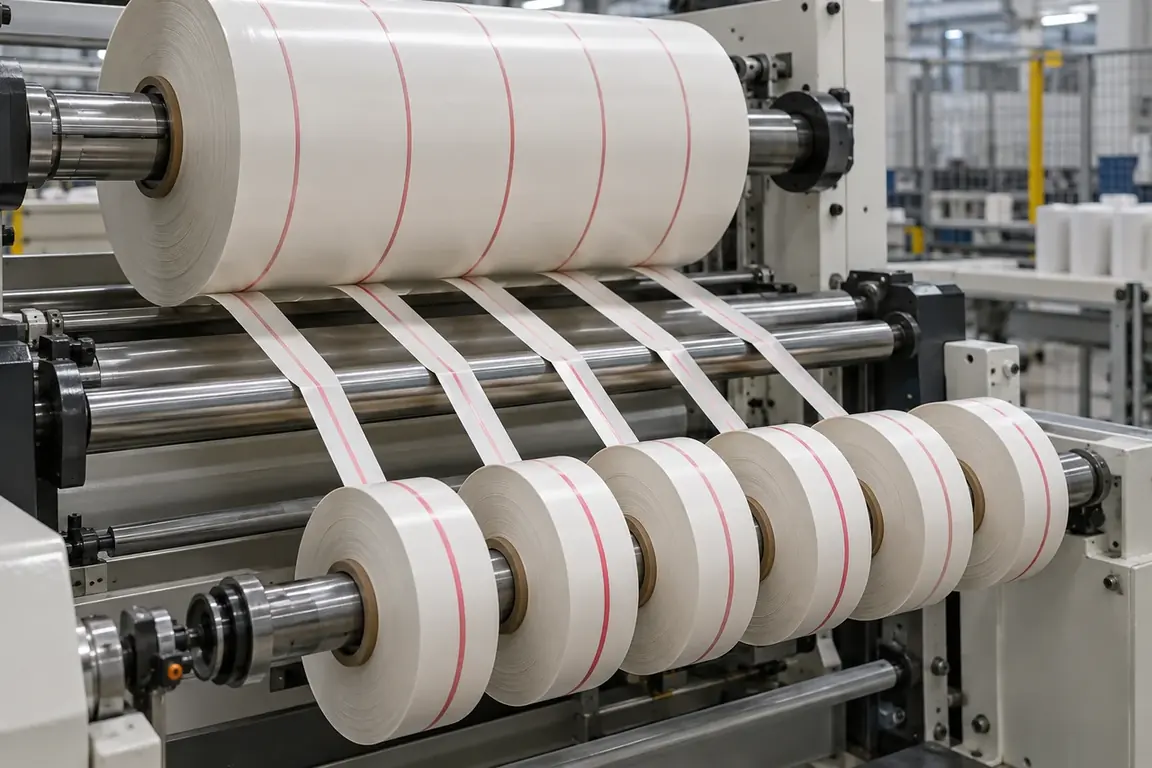
Where This Cutting Application Appears
Carton opening tear tape
Narrow rolls are prepared for integration into corrugated or paperboard easy-open systems.
Flexible overwrap tear strips
Polymer tear tape is slit for controlled placement in film overwrap packages.
Printed tamper-evident strips
Printed web is converted while maintaining the required relationship between graphics and edge.
Common Ways to Describe This Cutting Problem
- tamper-evident tear tape slitting blades
- easy-open tear strip narrow roll slitter knives
- packaging tear tape jumbo roll cutting blades
- adhesive tear tape precision slitting knife
- printed tear strip edge trimming blades
- tear tape width control slitter tooling
- tamper strip roll rewinding cutting blades
- custom narrow tear tape slitting knife
Define the Required Cut Result
- Consistent narrow finished width across the usable roll length.
- Clean edges without splits, feathering, adhesive strings or curl.
- Stable winding without telescoping, blocking or distorted roll faces.
- Preserved printed, coated and directional tear features.
Problems to Diagnose Before Changing the Knife
Finished tape width drifts along the roll
- Measure slit position at several roll locations.
- Review guiding, blade positioning and lateral web movement.
- Check whether drift changes with diameter, splice or tension.
Adhesive accumulates at the slit edge
- Identify adhesive type, coating pattern and exposed cut-line adhesive.
- Record buildup location and interval before quality changes.
- Review material temperature, storage and approved cleaning practice.
Narrow tape curls, twists or splits
- Confirm film orientation, layer symmetry and feed direction.
- Compare both edges created by the same slit pair.
- Review tension and winding for accepted and rejected rolls.
Finished rolls telescope or show uneven faces
- Inspect core alignment, winding tension and roll support.
- Check whether contamination or width variation changes roll build.
- Compare startup, steady production and final-diameter behavior.
Knife Forms That May Be Considered
| Possible knife form | When it may be considered | What must be confirmed |
|---|---|---|
| Rotary shear slitting arrangement | For supported narrow-web conversion on compatible slitters. | Material stack, slit layout, shafts, overlap control, web path and edge sample. |
| Score slitting arrangement | For constructions designed to separate tape against a controlled support surface. | Support roll, tape hardness, adhesive exposure, edge requirement and holder loading. |
| Supported razor slitting arrangement | For thin film-based tear tape where web path and material behavior permit it. | Film orientation, thickness range, holder, support, speed range and roll quality. |
Information to Send for Technical Review
You do not need to know the exact blade name. Send the available workpiece, machine, current-knife and cut-result information so the application can be reviewed against a drawing or sample.
- Tape construction, polymer orientation, coatings and adhesive description.
- Parent width, finished widths and slit-pattern drawing.
- Feed direction and printed or directional feature locations.
- Slitter model, holder interface, shafts, supports and web path.
- Winding cores, finished diameter range and tension method.
- Accepted and rejected rolls showing edges and unwind behavior.
- Operating environment, cleaning interval and buildup location.
- Trial quantity and current cutting-component information.
Questions About This Cutting Application
How does tear tape differ from general packaging tape?
It is often much narrower and may have directional film or printed registration.
Should adhesive and non-adhesive tape use the same method?
Not automatically; adhesive exposure, support and machine design must be reviewed.
What should be supplied for width drift?
Provide the slit layout, roll measurements, parent web and guiding information.
Why does roll-face quality matter?
Poor roll build can reveal width, tension or contamination problems affecting application.
Can finished width alone define the blade?
No; material, slit pattern, holder interface, web path and edge requirement are needed.
Request a Custom Cutting-Knife Review
Send the workpiece details, machine or holder information, current knife photos or sample, required quantity and examples of the present cut problem. Final dimensions, material, edge geometry and tolerances are confirmed from the approved requirements.