
Blade Application Guides / Application Guide / composite materials
Cutting Fiberglass Chopped-Strand Mat
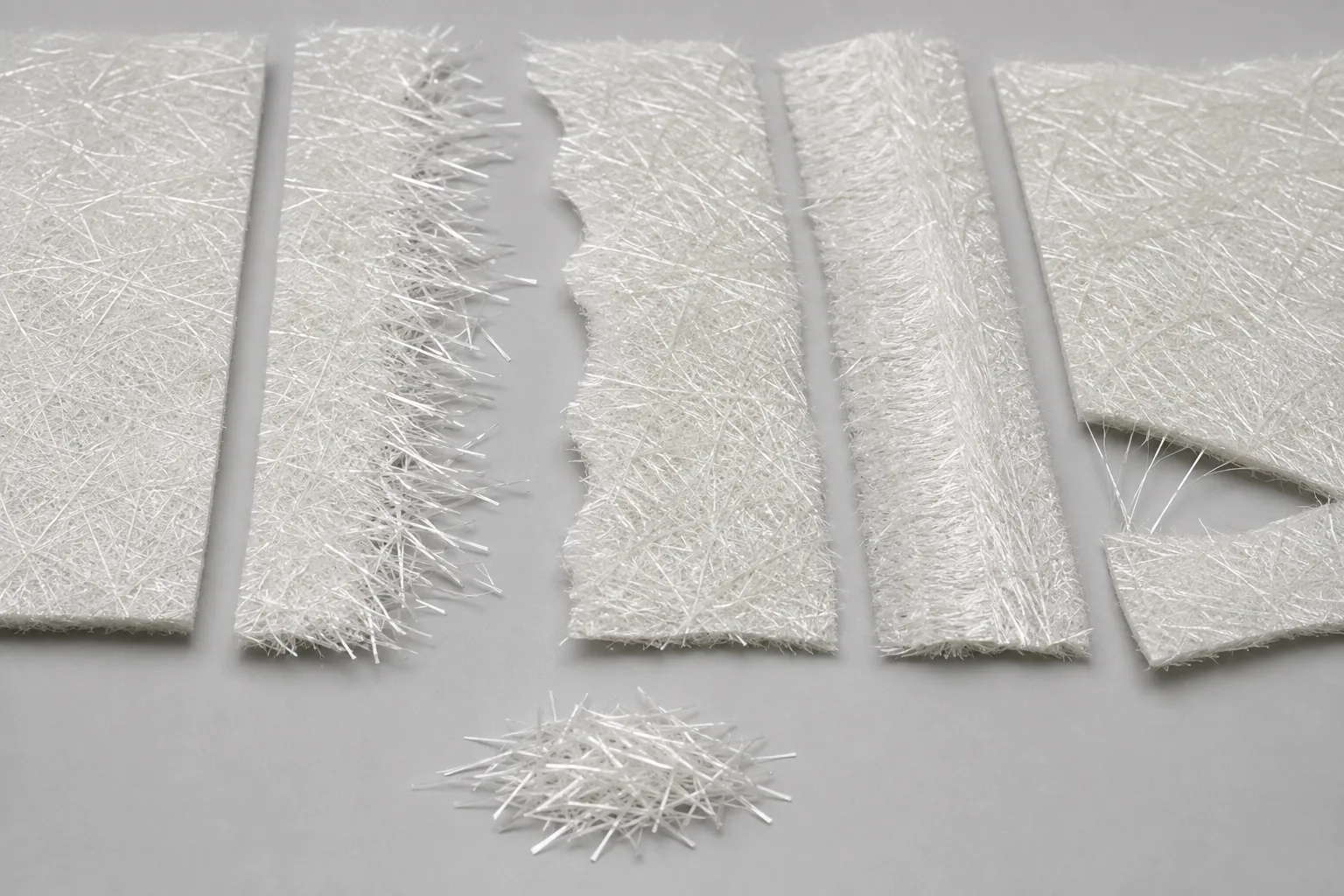
Chopped-strand mat is a random glass-fiber network held by binder, so it sheds differently from woven reinforcement. Support and a progressive cut help prevent the mat from bunching while abrasive fibers steadily change edge condition.
Updated
Where This Cutting Application Appears
Mat roll sheeting
Cuts reinforcement sheets before layup or molding.
Edge trim for fixed-width rolls
Removes loose margins before winding.
Kit and patch preparation
Produces shaped reinforcement pieces for manual layup.
Sheet Cutting And Trimming process boundary
sheet cutting and trimming for fiberglass chopped-strand mat is a linked sequence: the output condition and datum from each operation become the controlled input for the next. It should not be evaluated as one generic cut or accepted only by the final dimension.
Sheet Cutting And Trimming setup checkpoint
For fiberglass chopped-strand mat, define the operation order, intermediate dimensions, registration transfer, material support, web or part handling and waste route for every stage of sheet cutting and trimming.
Sheet Cutting And Trimming acceptance checkpoint
Verify both intermediate and final results from sheet cutting and trimming, including dimensions, registration, edge or feature quality, material damage, waste separation and stable transfer between stages.
Define the Required Cut Result
- Fully separated random fibers
- Low shedding
- Limited compression
- Accurate sheet or profile
Problems to Diagnose Before Changing the Knife
Loose fiber
- Check binder level
- Inspect edge wear
- Review extraction
Uneven edge
- Support the mat
- Check feed skew
- Inspect cutting direction
Mat compression
- Reduce hold-down
- Measure recovery
- Check edge force
Rapid wear
- Identify glass grade
- Inspect wear zone
- Track cut length
Knife Forms That May Be Considered
| Possible knife form | When it may be considered | What must be confirmed |
|---|---|---|
| serrated straight knife | May progressively sever a bulky mat if teeth do not rake fibers loose. | Confirm the final geometry and mounting from the glass-mat cutter equipment, an unworn sample or an approved drawing before manufacture. |
| circular slitter | May suit supported continuous edge trim with adequate wear allowance. | Confirm the final geometry and mounting from the glass-mat slitter equipment, an unworn sample or an approved drawing before manufacture. |
| powered rotary cutter | May suit guided sheet or kit cutting where drive limits dragging. | Confirm the final geometry and mounting from the glass-mat rotary cutter equipment, an unworn sample or an approved drawing before manufacture. |
Information to Send for Technical Review
You do not need to know the exact blade name. Send the available workpiece, machine, current-knife and cut-result information so the application can be reviewed against a drawing or sample.
- Cutter model
- Glass type and mass per area
- Binder and mat thickness
- Roll or sheet dimensions
- Cut shape and tolerance
- Support and extraction
- Shedding and wear samples
- Tool quantity and destination
Questions About This Cutting Application
Why does chopped mat shed at the edge?
Weak binder, dragging action or wear can pull random fibers loose.
Is woven-glass tooling equivalent?
No. Random mat support and shedding differ.
How is wear tracked?
Record cut length, edge condition and shedding together.
Can a serrated edge help?
It may lower force but can rake fibers; trial the actual mat.
What image helps review?
Show the full mat edge and loose-fiber pattern with direction marked.
Related product and service information
- Fiberglass Insulation Batt Cutting - fiberglass insulation batts · batt trimming and sizing
- Slitting Flexible Plastic Film Rolls - flexible plastic film rolls · high-speed longitudinal slitting
- Trimming PET Sheet Edges - PET sheet and thin gauge strip · edge trimming
Request a Custom Cutting-Knife Review
Send the workpiece details, machine or holder information, current knife photos or sample, required quantity and examples of the present cut problem. Final dimensions, material, edge geometry and tolerances are confirmed from the approved requirements.