
Blade Application Guides / Application Guide / film converting
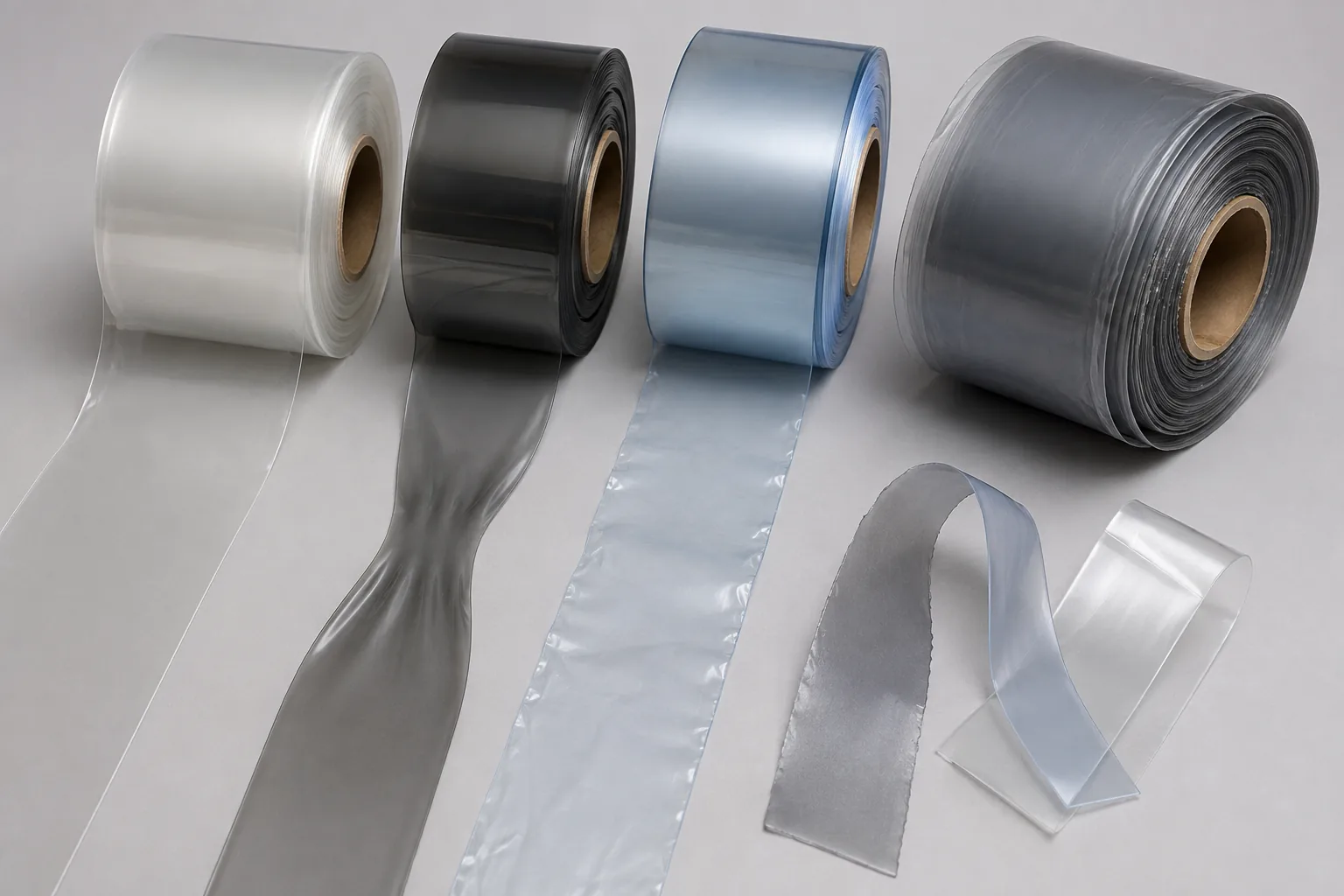
Slitting Flexible Plastic Film Rolls
Thin film carries little bending stiffness and can move under tension, static charge or air at the slitter. Polymer type, gauge, orientation and winding conditions determine whether the edge separates cleanly or deforms before it reaches the rewind roll.
Updated
Where This Cutting Application Appears
Master-roll conversion
Divides blown or cast film into narrower finished rolls for printing, lamination, bag making or packaging.
Edge trim before winding
Removes unstable margins while web guiding and tension establish the usable roll width.
Gauge and polymer changeover
Revalidates support and edge engagement when film thickness, orientation, additives or coefficient of friction changes.
High-Speed Longitudinal Slitting process boundary
high-speed longitudinal slitting for flexible plastic film rolls is planned around longitudinal width conversion of a moving roll, web, sheet or strip into controlled lanes or daughter rolls; it is not transverse length cutting, profile formation or removal of only a narrow damaged margin.
High-Speed Longitudinal Slitting setup checkpoint
For flexible plastic film rolls, confirm unwind and rewind tension, lane widths, knife positions, edge guidance, core alignment, trim removal and discharge behavior.
High-Speed Longitudinal Slitting acceptance checkpoint
For flexible plastic film rolls, evaluate lane width, edge condition, camber or wandering, debris, telescoping, interleaving and stable winding or downstream transfer.
Define the Required Cut Result
- Clean continuous slit without stretching the web
- Stable width and straight wound edges
- Minimal curl, neck-in and wrinkle generation
- Controlled static and trim removal
Problems to Diagnose Before Changing the Knife
Film stretching
- Measure tension across the slitting zone
- Inspect unsupported span
- Compare edge drag with web speed
Wrinkled slit edge
- Check roller alignment and spreader action
- Map cross-web tension
- Inspect rewind differential
Static-related movement
- Measure charge under production humidity
- Check grounding and ionization
- Observe lightweight trim behavior
Edge curl or burr
- Identify film orientation and layers
- Inspect blade condition and entry geometry
- Compare curl direction with winding tension
Knife Forms That May Be Considered
| Possible knife form | When it may be considered | What must be confirmed |
|---|---|---|
| razor slitter | May suit thin, low-tension film with suitable free-span or groove support and controlled blade exposure. | Confirm dimensions and edge details from the film razor-slitting station equipment, an unworn sample or an approved drawing before manufacture. |
| circular shear slitter | May suit thicker or laminated film requiring positive supported separation and controlled overlap. | Confirm dimensions and edge details from the film shear-slitting station equipment, an unworn sample or an approved drawing before manufacture. |
| score-cut wheel | May be considered on robust film against a compatible anvil when compression and edge deformation are acceptable. | Confirm dimensions and edge details from the film score-cut station equipment, an unworn sample or an approved drawing before manufacture. |
Information to Send for Technical Review
You do not need to know the exact blade name. Send the available workpiece, machine, current-knife and cut-result information so the application can be reviewed against a drawing or sample.
- Slitter-rewinder make and model
- Polymer, layer structure and orientation
- Gauge range and coefficient-of-friction data
- Master width, slit plan and roll diameter
- Speed, tension zones and web support
- Static control, humidity and trim removal
- Photos of curl, wrinkles and wound edges
- Current blade, quantity and destination
Questions About This Cutting Application
Why does thin film move away from the blade?
Low stiffness, static, airflow and local tension imbalance can shift the web before separation.
When is razor slitting appropriate?
It often suits thin film, but support geometry, safety, fragment control and change interval must match the line.
What causes edge curl after slitting?
Film orientation, residual stress, edge drag and rewind tension can combine to curl one side.
Can one setup cover cast and blown film?
Do not assume so. Orientation, gauge profile and friction may require different tension and engagement.
What should a film trial record?
Record roll position, gauge, speed, tension, static, blade hours, slit width and edge condition through the roll.
Related product and service information
- Bookbinding Laminate Film Roll Slitting Blades: Clear Edges and Adhesive Control - bookbinding laminate film · roll slitting
- Slitting Carbon Fiber Prepreg Tape - carbon fiber prepreg tape · roll slitting
- PET Film Slitting for Clean Narrow Reels - PET film webs · precision slitting
Request a Custom Cutting-Knife Review
Send the workpiece details, machine or holder information, current knife photos or sample, required quantity and examples of the present cut problem. Final dimensions, material, edge geometry and tolerances are confirmed from the approved requirements.