
Blade Application Guides / Application Guide / building insulation
Fiberglass Insulation Batt Cutting
Fiberglass insulation batts are thick, springy fiber assemblies that compress far below their free thickness. Cutting must reach through the recovered fiber mass and any kraft or foil facing without pulling bundles, while dimensions should be checked after the batt has expanded again.
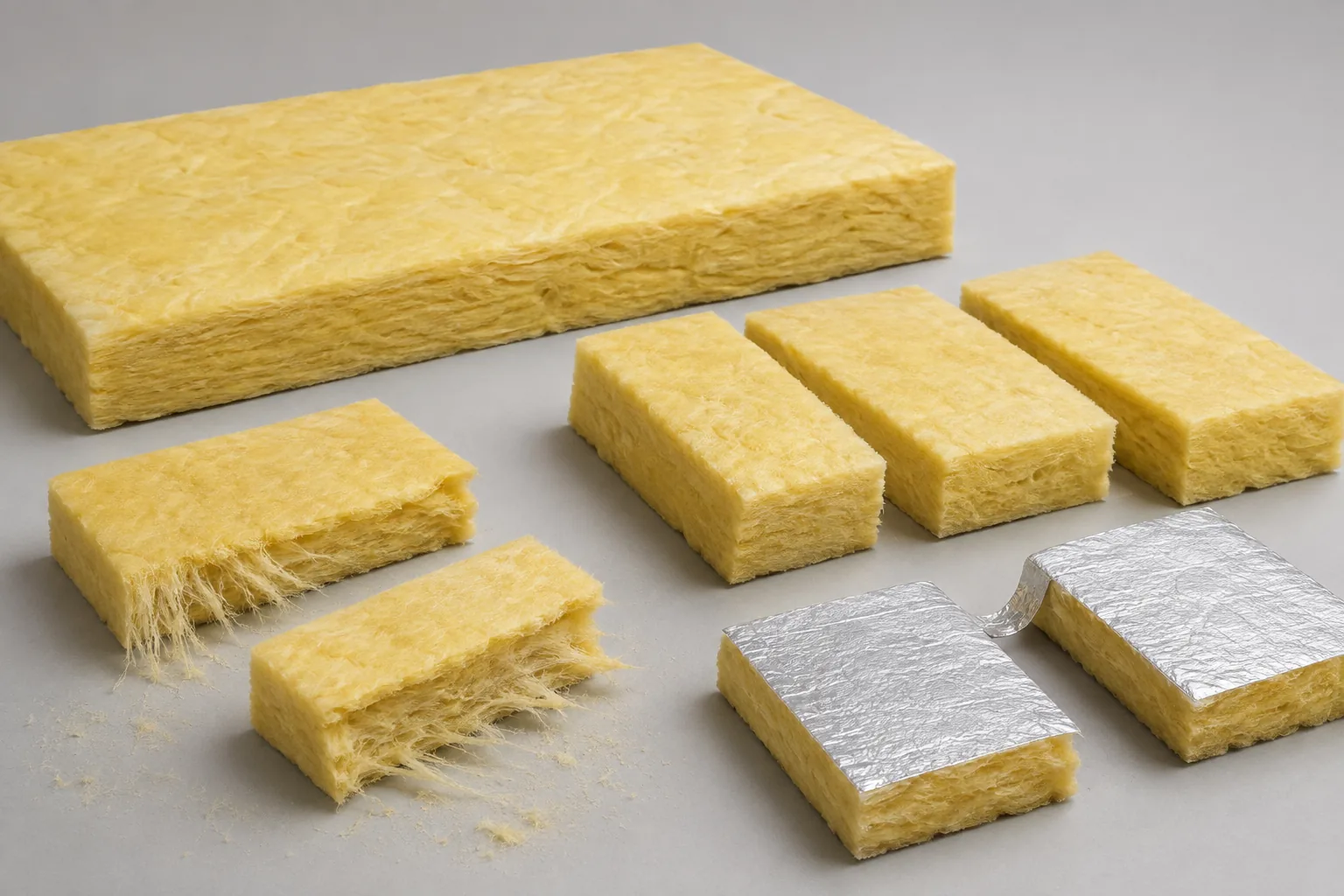
Where This Cutting Application Appears
Sizing unfaced fiberglass batts
Cut standard or custom lengths and widths before packing or installation preparation.
Trimming kraft- or foil-faced insulation
Separate facing and fiber core together without leaving long paper or foil tails.
Cutting stacked insulation layers
Process declared multi-batt stacks where compression and full-depth penetration are controlled.
Common Ways to Describe This Cutting Problem
- fiberglass insulation batt cutting knife
- glass wool blanket cutter
- insulation batt sizing blade
- reduce fiberglass edge pullout
- foil faced insulation cutting
- thick batt serrated knife
- custom insulation blanket blade
- fiberglass batt incomplete cut
Define the Required Cut Result
- Complete separation through full batt thickness
- Straight fiber edges with limited bundle pullout
- Facing cut flush with the insulation core
- Recovered dimensions within the stated tolerance
Problems to Diagnose Before Changing the Knife
The batt springs back with uncut fibers
Check compressed depth, edge travel, backing support, tooth engagement and maximum density.
Fiber bundles pull from the edge
Review tooth condition, cutting direction, withdrawal motion and local binder or density variation.
Kraft or foil facing remains attached
Inspect facing orientation, backing contact, penetration and relative slip between facing and batt.
Cut sections recover out of square
Check locating under compression, uneven hold-down, density distribution and measurement timing.
Knife Forms That May Be Considered
| Possible knife form | When it may be considered | What must be confirmed |
|---|---|---|
| serrated straight knife | Progressive teeth may suit thick compressible glass-fiber batts by engaging the fiber mass in stages. | Confirm tooth pitch, depth and direction, blade stroke, backing, compressed build and accepted edge samples. |
| rotary cutoff knife | A rotary format may suit continuous blanket sizing where compression and the mating edge remain controlled. | Confirm rotor diameter, mounting, cutting width, rotation, counter-surface and maximum faced or stacked construction. |
Information to Send for Technical Review
You do not need to know the exact blade name. Send the available workpiece, machine, current-knife and cut-result information so the application can be reviewed against a drawing or sample.
- Fiberglass or glass-wool product grade
- Free thickness, density and compressed thickness
- Unfaced, kraft-faced, foil-faced or laminated construction
- Roll, batt or stacked presentation at cutting
- Target dimensions and measurement after recovery
- Feed, compression, hold-down and backing arrangement
- Current knife geometry and dust-control method
- Samples showing pulled fibers, facing tails, incomplete depth or skew
Questions About This Cutting Application
Why should batt dimensions be measured after recovery?
Compression at the cutting station can temporarily change length, width and thickness. Use a consistent recovery condition.
Can deeper penetration solve every incomplete cut?
No. It may damage the backing or machine. Check compression, edge continuity and support first.
Why does facing stay connected after fibers separate?
Thin paper or foil can deflect away from the edge when support or layer contact is uneven.
Does denser insulation need a different knife?
Density changes cutting load and fiber restraint, but the holder and process also matter. Review representative grades.
How should dust performance be compared?
Use the customer's consistent collection or visual method with the same batt, cut length, extraction and knife condition.
Request a Custom Cutting-Knife Review
Send the workpiece details, machine or holder information, current knife photos or sample, required quantity and examples of the present cut problem. Final dimensions, material, edge geometry and tolerances are confirmed from the approved requirements.