
Blade Application Guides / Application Guide / battery manufacturing
Coated Battery Electrode Sheet Slitting
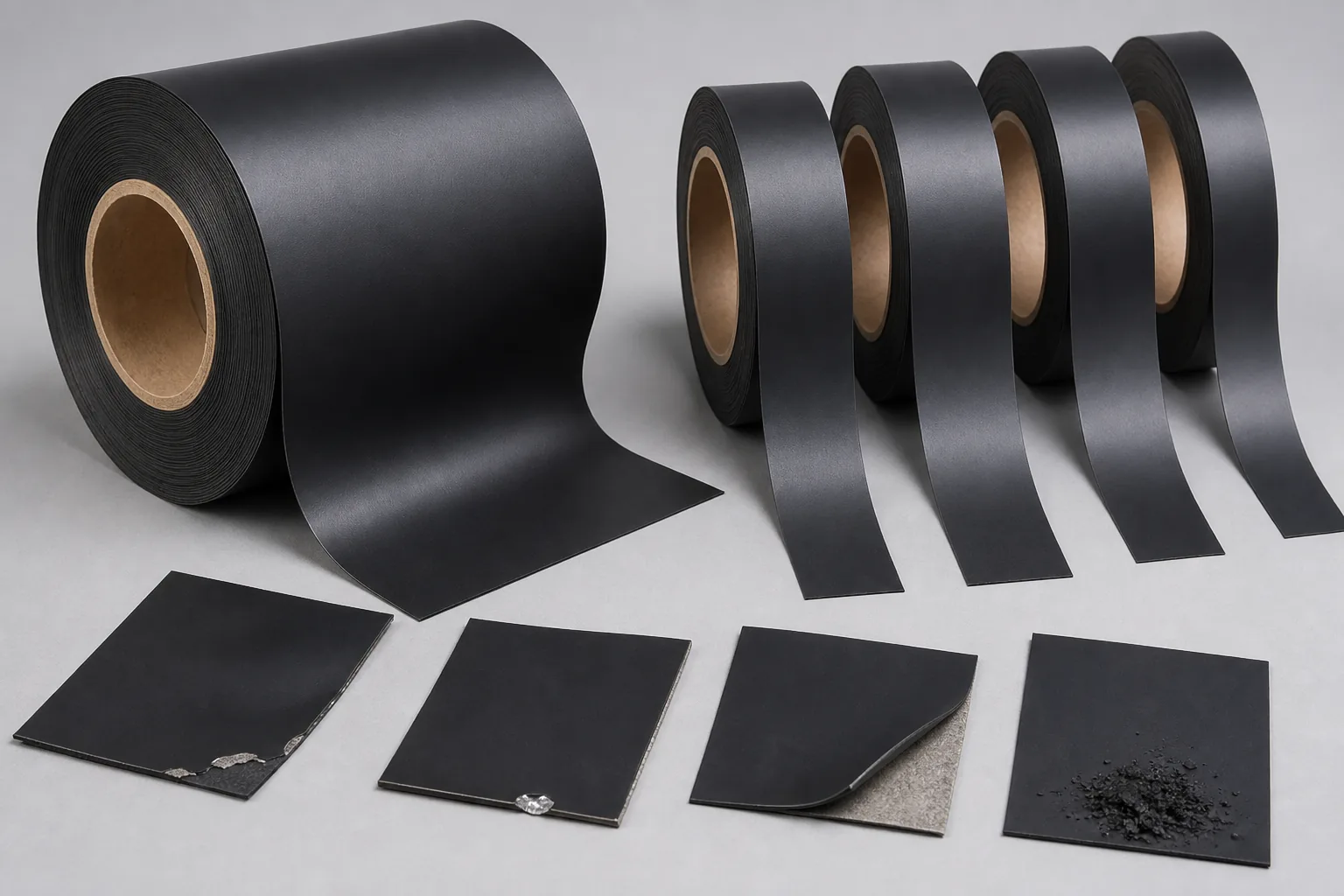
A coated electrode is a layered structure: ductile metal foil carries a comparatively brittle particulate coating whose adhesion and compaction vary by process. Slitting must control the foil burr while limiting coating fracture, loose particles and delamination at the newly exposed edge.
Updated
Where This Cutting Application Appears
Slitting coated anode rolls
Divide coated copper-based web into electrode widths while monitoring foil burr and active-layer edge integrity.
Slitting coated cathode rolls
Convert aluminum-based coated web where brittle edge particles and surface protection are critical concerns.
Trimming uncoated edge margins
Remove or control foil and coating margins according to the customer's electrode design and downstream process.
Electrode Slitting process boundary
electrode slitting for coated battery electrode sheets is planned around longitudinal width conversion of a moving roll, web, sheet or strip into controlled lanes or daughter rolls; it is not transverse length cutting, profile formation or removal of only a narrow damaged margin.
Electrode Slitting setup checkpoint
For coated battery electrode sheets, confirm unwind and rewind tension, lane widths, knife positions, edge guidance, core alignment, trim removal and discharge behavior.
Electrode Slitting acceptance checkpoint
For coated battery electrode sheets, evaluate lane width, edge condition, camber or wandering, debris, telescoping, interleaving and stable winding or downstream transfer.
Define the Required Cut Result
- Controlled foil burr beneath the coating edge
- Limited coating chips, dust and loose particles
- No progressive delamination from the slit line
- Stable width and edge alignment on rewind
Problems to Diagnose Before Changing the Knife
Coating flakes from the slit edge
Review coating adhesion, dryness, compaction, unsupported span, shear clearance and the direction of edge loading.
Metal burr is acceptable but particles are high
Separate foil shear quality from coating fracture; inspect particle source, knife-face contact and downstream handling.
Delamination grows after rewinding
Check edge damage, winding tension, bend radius, layer adhesion and whether the slit edge rubs a guide.
Knife faces acquire coating deposits
Identify binder and coating state, then review pressure, heat, debris clearance and cleaning method.
Knife Forms That May Be Considered
| Possible knife form | When it may be considered | What must be confirmed |
|---|---|---|
| paired rotary shear knife | A precision shear pair can control foil separation while supporting the coated web close to the cut. | Confirm foil side, coating on one or both faces, knife overlap, clearance, side load, shaft accuracy and approved edge criteria. |
| circular slitter | A single circular format may be used only where the machine's documented cutting mode supports the electrode construction. | Confirm lower interface, rotation, penetration, web support, coating orientation and trial results before approving geometry. |
Information to Send for Technical Review
You do not need to know the exact blade name. Send the available workpiece, machine, current-knife and cut-result information so the application can be reviewed against a drawing or sample.
- Anode or cathode designation and current-collector foil
- Foil thickness, coating thickness and one- or two-sided coating
- Coating adhesion, compaction and dryness state at slitting
- Coated and uncoated margin layout
- Master width, slit widths and edge-position tolerance
- Line speed, tension, web path and rewind arrangement
- Matched knives, spacers, shafts and current setup records
- Edge and particle samples with foil burr and coating damage identified separately
Questions About This Cutting Application
Why must foil burr and coating damage be assessed separately?
A clean foil shear can still fracture brittle coating, while an intact coating can hide a metal burr. Inspect both components of the edge.
Does higher coating adhesion guarantee a clean slit?
No. Compaction, dryness, particle structure, support and shear setup also influence chipping and dust.
Why can edge damage worsen on rewind?
A weakened coating edge may bend, rub or delaminate under winding tension. Compare samples before and after rewind.
Can one knife setup cover both anode and cathode rolls?
Do not assume so. Collector metal, coating and mechanical response differ; qualify each declared construction.
What should an electrode-edge report include?
Document sampling lane, web direction, coated face, foil burr method, coating loss, particles and the operating settings used.
Related product and service information
- Thin Copper Foil Precision Slitting - thin copper foil · precision roll slitting
- Battery Aluminum Foil Slitting - battery-grade aluminum foil · precision roll slitting
- Battery Separator Film Slitting - battery separator film · film slitting
Request a Custom Cutting-Knife Review
Send the workpiece details, machine or holder information, current knife photos or sample, required quantity and examples of the present cut problem. Final dimensions, material, edge geometry and tolerances are confirmed from the approved requirements.