
Blade Application Guides / Application Guide / battery materials
Battery Separator Film Slitting
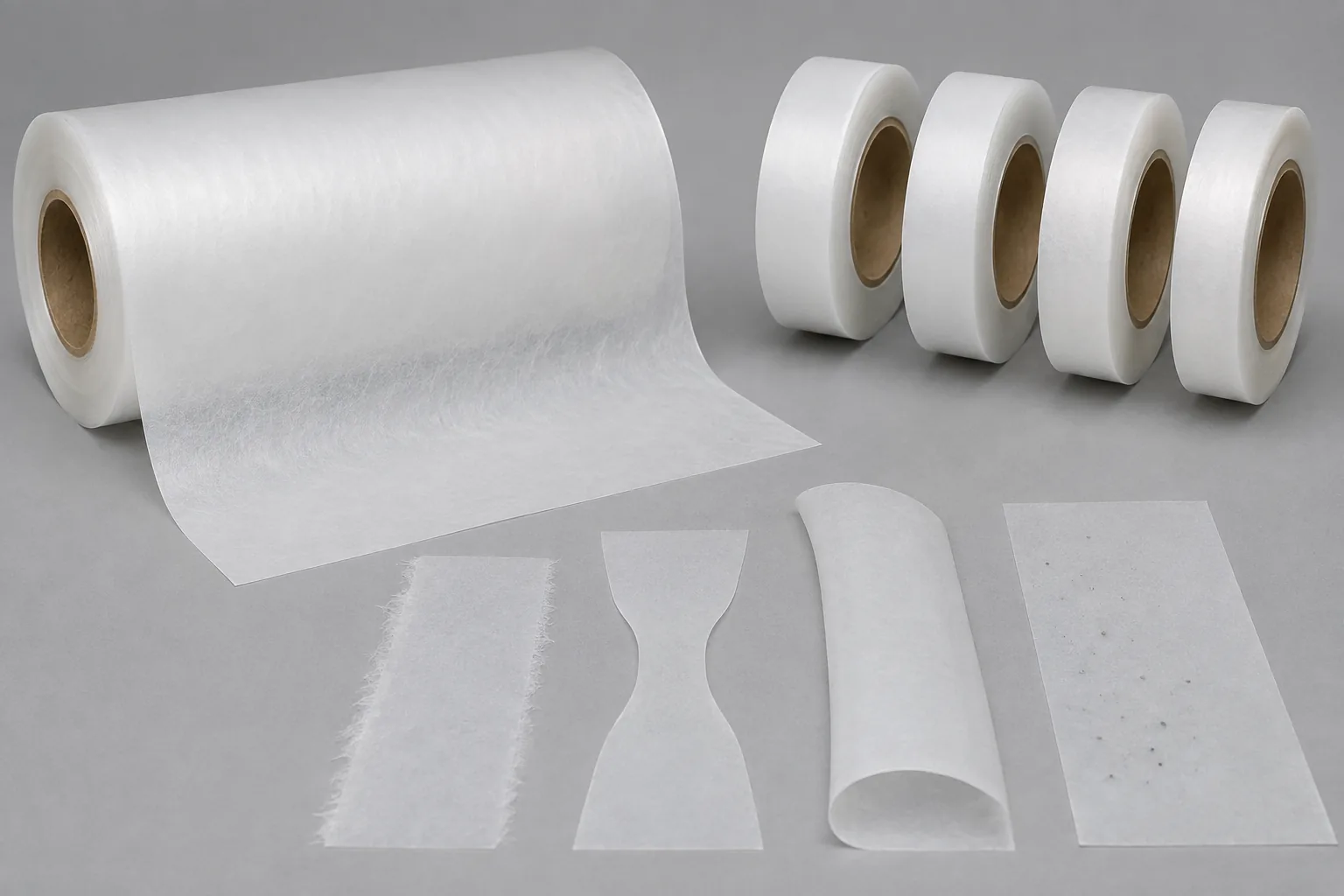
Battery separator film is a thin microporous web whose apparent flexibility can conceal sensitivity to stretching, heat and edge fibrillation. A stable slit requires gentle handling and consistent support so that the knife does not neck the web, close pores locally or leave loose edge filaments.
Updated
Where This Cutting Application Appears
Slitting separator master rolls
Produce narrow reels for cell assembly while preserving width, edge integrity and winding alignment.
Trimming coated separator film
Remove irregular margins from ceramic-coated or otherwise treated constructions declared by the customer.
Preparing multilayer separator webs
Cut laminated or composite separator structures whose layers may carry different tension and fracture behavior.
Film Slitting process boundary
film slitting for battery separator film is planned around longitudinal width conversion of a moving roll, web, sheet or strip into controlled lanes or daughter rolls; it is not transverse length cutting, profile formation or removal of only a narrow damaged margin.
Film Slitting setup checkpoint
For battery separator film, confirm unwind and rewind tension, lane widths, knife positions, edge guidance, core alignment, trim removal and discharge behavior.
Film Slitting acceptance checkpoint
For battery separator film, evaluate lane width, edge condition, camber or wandering, debris, telescoping, interleaving and stable winding or downstream transfer.
Define the Required Cut Result
- Smooth edges without long fibrils or loose particles
- Stable width with minimal neck-in
- No avoidable wrinkles, heat marks or stretched margins
- Aligned rewind without edge curl or telescoping
Problems to Diagnose Before Changing the Knife
Fine fibrils remain along the edge
Review polymer structure, edge mode, penetration or shear clearance, wear and support directly at the cut.
The web narrows after slitting
Check tension at measurement, elastic recovery, knife drag and unsupported spans before and after separation.
Edges curl toward one face
Inspect coating asymmetry, residual stress, bevel or side load, temperature and rewind tension.
Static attracts particles to slit rolls
Review humidity and static control, web handling, debris extraction and contact surfaces near the cutting zone.
Knife Forms That May Be Considered
| Possible knife form | When it may be considered | What must be confirmed |
|---|---|---|
| razor slitter | Razor slitting may suit very thin supported film where penetration and heat generation remain controlled. | Confirm blade holder, support, penetration, web tension, speed, coating face and accepted edge samples. |
| shear slitter | A matched shear pair may suit stronger or coated separator structures when side load and overlap are stable. | Confirm upper/lower geometry, clearance, overlap, shaft runout, web orientation and particle acceptance. |
Information to Send for Technical Review
You do not need to know the exact blade name. Send the available workpiece, machine, current-knife and cut-result information so the application can be reviewed against a drawing or sample.
- Separator polymer and manufacturing process
- Thickness, porosity-related construction and coating layers
- Machine direction and functional face orientation
- Master and finished widths with measurement tension
- Line speed, tension zones, web support and static controls
- Razor, score or shear cutting mode
- Current knives, lower interface and setup records
- Edge images or samples showing fibrils, curl, neck-in or heat marks
Questions About This Cutting Application
Why can separator width change after it leaves the slitter?
A tensioned film may recover, especially if the knife adds drag. State where and under what tension width is measured.
Can edge fuzz be removed by increasing penetration?
More penetration can increase drag or backing wear. First identify the cutting mode, support and edge condition.
Does coating orientation matter?
Yes. Coated faces may respond differently to compression, shear and bending. Mark orientation on every submitted sample.
What causes separator edge curl?
Asymmetric layers, residual stress, side load or tension can bias the edge. Compare curl direction with web and knife orientation.
Who confirms electrochemical suitability after cutting?
The battery manufacturer owns product validation. Knife review covers the declared material, equipment interface and physical cut criteria.
Related product and service information
- Battery Aluminum Foil Slitting - battery-grade aluminum foil · precision roll slitting
- Thin Copper Foil Precision Slitting - thin copper foil · precision roll slitting
- Coated Battery Electrode Sheet Slitting - coated battery electrode sheets · electrode slitting
Request a Custom Cutting-Knife Review
Send the workpiece details, machine or holder information, current knife photos or sample, required quantity and examples of the present cut problem. Final dimensions, material, edge geometry and tolerances are confirmed from the approved requirements.