
Blade Application Guides
Browse focused application knowledge
Cutting guides by industry, process, equipment and defect
Use these curated topic pages to compare related materials and cutting conditions without relying on broad site search.
Industries
Cutting processes
Equipment types
Cutting defects
Technical Articles
Industrial cutting problem knowledge base
1857 Blade Application Guides
Search by material, industry, cutting process or a problem described in your own words. You do not need to know the exact blade name.

Food Processing
Cheese Block Dicing Blades
Cheese-block dicing: verify staged registration, cube dimensions, corner condition, complete separation, side trim and collection loss.
Read the application guide →
Metals, Coils & Strips
French-Fry Potato Strip Slicing Blades
Prepared-potato slicing: define the actual incoming piece and slice plane before diagnosing thickness drift, feathering, surface drag and breakage.
Read the application guide →
Metals, Coils & Strips
French-Fry Potato Strip Portioning Blades
French-fry strip portioning: control cross-cut length while separating feed registration, strip alignment, crushing, slivers and discharge breakage.
Read the application guide →
Metals, Coils & Strips
French-Fry Potato Strip Dicing Blades
Potato-strip dicing: verify registered cross-cutting of known strip widths, cube dimensions, corner condition, slivers and complete separation.
Read the application guide →
Food Processing
Leafy Vegetable Slicing Blades
Leafy-vegetable slicing: distinguish repeated transverse slices from shredding while checking slice pitch, bruising, torn edges and leaf carryover.
Read the application guide →
Food Processing
Leafy Vegetable Portioning Blades
Leafy-vegetable portioning: divide heads or controlled bundles into larger pieces while checking registration, core response, crushing and retained shape.
Read the application guide →
Metals, Coils & Strips
Leafy Vegetable Strip Cutting Blades
Leafy-vegetable strip cutting: control ribbon width and complete separation while diagnosing feed orientation, bunching, torn veins and discharge tangles.
Read the application guide →
Food Processing
Leafy Vegetable Dicing Blades
Leafy-vegetable dicing: confirm two-direction cutting, registration, piece-size distribution, bruising, uncut veins and collection loss.
Read the application guide →
Metals, Coils & Strips
Dried Fruit Strip Slicing Blades
Dried-fruit-strip slicing: define a genuine thin-slice plane before comparing thickness drift, tacky drag, fracture and release damage.
Read the application guide →
Metals, Coils & Strips
Dried Fruit Strip Portioning Blades
Dried-fruit-strip portioning: control transverse length or approved mass while diagnosing registration, tacky drag, incomplete cutoff and transfer deformation.
Read the application guide →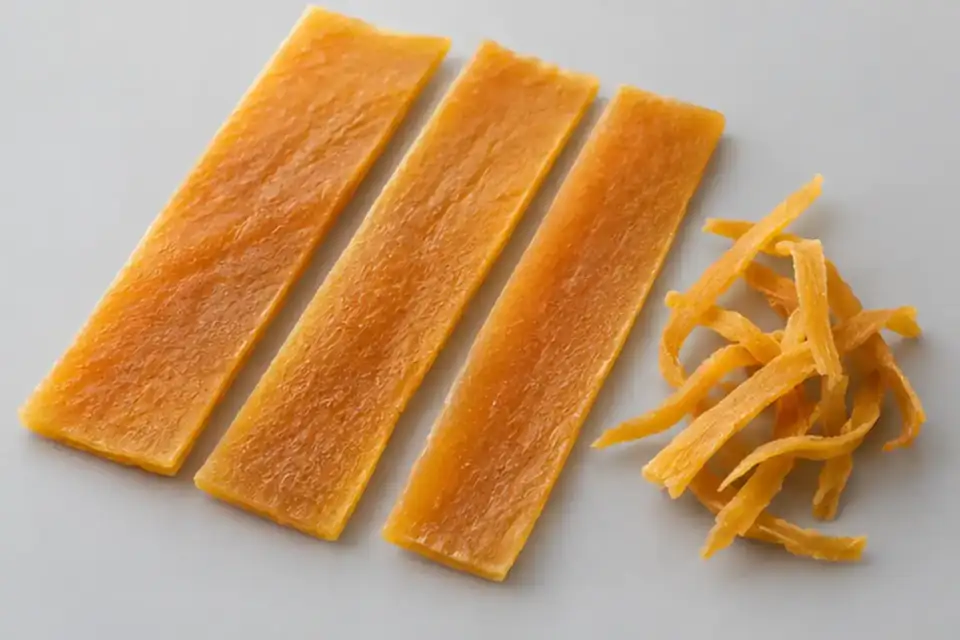
Metals, Coils & Strips
Dried Fruit Strip Cutting Blades
Dried-fruit strip cutting: divide a wider sheet or fruit leather into narrow lanes while controlling width, tracking, tacky edge pull and lane release.
Read the application guide →
Metals, Coils & Strips
Dried Fruit Strip Dicing Blades
Dried-fruit dicing: verify intersecting cuts, piece dimensions, corner integrity, sticking, complete separation and collection handling.
Read the application guide →
Food Processing
Fish Fillet Slicing Blades
Fish-fillet slicing: define the slice plane and product state before diagnosing thickness drift, gaping, surface drag and release damage.
Read the application guide →
Food Processing
Fish Fillet Portioning Blades
Fish-fillet portioning: control piece geometry or approved mass while separating registration, taper, gaping, trim and transfer effects.
Read the application guide →
Metals, Coils & Strips
Fish Fillet Strip Cutting Blades
Fish-fillet strip cutting: control lane width and parallelism while diagnosing fibre pull, gaping, joined strips and discharge deformation.
Read the application guide →
Food Processing
Fish Fillet Dicing Blades
Fish-fillet dicing: verify intersecting cuts, registration, piece dimensions, gaping, bridges, skin separation and collection handling.
Read the application guide →
Food Processing
Frozen Meat Block Slicing Blades
Frozen-meat-block slicing: control slice thickness while diagnosing block restraint, temperature gradient, fracture, face drag and clearing.
Read the application guide →
Metals, Coils & Strips
Frozen Meat Block Strip Cutting Blades
Frozen-meat-block strip cutting: inspect bar width, parallelism, fracture and grid release before any later cross-cut or grinding step.
Read the application guide →
Food Processing
Frozen Meat Block Dicing Blades
Frozen-meat-block dicing: verify staged registration, three-axis geometry, fracture, bridges, temperature effects and collection loss.
Read the application guide →
Films & Foils
Seed Tape Roll Slitting Blades
Seed-tape roll slitting: control lane width and seed exclusion while diagnosing fibre pull, adhesive buildup, web tracking and seed damage.
Read the application guide →
Films & Foils
Seed Tape Transverse Cross Cutting Blades
Seed-tape cross cutting: control finished length and seed registration while checking squareness, fibre tear, adhesive pickup and complete separation.
Read the application guide →
Films & Foils
Seed Tape Width Edge Trimming Blades
Seed-tape edge trimming: set the retained web datum while controlling trim continuity, fibre pull, adhesive buildup and seed clearance.
Read the application guide →
Films & Foils
Seed Tape Rotary Die Cutting Blades
Seed-tape rotary die cutting: verify a real registered feature or repeated part before reviewing cut depth, seed exclusion, matrix release and carrier damage.
Read the application guide →
Films & Foils
Mulch Film Roll Slitting Blades
Mulch-film roll slitting: control lane width and winding while separating web tracking, wrinkle, edge curl and film-stretch effects.
Read the application guide →Industrial Blade Application Guides: From Material to Cutting Edge
Reliable cutting comes from a system, not a single hardness number. Industrial blade technology connects the processed material, cutting method, machine condition, blade material, heat treatment, geometry, grinding accuracy and maintenance practice.
This page gives engineers and buyers a practical framework for discussing blade performance with Meirente before a quotation, trial or repeat-order improvement.
Start With the Cutting Application
A thin film, abrasive glass fiber, soft food product, polymer strand and electronic ceramic sheet place very different demands on a blade. The first questions should cover material behavior, thickness, speed, cutting gap, temperature, contamination, target finish and the cost of downtime.
Material Selection Is a Balance
Tool steel, stainless steel, high-speed steel, powder-metallurgy grades, tungsten carbide and coated solutions offer different combinations of hardness, toughness, wear resistance, corrosion resistance and cost. Selection should reflect the dominant failure risk instead of using the same grade for every application.
Edge Geometry Controls How the Blade Enters the Material
Bevel angle, single- or double-bevel direction, edge thickness, tooth pitch, tooth height, rake and clearance influence cutting force, dust, burrs, heat and edge strength. A sharper edge can reduce force, but an edge that is too thin may chip or deform under impact.
Heat Treatment, Grinding and Surface Engineering
Heat treatment develops the material properties required by the design. Precision grinding then controls flatness, parallelism, runout, concentricity and final edge geometry. Surface finishing or coating may help with wear, friction, corrosion or material adhesion when the application and base material justify it.
Measurement and Failure Feedback
Inspection confirms whether the blade matches the agreed specification; production feedback confirms whether the specification matches the real process. Photos and records of wear, chipping, deformation, burrs, dust, motor load, heat and cutting hours help separate material problems from alignment, gap, vibration or contamination issues.
Is higher hardness always better?
No. Higher hardness can improve wear resistance but may reduce toughness. The correct balance depends on impact, material abrasiveness and machine stability.
Why does the same blade wear differently on two machines?
Alignment, holder condition, cutting gap, speed, cooling, vibration, contamination and processed material can all change blade life.
When should a coating be considered?
Consider it when wear, friction, corrosion or adhesion is a defined problem and the coating is compatible with the base material, edge and operating temperature.
What information helps diagnose chipping?
Provide the chipped location, installation direction, holder condition, cutting gap, speed, processed material, contamination risk and close-up photos.
Can edge geometry be changed without changing the machine?
Sometimes, but the blade-holder interface, clearance and cutting method must be reviewed before any geometry change is approved.