
Blade Application Guides / Application Guide / Printing and labels
Self-Adhesive Labelstock Roll-Slitting Blades
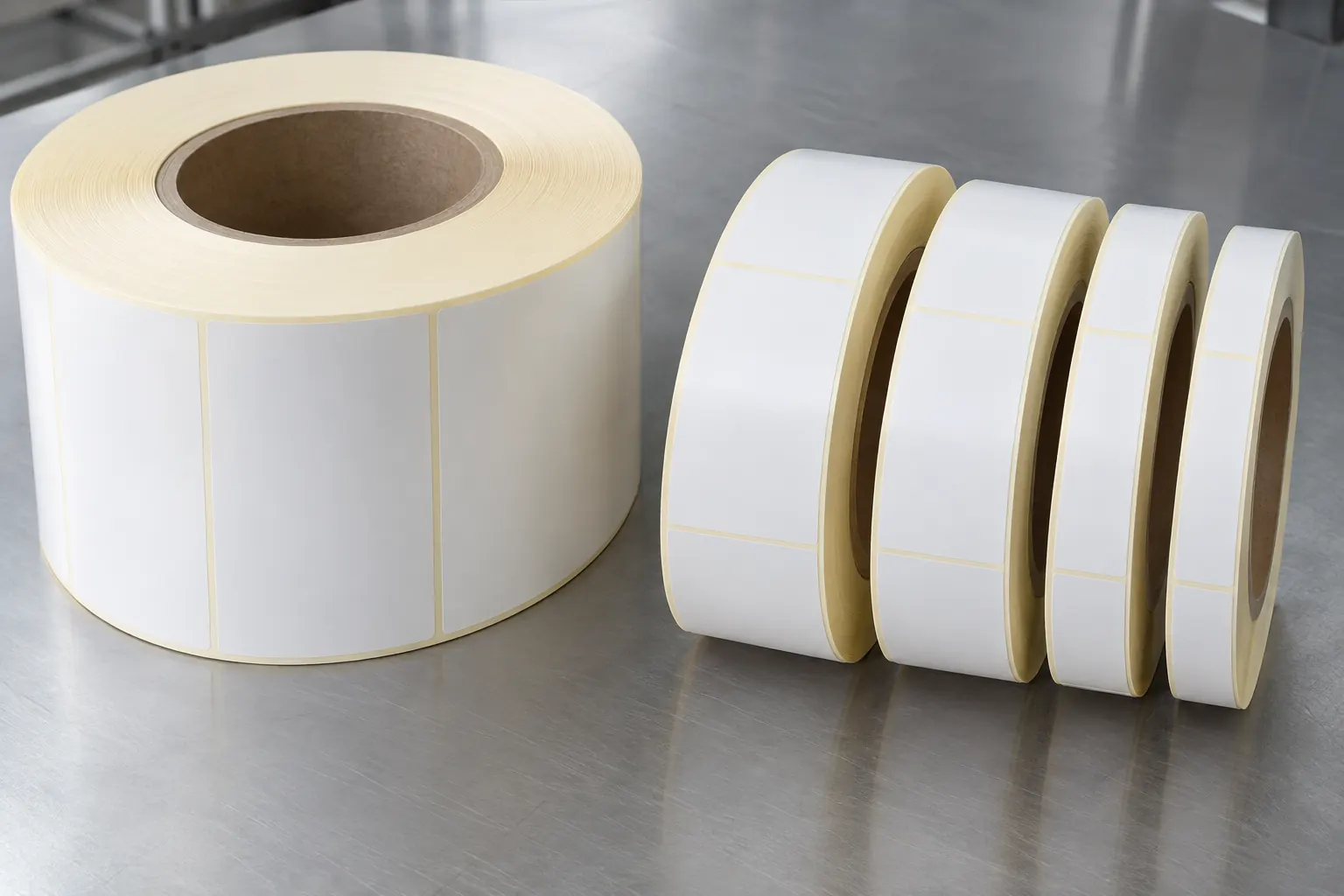
Self-adhesive labelstock is a laminate of facestock, pressure-sensitive adhesive, release coating and liner. Roll slitting must separate these layers without forcing adhesive onto the reel edge or cutting inconsistently through a liner whose thickness and stiffness differ from the facestock.
Updated
Where This Cutting Application Appears
Printed label roll conversion
Slits master rolls into press or finishing widths while preserving print and liner edges.
Blank labelstock preparation
Produces narrow rolls for later coating, printing or rotary die-cutting.
Specialty adhesive tape-label widths
Converts laminated constructions with declared facestock, adhesive and liner combinations.
Roll Slitting process boundary
Roll slitting divides a master roll longitudinally into narrower rolls; it does not separate the web transversely into sheets or fixed lengths.
Roll Slitting setup checkpoint
Confirm unwind and rewind tension, slit widths, knife positions, core alignment, trim removal and the winding behavior of every daughter roll.
Roll Slitting acceptance checkpoint
Inspect roll width, edge condition, telescoping, interleaving, debris and whether each rewound roll remains stable at the required diameter.
Define the Required Cut Result
- Clean, straight facestock and liner edges
- Minimal adhesive transfer or reel-edge blocking
- Finished width and rewind alignment within tolerance
- Liner remains intact without cracks or telescoping
Problems to Diagnose Before Changing the Knife
Adhesive builds up at the slit edge
- Identify adhesive chemistry and coat weight
- Record web temperature and dwell
- Compare cutting action, cleaning interval and rewind pressure
Liner cracks while facestock looks clean
- Review liner material, caliper and brittleness
- Inspect penetration or overlap
- Compare tension and bend path after slitting
Narrow reels telescope
- Check rewind tension and core alignment
- Measure slit width and edge tack
- Review roll hardness across the web
Silicone-release debris appears
- Distinguish liner dust from adhesive residue
- Inspect release coating and edge fracture
- Compare speed, support and extraction
Knife Forms That May Be Considered
| Possible knife form | When it may be considered | What must be confirmed |
|---|---|---|
| circular shear-slitting arrangement | May suit supported label laminates where paired rotary edges and controlled side load are provided. | Confirm diameters, bores, overlap, side load, rotation and web path from the installed slitter and approved drawings. |
| razor-slitting arrangement | May suit selected thin labelstock constructions on equipment designed for supported or in-air razor slitting. | Confirm holder, exposure, web support, adhesive behavior, speed and safety details; no blade geometry is assumed. |
| score-slitting arrangement | May be considered only where the machine uses controlled loading against a compatible anvil surface. | Confirm load, anvil, mounting, liner requirement and accepted edge samples through line information and trials. |
Information to Send for Technical Review
You do not need to know the exact blade name. Send the available workpiece, machine, current-knife and cut-result information so the application can be reviewed against a drawing or sample.
- Facestock material, thickness and surface coating
- Adhesive chemistry, coat weight and service temperature
- Liner material, caliper and release coating
- Master-roll and finished-roll dimensions
- Slit widths, tolerance and minimum lane
- Speed, tension, rewind pressure and web temperature
- Current slitting action, interfaces and cleaning practice
- Samples of ooze, liner crack, debris and telescoping
Questions About This Cutting Application
Why does adhesive appear on the finished reel edge?
Pressure, temperature, adhesive flow, dwell and cutting condition can move adhesive beyond the laminate edge.
Can paper and film labelstock share one setup?
Not automatically. Facestock stiffness, liner, adhesive and acceptable edge behavior can differ substantially.
Why does the liner crack after rewinding?
A damaged slit edge may open under bending and tension even if the defect was not obvious at the cutting point.
What should be recorded during an adhesive buildup trial?
Record material lot, temperature, speed, running length, cleaning interval and residue location.
How is the knife form selected?
Use the installed slitting motion, web support, laminate construction, speed and approved edge criteria.
Related product and service information
- Shrink Sleeve Label Web Roll-Slitting Blades - shrink sleeve label web · roll slitting
- Security Paper Label Stock Roll-Slitting Blades - security paper label stock · roll slitting
- Bookbinding Laminate Film Roll Slitting Blades: Clear Edges and Adhesive Control - bookbinding laminate film · roll slitting
Request a Custom Cutting-Knife Review
Send the workpiece details, machine or holder information, current knife photos or sample, required quantity and examples of the present cut problem. Final dimensions, material, edge geometry and tolerances are confirmed from the approved requirements.