
Blade Application Guides / Application Guide / Printing and labels
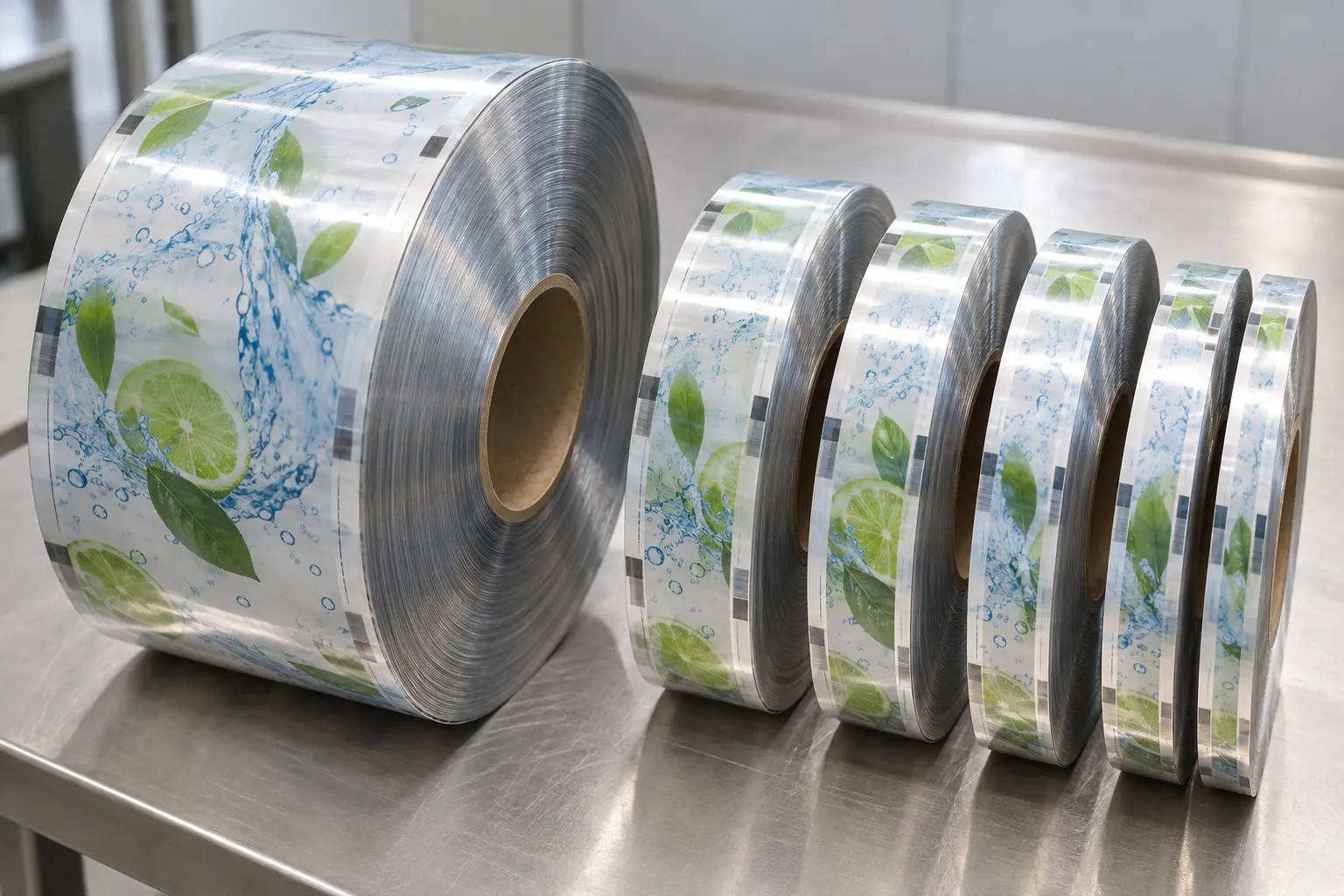
Shrink Sleeve Label Web Roll-Slitting Blades
Shrink sleeve label webs are thin, oriented films whose dimensional response depends on polymer, orientation, temperature and printing. Roll slitting must control edge initiation and web tension without creating nicks that propagate during seaming, shrinking or high-speed application.
Updated
Where This Cutting Application Appears
Printed sleeve roll conversion
Slits wide printed webs into lane widths for seaming or application.
Unprinted film preparation
Produces controlled master and trial widths before printing and converting.
Seaming-web edge preparation
Creates stable edges that support consistent overlap and solvent or adhesive seaming.
Roll Slitting process boundary
Roll slitting divides a master roll longitudinally into narrower rolls; it does not separate the web transversely into sheets or fixed lengths.
Roll Slitting setup checkpoint
Confirm unwind and rewind tension, slit widths, knife positions, core alignment, trim removal and the winding behavior of every daughter roll.
Roll Slitting acceptance checkpoint
Inspect roll width, edge condition, telescoping, interleaving, debris and whether each rewound roll remains stable at the required diameter.
Define the Required Cut Result
- Consistent slit width and straight printed margin
- Smooth edges without nicks or stress whitening
- Low curl and stable web tracking
- Aligned rewind with no telescoping or edge blocking
Problems to Diagnose Before Changing the Knife
Small edge nicks grow during shrinking
- Inspect nick direction and depth
- Identify polymer and orientation
- Compare tension, temperature and downstream shrink test
Slit lanes curl toward one side
- Review orientation and print-layer balance
- Compare tension and edge stress
- Measure curl after consistent conditioning
Printed ink chips at the edge
- Identify ink, varnish and cure
- Inspect cutting from printed and unprinted sides
- Compare friction and support
Reels telescope or show width drift
- Check web guide and rewind alignment
- Measure tension by lane
- Review core position and roll hardness
Knife Forms That May Be Considered
| Possible knife form | When it may be considered | What must be confirmed |
|---|---|---|
| razor-slitting arrangement | May suit selected thin shrink films on equipment designed for supported or in-air razor slitting. | Confirm polymer, thickness, holder, exposure, web support, speed and safety provisions from the actual line. |
| circular shear-slitting arrangement | May suit printed or laminated sleeve films requiring paired rotary control. | Confirm diameters, bores, overlap, side load, rotation and web path with equipment data and approved trials. |
Information to Send for Technical Review
You do not need to know the exact blade name. Send the available workpiece, machine, current-knife and cut-result information so the application can be reviewed against a drawing or sample.
- Film polymer, grade, thickness and orientation
- Printed, varnished or laminated layer construction
- Master-roll and finished-roll dimensions
- Slit widths, margins and tolerances
- Speed, tension, guide and rewind conditions
- Current slitting action and mounting interface
- Seaming and shrink-test requirements
- Samples of nicks, curl, ink chip and telescoping
Questions About This Cutting Application
Why is a tiny edge nick important on shrink film?
Oriented film can concentrate stress at the nick, which may extend during seaming, handling or thermal shrinking.
Can PETG, PVC and OPS use identical settings?
Not automatically. Their orientation, toughness, friction and temperature response differ.
Why does one slit lane curl more than another?
Orientation profile, print balance, tension and lateral position across the master roll may differ.
What downstream trial should be included?
Check seaming, rewind unwinding, sleeve application and the intended shrink tunnel or laboratory shrink condition.
How are replacement dimensions confirmed?
Use the holder, current approved component or line drawing rather than the film width or polymer name.
Related product and service information
- Shrink Sleeve Label Web Edge-Trimming Blades - shrink sleeve label web · width edge trimming
- Self-Adhesive Labelstock Roll-Slitting Blades - self-adhesive labelstock · roll slitting
- Security Paper Label Stock Roll-Slitting Blades - security paper label stock · roll slitting
Request a Custom Cutting-Knife Review
Send the workpiece details, machine or holder information, current knife photos or sample, required quantity and examples of the present cut problem. Final dimensions, material, edge geometry and tolerances are confirmed from the approved requirements.