
Blade Application Guides / Application Guide / Printing and labels
Security Paper Label Stock Roll-Slitting Blades
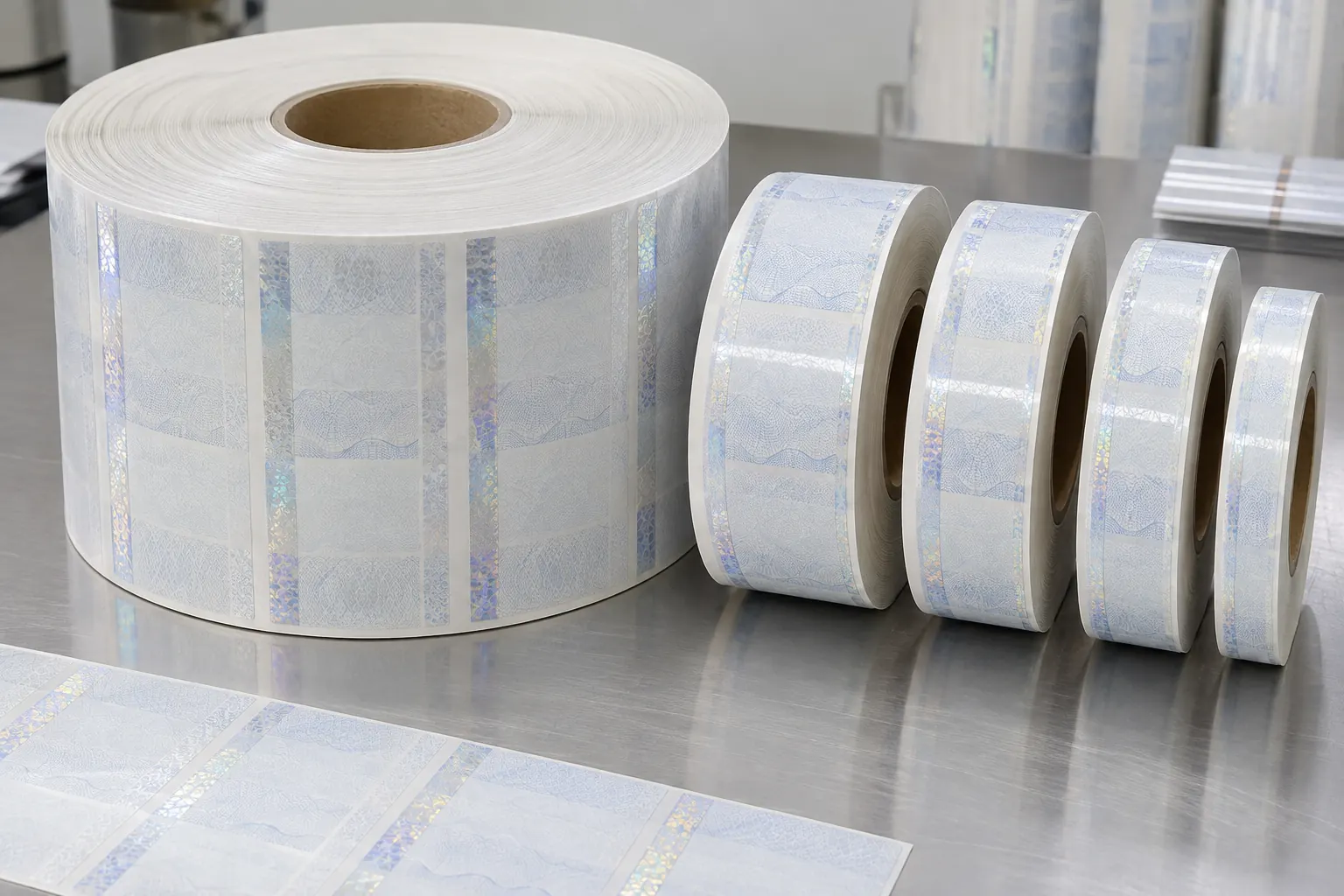
Security paper label stock may contain watermarks, embedded fibers, threads, coatings or tamper-responsive layers. Roll slitting must maintain lane width without pulling security elements from the edge, while reels and trim waste remain traceable under the customer's authorized handling procedure.
Where This Cutting Application Appears
Authentication-label reel conversion
Slits master stock into controlled lane widths while preserving declared visible or embedded security features.
Tamper-evident paper roll preparation
Produces narrow reels for later printing, die-cutting or serialized processing.
Security-document labelstock lanes
Converts authorized paper stock to defined widths under traceable inspection and waste-control criteria.
Common Ways to Describe This Cutting Problem
- security paper label stock roll slitting blades
- authentication label paper roll slitter
- watermarked label stock width cutting
- tamper evident paper reel slitting
- security fiber paper edge separation
- document label stock narrow roll conversion
- protected paper web slitting tooling
- custom slitter for security label paper
Define the Required Cut Result
- Finished reel width held to the approved tolerance
- Clean longitudinal edges with limited fiber debris
- No pulling or unintended exposure of embedded elements
- Stable rewinds and traceable trim waste for controlled handling
Problems to Diagnose Before Changing the Knife
Embedded fibers or threads pull along the slit edge
- Use authorized feature-orientation data
- Inspect feature termination on accepted reels
- Compare support, tension and cutting direction
Finished lane width drifts
- Check web guiding and lateral movement
- Measure spacer or holder positions from approved records
- Track variation by master-roll location
Narrow security-paper reels telescope
- Review rewind tension and core alignment
- Compare roll hardness and edge condition
- Check whether coating or feature distribution changes lane stiffness
Coating or long fibers create edge debris
- Identify permitted coating and furnish details
- Distinguish intended security fibers from pullout
- Compare moisture, speed and debris collection
Knife Forms That May Be Considered
| Possible knife form | When it may be considered | What must be confirmed |
|---|---|---|
| circular shear-slitting arrangement | May suit security-paper webs where paired rotary edges and controlled lateral guidance are already provided. | Confirm diameters, bores, overlap, side load, rotation and mounting through authorized equipment records and approved drawings. |
| score-slitting arrangement | May be considered only where the installed line applies controlled loading against a compatible anvil surface. | Confirm holder, load, anvil, web build and accepted security-feature termination through line data and representative trials. |
Information to Send for Technical Review
You do not need to know the exact blade name. Send the available workpiece, machine, current-knife and cut-result information so the application can be reviewed against a drawing or sample.
- Authorized paper grade and furnish description
- Permitted security-feature type and orientation data
- Master-roll width, diameter, core and caliper
- Finished slit widths, tolerances and lane layout
- Printing, coating and serialization status
- Speed, tension, guiding and rewind conditions
- Current slitting motion, mounting and support
- Approved edge samples, reel inspection and secure trim procedure
Questions About This Cutting Application
Why is security-feature orientation necessary?
Longitudinal elements can meet the slit line differently by lane, affecting edge termination and usable layout.
Can visible security fibers be mistaken for edge pullout?
Yes. Compare uncut material and authorized acceptance samples before classifying the condition.
How should sensitive material details be shared?
Use the customer's approved confidentiality, access-control and document-revision procedures.
Why can narrow reels telescope?
Unequal lane tension, core alignment, edge tack or variable web stiffness can destabilize the rewind.
Can a generic paper slitter specification be used?
No. The equipment interface, security stock, lane layout and approved process must be confirmed.
Request a Custom Cutting-Knife Review
Send the workpiece details, machine or holder information, current knife photos or sample, required quantity and examples of the present cut problem. Final dimensions, material, edge geometry and tolerances are confirmed from the approved requirements.