
Blade Application Guides / Application Guide / Fuel cell component manufacturing
Fuel Cell Gas Diffusion Layer Cutting Blades
Fuel cell gas diffusion layer cutting blades are used to convert gas diffusion media into sheets or profiles for later cell-component processing. A useful review considers whether the supplied media is a roll or sheet, its surface condition, any supported or coated face, the required geometry and the customer's accepted edge sample before a cutting arrangement is proposed.
Updated
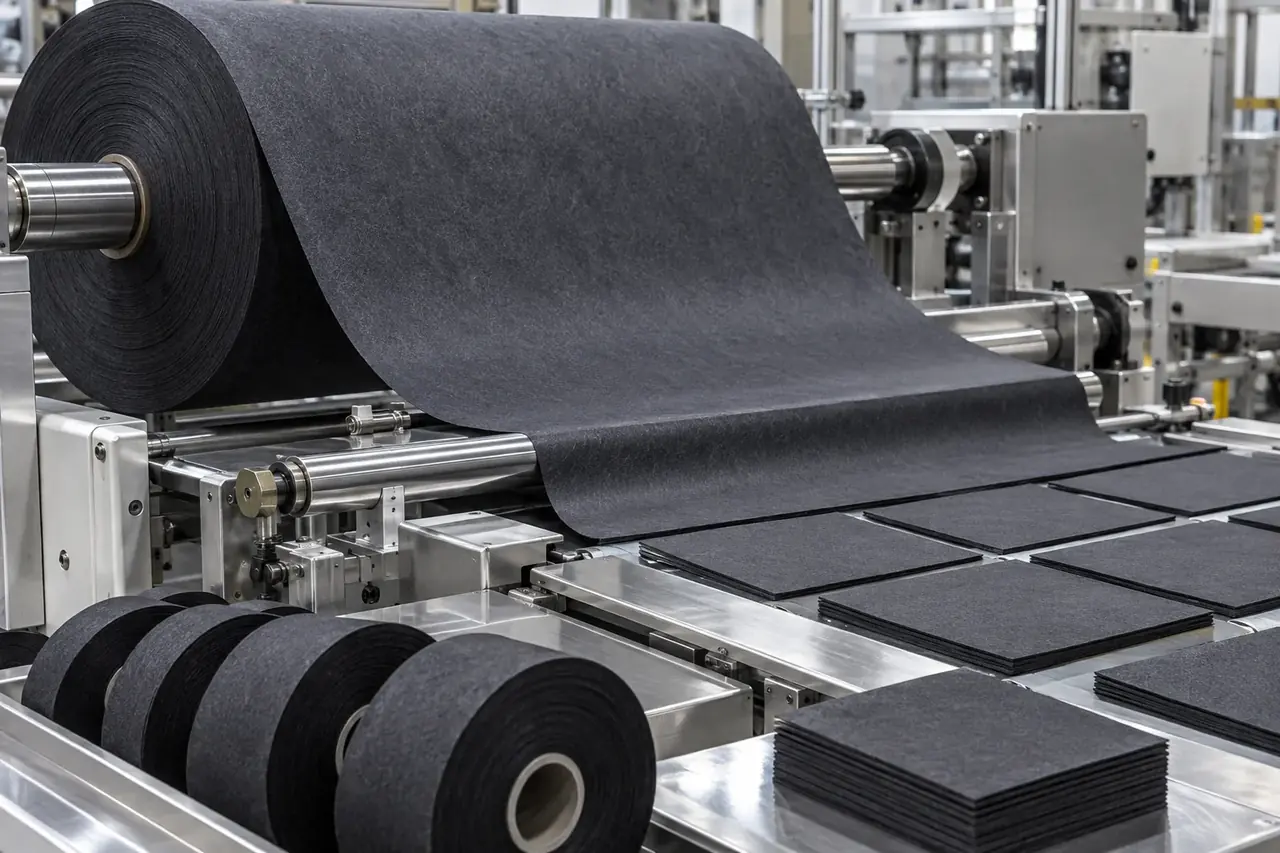
Where This Cutting Application Appears
Gas diffusion media sheet preparation
Roll or sheet material is converted into controlled formats for handling in the next fuel-cell component process.
Perimeter and edge trimming
Excess material is removed to produce the specified outer geometry while protecting the functional surface from avoidable damage.
Sample and production blank preparation
Representative blanks are prepared for process trials, inspection or repeat component production using the approved layout.
Sheet Cutting And Edge Trimming process boundary
Sheet cutting and edge trimming for Fuel cell gas diffusion layer is a linked sequence: the output condition and datum from each operation become the controlled input for the next. It should not be evaluated as one generic cut or accepted only by the final dimension.
Sheet Cutting And Edge Trimming setup checkpoint
For Fuel cell gas diffusion layer, define the operation order, intermediate dimensions, registration transfer, material support, web or part handling and waste route for every stage of Sheet cutting and edge trimming.
Sheet Cutting And Edge Trimming acceptance checkpoint
Verify both intermediate and final results from Sheet cutting and edge trimming, including dimensions, registration, edge or feature quality, material damage, waste separation and stable transfer between stages.
Define the Required Cut Result
- Continuous cut edges without loose fibers, pulled strands or local breakaway.
- Stable blank geometry that follows the approved drawing or reference sample.
- Minimal disturbance to coated or functional surfaces near the cut boundary.
- Clean material handling with controlled particles and no avoidable creasing or crushing.
Problems to Diagnose Before Changing the Knife
Fiber pullout or a fuzzy edge
- Confirm whether the gas diffusion medium is paper-like, cloth-like or another supplied construction.
- Compare edge behavior in the machine direction and cross direction when orientation is relevant.
- Review material support and movement at the point where fiber pullout begins.
Coating disturbance near the perimeter
- Identify the coated face and document whether the coating reaches the intended cut line.
- Inspect accepted and rejected samples using the customer's normal evaluation method.
- Check handling contact before and after cutting to separate cutting damage from transfer damage.
Local crushing or edge deformation
- Review clamping, hold-down and support conditions around the cut area.
- Confirm whether deformation appears on single sheets, stacked sheets or both.
- Record the location and direction of compression marks on representative blanks.
Particles remaining on the finished blank
- Determine whether particles originate from the cut edge, surface handling or surrounding equipment.
- Document the cleaning and inspection sequence used during the trial.
- Confirm the customer's restrictions for contact, collection and packaging.
Knife Forms That May Be Considered
| Possible knife form | When it may be considered | What must be confirmed |
|---|---|---|
| Machine-matched sheet cutting arrangement | For converting supplied gas diffusion media into rectangular sheets on an existing sheet-cutting station. | Feed format, sheet layout, machine interface, support condition and accepted edge result. |
| Profile or perimeter cutting arrangement | When the finished component requires a defined outer contour rather than a straight format cut. | Approved drawing, corner details, feature layout, registration method and material orientation. |
| Supported-web edge trimming arrangement | When roll-fed gas diffusion media is trimmed before sheeting or another converting step. | Web path, edge-trim width, support at the cut, roll condition and downstream handling. |
Information to Send for Technical Review
You do not need to know the exact blade name. Send the available workpiece, machine, current-knife and cut-result information so the application can be reviewed against a drawing or sample.
- Gas diffusion layer name, supplied construction and a representative material sample.
- Roll or sheet format, material orientation and photographs of both faces.
- Finished drawing, blank layout or clearly identified approved sample.
- Machine position, feed path, support area and available interface drawings.
- Close-up photographs of acceptable edges and current defects.
- Surface-contact, particle-control and packaging requirements.
- Inspection method and the criteria used to accept the finished perimeter.
- Trial quantity, production pattern and current tooling photographs if available.
Questions About This Cutting Application
Can gas diffusion layer cutting blades be reviewed from the GDL name alone?
No. The supplied construction, surface condition, feed format, finished geometry and accepted edge result should be reviewed together.
Why should material orientation be recorded?
A structured medium may not behave identically in every cutting direction, so orientation helps make trial results repeatable and comparable.
What samples are useful for an initial cutting review?
Provide uncut material plus accepted and rejected finished blanks, with each face and cutting direction clearly identified.
How should particle concerns be communicated?
Describe the customer's inspection method, show where particles are found and distinguish edge debris from contamination introduced during handling.
Should missing construction details be estimated?
No. Mark unknown information as unconfirmed and use samples, drawings and trial observations instead of invented specifications.
Related product and service information
- Fuel Cell Proton Exchange Membrane Slitting Blades - Fuel cell proton exchange membrane · Roll slitting
- Solid-State Battery Electrolyte Sheet Cutting Blades - Solid-state battery electrolyte sheet · Sheet sizing and profile cutting
- Lithium Metal Anode Foil Punching Blades - Lithium metal foil for battery anodes · Precision blanking, punching and cut-to-length
Request a Custom Cutting-Knife Review
Send the workpiece details, machine or holder information, current knife photos or sample, required quantity and examples of the present cut problem. Final dimensions, material, edge geometry and tolerances are confirmed from the approved requirements.