
Blade Application Guides / Application Guide / Filtration manufacturing
Industrial Filter Paper Cutting Without Fiber Pullout
Industrial filter paper must be converted without closing pores, dragging fibers into the edge, or introducing particles that compromise assembly. The review should reflect the media grade, impregnation, pleating direction, cleanliness standard, and final sealing method.
Updated
Where This Cutting Application Appears
Pleated cartridge media preparation
Filter media is cut to panel width before pleating or to pack size after pleating, with the edge kept suitable for adhesive or end-cap sealing.
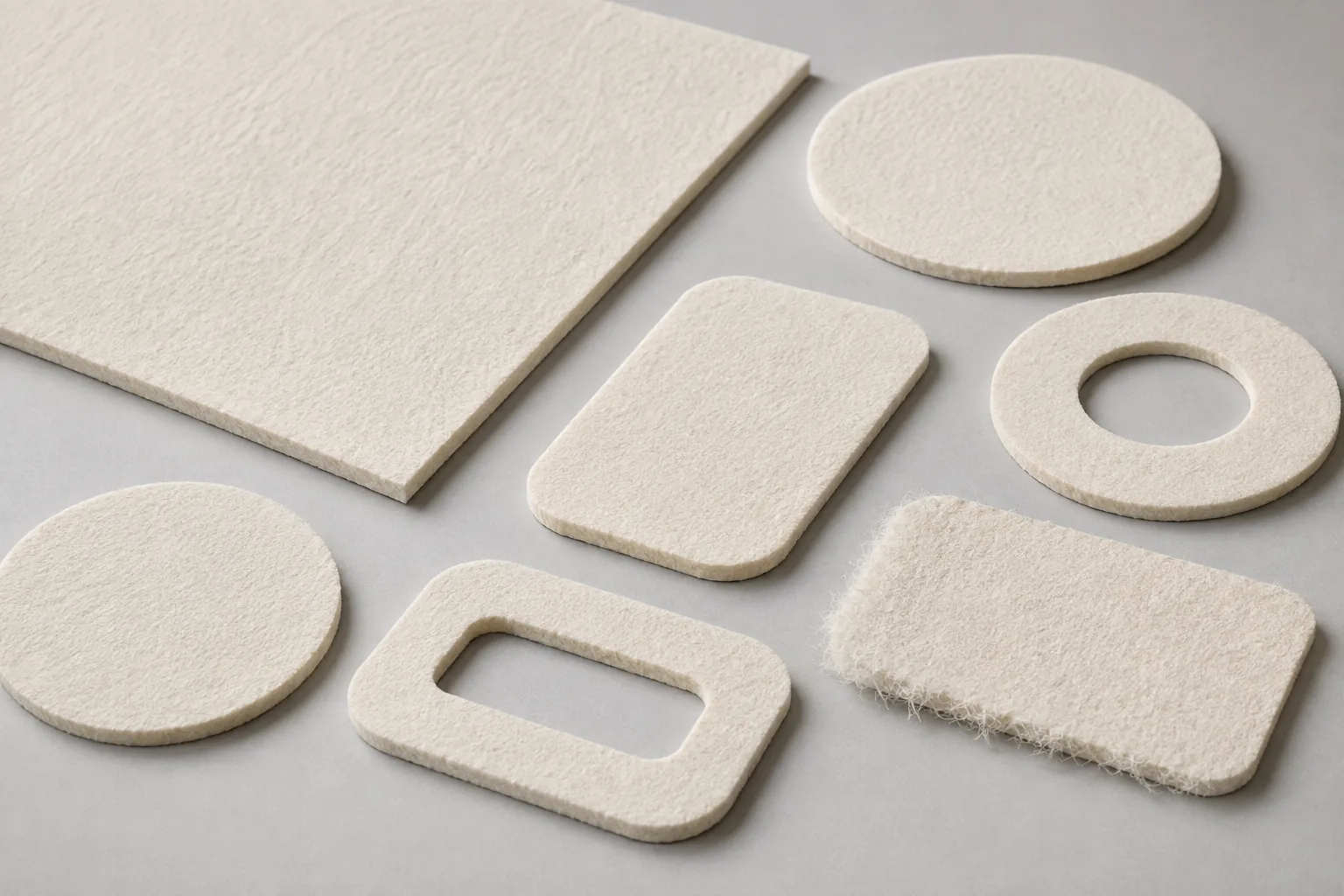
Filter disc and pad profiling
Flat media is converted into circular or shaped elements where profile accuracy and low loose-fiber generation support reliable seating.
Laboratory and process filter sheet sizing
Specialty sheets are portioned for test cells or industrial housings while preserving the specified active filtration area.
Profile Cutting process boundary
Profile cutting follows the specified finished outline, including shaped or non-rectangular boundaries; it is distinct from straight sizing and narrow edge cleanup.
Profile Cutting setup checkpoint
Review the finished outline, inside and outside radii, start and stop points, material support near corners and the method used to remove shaped waste.
Profile Cutting acceptance checkpoint
Compare the complete profile to the drawing or template, including corners, holes, narrow features, edge condition and fit in the downstream assembly.
Define the Required Cut Result
- Keep fibers anchored at the finished profile
- Avoid crushing or glazing the functional pore structure
- Hold disc, pad, or panel dimensions at sealing interfaces
- Limit loose particles before clean assembly
Problems to Diagnose Before Changing the Knife
Fiber pullout and fuzzy profile edges
Compare fiber furnish, machine direction, impregnation, moisture, edge support, cutting direction, and the length of loose fibers on accepted and rejected parts.
Compressed or glazed media near the cut
Inspect local thickness, clamp or die pressure, backing support, resin response, and whether the affected band changes airflow or sealing.
Layer separation in multi-ply filter media
Review ply construction, binder distribution, lamination strength, profile radius, and where separation begins relative to the entry and exit sides.
Cutting debris on the active filter surface
Trace extraction, handling, static charge, cleaning method, and particle transfer from the cut edge to the media face.
Knife Forms That May Be Considered
| Possible knife form | When it may be considered | What must be confirmed |
|---|---|---|
| Straight shear form | Consider for supported sheet or panel sizing before pleating. | Confirm the shear direction, support, mounting interface, media sample, and approved drawing before production. |
| Circular slitting form | Consider for continuous filter-media webs converted to narrower widths. | Confirm web tension, overlap or penetration, rotation, holder geometry, and the actual media construction. |
| Profiled cutting form | Consider for discs, pads, and housing-specific outlines. | Confirm the closed profile, minimum radii, ejection method, material support, and approved part drawing. |
Information to Send for Technical Review
You do not need to know the exact blade name. Send the available workpiece, machine, current-knife and cut-result information so the application can be reviewed against a drawing or sample.
- Filter-paper grade and intended filtration duty
- Fiber furnish, basis weight, caliper, and machine direction
- Resin impregnation, binder, coating, or lamination details
- Flat, pleated, or multi-ply condition at the cutting station
- Finished profile and sealing or bonding interface
- Cleanliness, loose-fiber, and edge-compression acceptance limits
- Feed, support, extraction, and cycle conditions
- Representative media, rejected edges, existing cutter sample, and drawing status
Questions About This Cutting Application
Why can filter paper look clean but still fail at the cut edge?
A compressed or glazed band may be visually subtle while changing pore structure or seal contact. Compare edge microscopy, thickness, airflow requirements, and housing fit where these are part of the specification.
Should impregnated and untreated filter papers be reviewed separately?
Yes. Resin or binder changes stiffness, fiber anchoring, friction, and debris behavior. Send production-condition samples for each media family that the cutting setup must cover.
How should loose fibers be measured during a trial?
Agree on an inspection method such as maximum protruding-fiber length, particle count, wipe test, or magnified edge reference. Record the method with the sample orientation and cut direction.
Can a filter disc be specified from its outside diameter alone?
No. The review may also need inner openings, sealing lands, concentricity, pore-area restrictions, ejection marks, and the housing datum shown on an approved drawing.
What should be checked before changing the cutting form?
First determine whether defects come from media construction, support, static, extraction, pressure, or handling. The equipment interface and representative samples are required before selecting a form.
Related product and service information
- Paper Straw Tube Cutoff Without End Delamination - paper straw tubes · tube cutoff
- Coated Paper Sheet Trimming Without Surface Damage - coated paper sheets · sheet trimming
- Tissue Log Cross Cutting and Compression Control - tissue logs · cross cutting
Request a Custom Cutting-Knife Review
Send the workpiece details, machine or holder information, current knife photos or sample, required quantity and examples of the present cut problem. Final dimensions, material, edge geometry and tolerances are confirmed from the approved requirements.