
Blade Application Guides / Application Guide / carpet manufacturing
Trimming Tufted Carpet Roll Edges
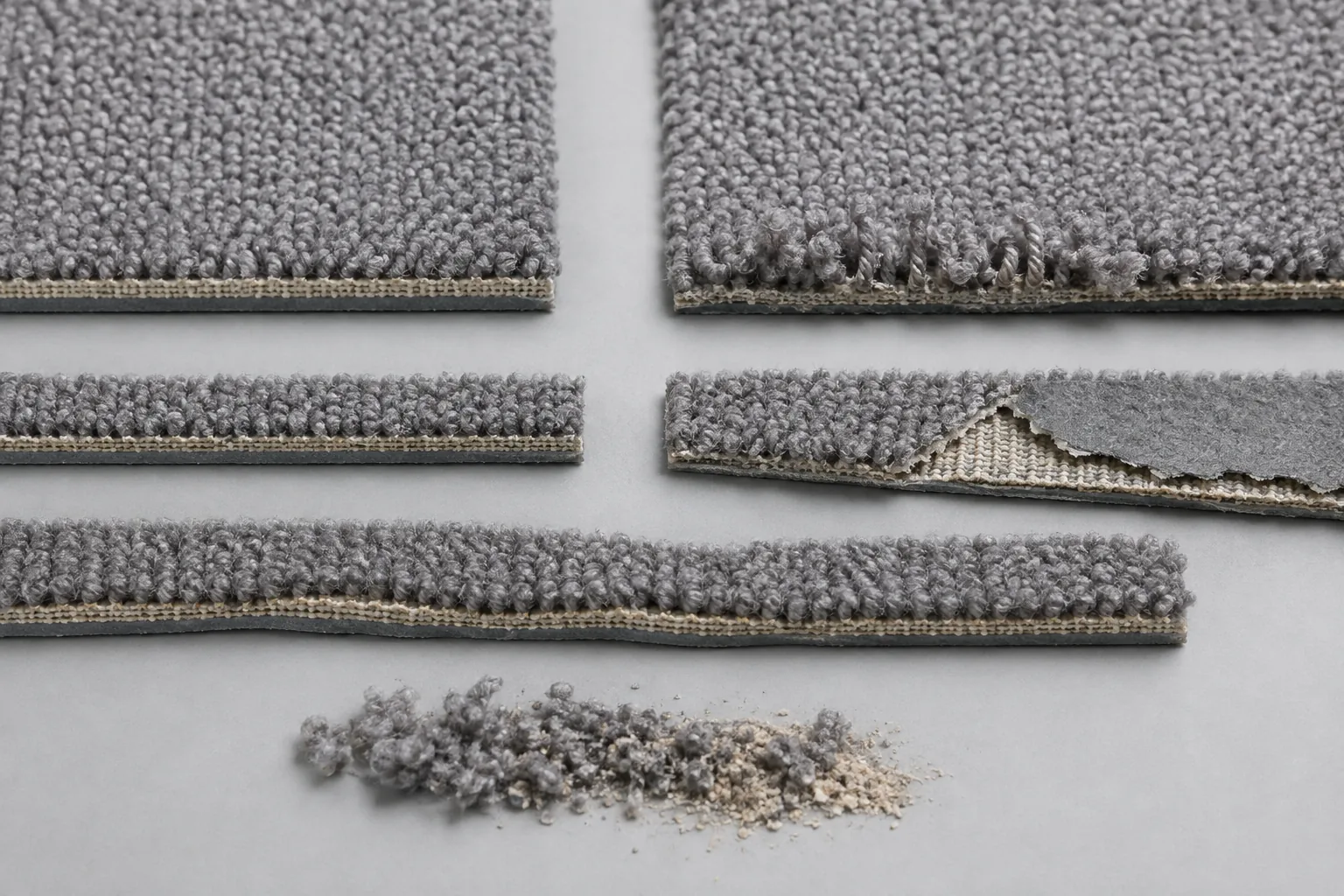
A carpet edge contains pile yarn, primary backing, binder and often a secondary backing with very different cutting behavior. Stable trimming requires the working edge to separate this stack without dragging tufts or steering along rows in the construction.
Updated
Where This Cutting Application Appears
Tufting-line selvage trim
Removes unbacked or irregular side margins before coating, secondary backing or finishing.
Backed-carpet final width trim
Sets saleable roll width after binder and secondary backing have cured.
Patterned carpet alignment trim
Controls the edge relative to pattern or tuft rows where lateral drift is visually apparent.
Edge Trimming process boundary
Edge trimming removes a narrow irregular, damaged or excess margin to finish an existing edge; it does not divide the full workpiece into several production widths.
Edge Trimming setup checkpoint
Define the trim allowance, reference edge, support close to the cut and a waste path that prevents the narrow offcut from re-entering the product.
Edge Trimming acceptance checkpoint
Inspect the finished edge for straightness, local tearing or crushing, surface scuffing and continuity from the start to the end of the trim.
Define the Required Cut Result
- A straight edge without pulled tufts
- Complete separation of all backing layers
- Finished width aligned with the agreed reference
- Low fiber and binder accumulation at the holder
Problems to Diagnose Before Changing the Knife
Yarn pullout
- Identify pile type, gauge and tuft direction
- Inspect whether the edge enters between or across tuft rows
- Check support beneath the pile and backing
Backing tear
- Identify primary and secondary backing materials
- Inspect cured binder for hard or brittle regions
- Check for a dull edge or unsupported exit side
Trim-line wandering
- Verify carpet guiding and pattern reference
- Check holder stiffness against lateral load
- Compare drift with roll tension and backing curl
Fiber buildup
- Locate accumulation on edge, hub or guard
- Check extraction and cleaning access
- Separate loose pile from adhesive or binder residue
Knife Forms That May Be Considered
| Possible knife form | When it may be considered | What must be confirmed |
|---|---|---|
| hook knife | May be considered where the process deliberately lifts and slices a carpet margin with controlled orientation. | Confirm dimensions and edge details from the carpet trimming equipment, an unworn sample or an approved drawing before manufacture. |
| circular trim blade | Can suit continuous supported trimming when rotary speed and holder geometry prevent pile from wrapping. | Confirm dimensions and edge details from the carpet trim station equipment, an unworn sample or an approved drawing before manufacture. |
| serrated straight knife | May suit indexed cross-cutting or thick backing stacks when tooth action does not pull tufts. | Confirm dimensions and edge details from the carpet cutting equipment, an unworn sample or an approved drawing before manufacture. |
Information to Send for Technical Review
You do not need to know the exact blade name. Send the available workpiece, machine, current-knife and cut-result information so the application can be reviewed against a drawing or sample.
- Tufting or finishing line and trim-station model
- Pile fiber, gauge, pile height and construction
- Primary backing, binder and secondary backing
- Cut stage before or after backing cure
- Finished width, edge tolerance and pattern reference
- Line speed, tension, support and extraction
- Photos of yarn pullout and both backing faces
- Existing knife, quantity and delivery requirements
Questions About This Cutting Application
Why do tufts pull out at only one carpet edge?
Check pile direction, lateral tension, blade orientation and support on that side; symmetrical holders do not guarantee symmetrical cutting.
Should carpet be trimmed before or after backing cure?
The stage changes stiffness, binder transfer and layer support. State the actual trim point when requesting a knife.
Can a circular blade cut through secondary backing?
It may, if diameter, drive, support and edge engagement suit the full stack. Confirm with the machine and material sample.
What defines carpet trim width?
Specify whether the reference is backing edge, usable pile, pattern line or finished roll width.
How can fiber buildup be reduced?
First identify whether accumulation is loose pile or binder. Edge condition, guarding, extraction and cleaning interval may each contribute.
Related product and service information
- Slitting Geotextile Rolls - woven and nonwoven geotextile rolls · roll slitting and width conversion
- Slitting Spunbond Nonwoven Rolls - spunbond nonwoven rolls · longitudinal roll slitting
- Slitting Meltblown Nonwoven Web - meltblown nonwoven web · precision web slitting
Request a Custom Cutting-Knife Review
Send the workpiece details, machine or holder information, current knife photos or sample, required quantity and examples of the present cut problem. Final dimensions, material, edge geometry and tolerances are confirmed from the approved requirements.