
Blade Application Guides / Application Guide / filtration media production
Slitting Meltblown Nonwoven Web
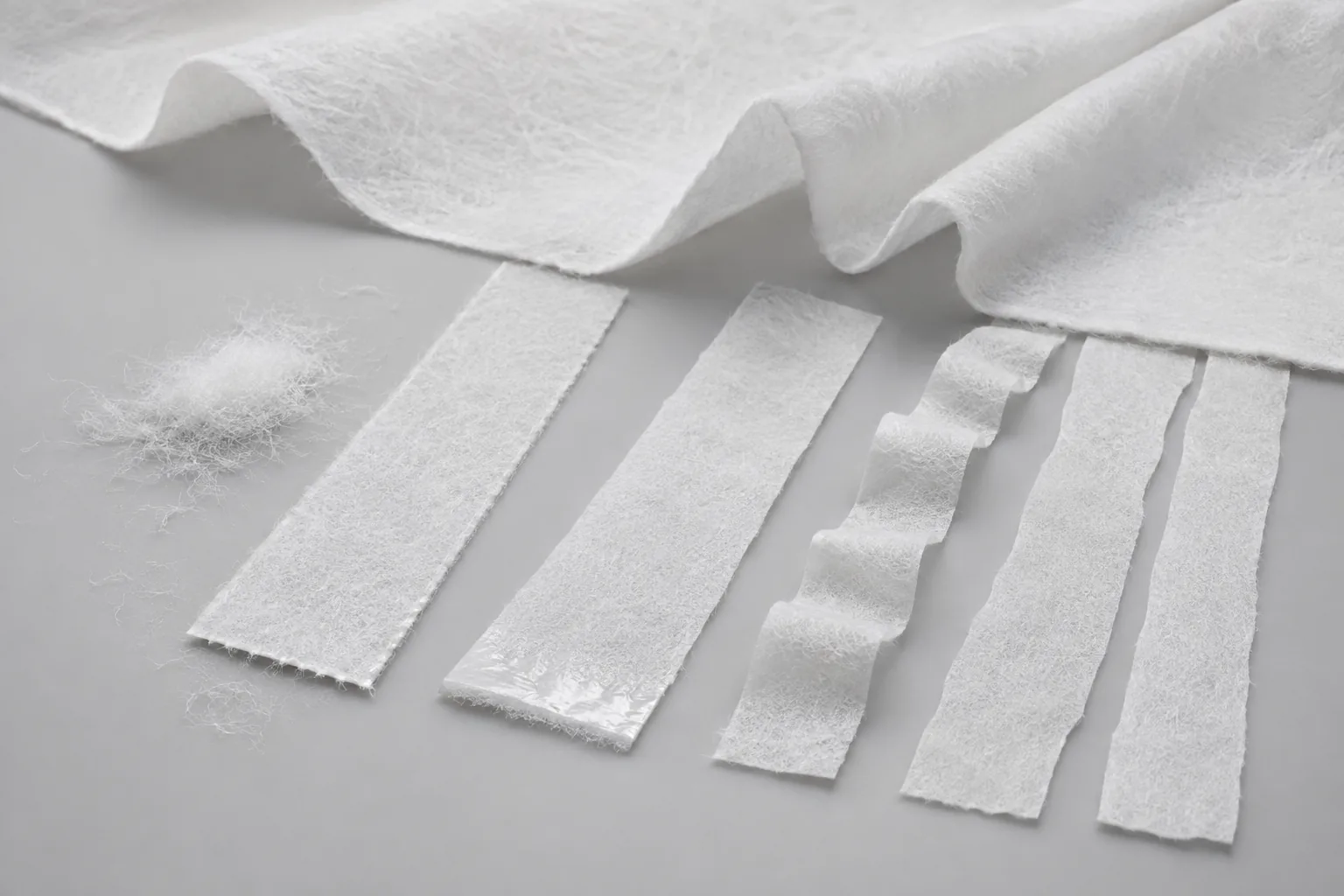
Meltblown media contains fine, lightly supported fibers and may carry an electrostatic charge important to filtration performance. Slitting should minimize mechanical disturbance and heat while keeping an extremely light web stable at the cutting point.
Updated
Where This Cutting Application Appears
Filter-media master-roll slitting
Converts wide meltblown media into roll widths required for pleating, laminating or downstream filter assembly.
Composite media layer preparation
Slits meltblown before or after lamination where layer tracking and particle generation affect later bonding.
Charge-sensitive media changeover
Reviews cutting and handling when basis weight, electrostatic treatment or additive package changes web behavior.
Precision Web Slitting process boundary
precision web slitting for meltblown nonwoven web is planned around longitudinal width conversion of a moving roll, web, sheet or strip into controlled lanes or daughter rolls; it is not transverse length cutting, profile formation or removal of only a narrow damaged margin.
Precision Web Slitting setup checkpoint
For meltblown nonwoven web, confirm unwind and rewind tension, lane widths, knife positions, edge guidance, core alignment, trim removal and discharge behavior.
Precision Web Slitting acceptance checkpoint
For meltblown nonwoven web, evaluate lane width, edge condition, camber or wandering, debris, telescoping, interleaving and stable winding or downstream transfer.
Define the Required Cut Result
- Low-shed cut edges with fully separated fibers
- No visible heat fusion or glazing
- Stable slit position on a lightweight moving web
- Minimal contamination of filtration media
Problems to Diagnose Before Changing the Knife
Fiber shedding
- Inspect basis weight and bonding condition
- Check for a chipped or contaminated edge
- Review extraction and contact surfaces after the cut
Edge fusion
- Measure speed and contact heating
- Inspect edge finish and accumulated polymer
- Separate thermal glazing from compression
Web flutter
- Measure free span and local airflow
- Check tension at the lightweight web
- Review static control and backing support
Uneven slit width
- Verify edge guiding before the slitter
- Inspect holder movement and runout
- Compare variation with speed and roll build
Knife Forms That May Be Considered
| Possible knife form | When it may be considered | What must be confirmed |
|---|---|---|
| razor slitter | May minimize cutting force on a thin web when safe support, exposure control and frequent replacement are built into the station. | Confirm the mounting dimensions, cutting motion and edge details from the meltblown media slitting equipment, an unworn sample or an approved drawing before manufacture. |
| circular shear slitter | May provide positive supported separation where the web and holder can tolerate controlled overlap and side load. | Confirm the mounting dimensions, cutting motion and edge details from the meltblown media slitting equipment, an unworn sample or an approved drawing before manufacture. |
| supported straight knife | May suit indexed sheeting or cutoff rather than continuous narrow-width slitting when the web can be clamped gently. | Confirm the mounting dimensions, cutting motion and edge details from the meltblown media cutting equipment, an unworn sample or an approved drawing before manufacture. |
Information to Send for Technical Review
You do not need to know the exact blade name. Send the available workpiece, machine, current-knife and cut-result information so the application can be reviewed against a drawing or sample.
- Media line, slitter and rewinder model
- Polymer, basis weight and electrostatic treatment
- Single-layer or laminated web construction
- Web width, slit plan and tolerance
- Line speed, tension, free span and airflow
- Cleanliness and particle-control requirements
- Edge microscopy or close photos of shedding and fusion
- Existing knife, change interval, quantity and destination
Questions About This Cutting Application
Can slitting damage meltblown filtration performance?
Excess heat, compression or contamination can affect the edge region. Define whether the customer needs only visual inspection or additional media performance checks.
What is the difference between fiber shedding and edge fusion?
Shedding leaves loose fibers or particles; fusion shows locally melted or glazed polymer. They point to different combinations of edge condition, force and heat.
Why does a meltblown web flutter at the knife?
Low basis weight, long free span, airflow, static and unstable tension can move the web. Stabilize the web before changing knife geometry.
Is a circular shear always cleaner than a razor?
No. Either can work in the correct station; support, overlap, blade condition, change interval and particle risk determine the result.
What sample should be retained from a trial?
Keep upstream material, accepted edge, rejected edge and wound-roll samples, all marked with direction, speed, tension and blade hours.
Related product and service information
- Cutting Needle-Punched Felt - needle-punched felt · sheet and roll cutting
- Slitting Spunbond Nonwoven Rolls - spunbond nonwoven rolls · longitudinal roll slitting
- Slitting Geotextile Rolls - woven and nonwoven geotextile rolls · roll slitting and width conversion
Request a Custom Cutting-Knife Review
Send the workpiece details, machine or holder information, current knife photos or sample, required quantity and examples of the present cut problem. Final dimensions, material, edge geometry and tolerances are confirmed from the approved requirements.