
Blade Application Guides / Application Guide / Coated abrasives
Abrasive Paper Cutting With Controlled Grit Shedding
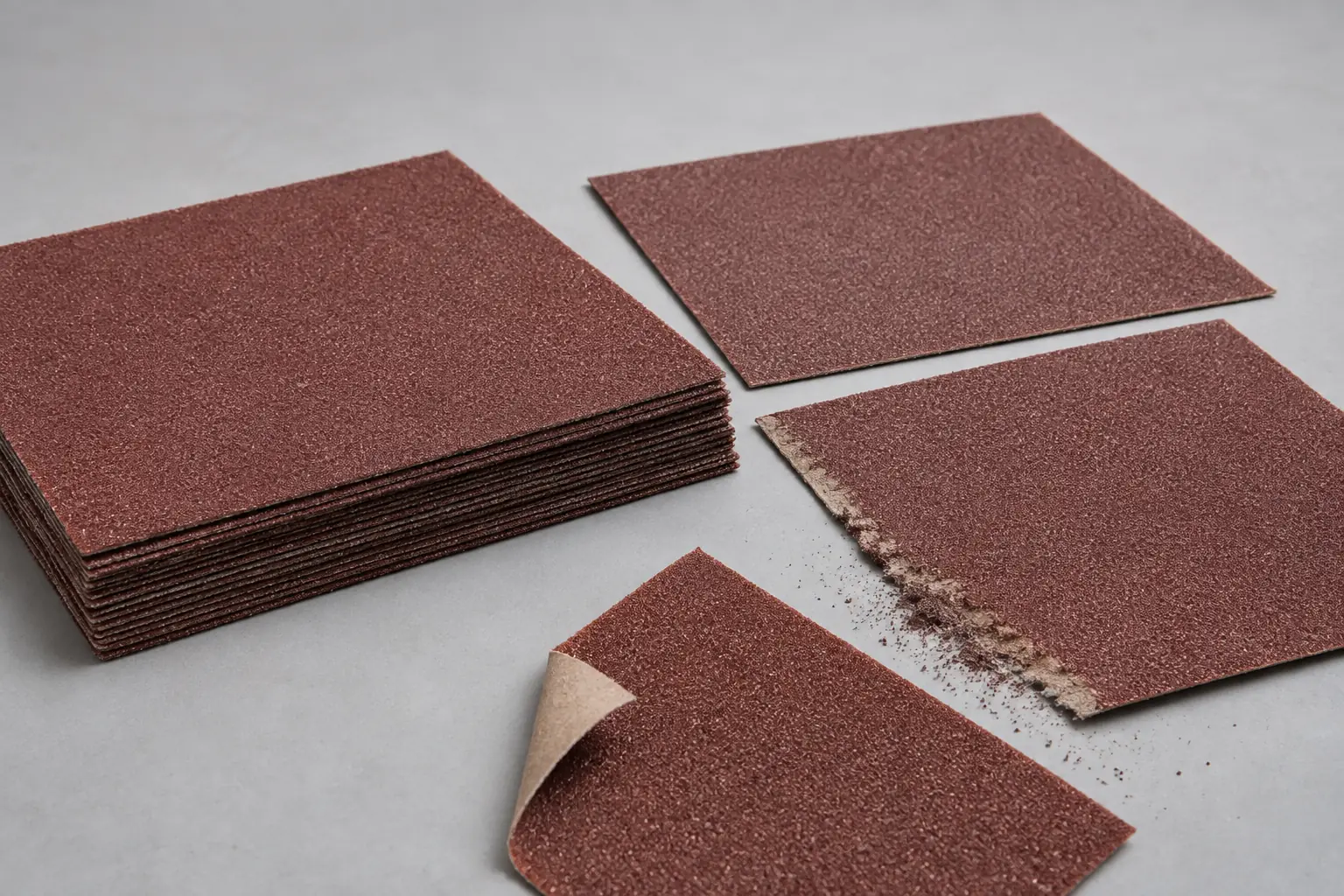
Abrasive paper places mineral grit, bonding resin and a flexible paper backing in the same cut. Technical review should identify which side is presented, how the sheet is supported and how much grit loss or backing breakout is acceptable.
Updated
Where This Cutting Application Appears
Sanding-sheet format cutting
Coated abrasive rolls or large sheets are sized into rectangular hand-sanding sheets with consistent dimensions and limited loose grit.
Abrasive belt blank preparation
Long strips are cut before belt splicing, so straight edges and undamaged backing are important at the joint.
Disc and profile blank conversion
Sheets are prepared for later die cutting or profiling, where cracks or delamination can propagate from a rough pre-cut edge.
Sheet Cutting process boundary
Sheet cutting separates sheet stock with straight cuts into manageable panels or sections; it differs from final two-axis sizing, shaped contour cutting and narrow edge cleanup.
Sheet Cutting setup checkpoint
Confirm sheet orientation, straight cut lines, support on both sides, hold-down method and the sequence used to reduce large stock into manageable sections.
Sheet Cutting acceptance checkpoint
Measure the specified cut dimension and squareness, then inspect edge breakout, compression, corner damage, surface marking and stack consistency.
Define the Required Cut Result
- Control excessive grit shedding at the cut
- Maintain the required geometry for sanding-sheet format cutting
- Protect material integrity during sheet cutting
- Deliver a cut condition accepted by the next production step
Problems to Diagnose Before Changing the Knife
Excessive grit shedding at the cut
Compare mineral type and grit size, coat density, bonding resin, coated-side orientation, support and the point where grains release.
Backing tear or layer delamination
Review backing weight, flex treatment, moisture, cut direction, exit support and whether the tear follows a splice or weak zone.
Rapid wear concentrated on one cutting zone
Inspect sheet presentation, abrasive-side contact, cutting length distribution, alignment, contamination and wear mapping on the existing part.
Dimensional drift or bowed sheet edges
Check material curl, guide datum, stack alignment, feed method, support flatness and how finished blanks are measured.
Knife Forms That May Be Considered
| Possible knife form | When it may be considered | What must be confirmed |
|---|---|---|
| Straight shear form | Consider for supported sheet or stack cutting from the backing or coated side. | Confirm this form only from the abrasive paper sheets sample, equipment interface, operating motion and approved drawing. |
| Rotary slitting form | Consider where abrasive stock is converted continuously from a roll. | Confirm this form only from the abrasive paper sheets sample, equipment interface, operating motion and approved drawing. |
Information to Send for Technical Review
You do not need to know the exact blade name. Send the available workpiece, machine, current-knife and cut-result information so the application can be reviewed against a drawing or sample.
- Abrasive mineral type and grit-size range
- Open-coat or closed-coat construction and coat density
- Paper backing grade, weight, treatment and moisture condition
- Resin or bond system and any anti-loading top treatment
- Coated-side orientation and direction through the cutting station
- Sheet or roll size, stack height, feed speed and support arrangement
- Finished blank dimensions plus grit-loss and backing-edge criteria
- Existing cutting-part sample, wear map, regrinding history and required quantity
Questions About This Cutting Application
Why does coarse abrasive paper shed more grain during cutting?
Larger mineral particles present a different interrupted surface to the cut, but bond system, coat density and support also matter. Compare actual grades under the same setup.
Should abrasive paper be cut from the grit side or backing side?
The suitable direction depends on the cutting action, support and defect limits. Report the current presentation and compare grit loss and backing breakout on controlled samples.
How should accelerated wear be documented?
Mark the active cutting zones, record processed length or cycles by abrasive grade, photograph the wear pattern and note any changes after cleaning or regrinding.
What edge condition is needed for an abrasive belt blank?
The edge should meet the splice process requirements for straightness, backing integrity and loose grain. Provide the joint design and accepted blank sample for review.
Can material hardness alone determine a suitable cutting specification?
No. Mineral type, grit size, backing, bond, coating orientation, motion and interface all influence wear and cut quality. Final selection requires samples and a confirmed drawing.
Related product and service information
- Book Block Three-Side Trimming for Square Clean Edges - bound book blocks · three-side trimming
- Coated Paper Sheet Trimming Without Surface Damage - coated paper sheets · sheet trimming
- Tissue Log Cross Cutting and Compression Control - tissue logs · cross cutting
Request a Custom Cutting-Knife Review
Send the workpiece details, machine or holder information, current knife photos or sample, required quantity and examples of the present cut problem. Final dimensions, material, edge geometry and tolerances are confirmed from the approved requirements.