
Blade Application Guides / Application Guide / technical textile production
Cross-Cutting Woven Industrial Fabric
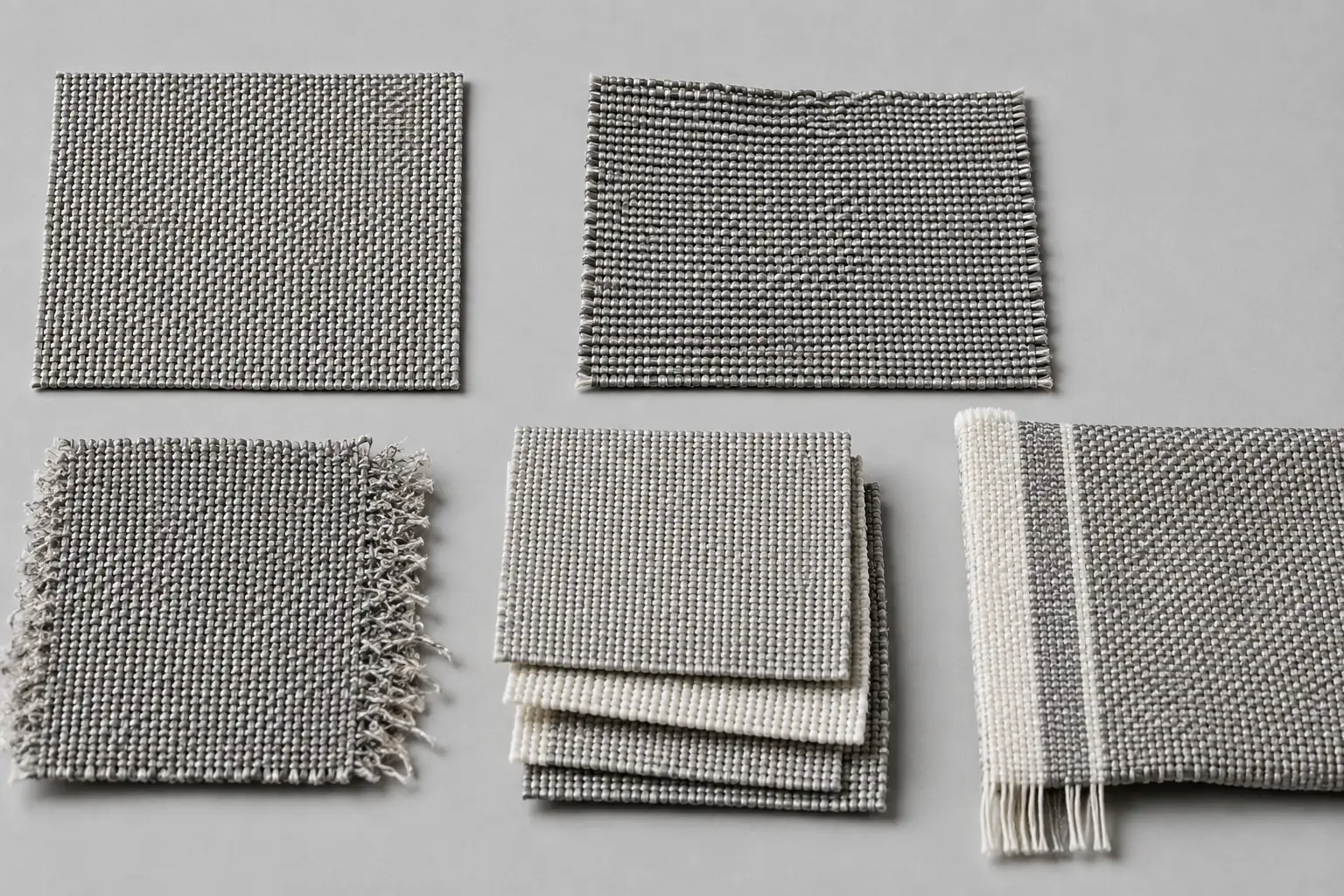
Woven fabric redistributes tension through warp and weft as soon as it is cut. A dependable cross-cut requires alignment to the weave, uniform restraint across the width and an edge action that severs yarns without dragging the cloth off square.
Updated
Where This Cutting Application Appears
Roll-to-sheet conversion
Cuts coated or uncoated industrial fabric into repeatable sheet lengths for later assembly.
Reinforcement-ply preparation
Produces square or bias pieces for rubber, composite or membrane reinforcement.
Multi-ply stack cutting
Separates aligned layers where ply slip and bottom-layer completion must be controlled.
Cross-Cutting To Length process boundary
cross-cutting to length for woven industrial fabric is planned around separation across the material flow or part axis to establish a controlled repeat length or finished end; it is not longitudinal width conversion, shaped contour production or particle-size reduction.
Cross-Cutting To Length setup checkpoint
For woven industrial fabric, confirm target length, datum or registration reference, feed indexing, support on both sides, cut timing and post-cut transfer.
Cross-Cutting To Length acceptance checkpoint
For woven industrial fabric, evaluate length distribution, squareness or cutoff angle, both cut faces, deformation, registration drift and stacking or discharge consistency.
Define the Required Cut Result
- Square cut aligned to the specified weave reference
- Low yarn fray across the full width
- No ply shift in stacked material
- Complete separation at both selvages
Problems to Diagnose Before Changing the Knife
Weft distortion
- Check cross-web tension balance
- Mark weave alignment before cutting
- Inspect clamp timing
Frayed edge
- Identify yarn type and weave density
- Inspect edge sharpness
- Compare cut direction to yarn orientation
Fabric shifting
- Review hold-down distribution
- Check slippery coatings or interleaves
- Measure feed stop repeatability
Incomplete selvage cut
- Inspect thickness at reinforced edges
- Check stroke parallelism
- Review backing and penetration
Knife Forms That May Be Considered
| Possible knife form | When it may be considered | What must be confirmed |
|---|---|---|
| straight shear knife | May deliver a square full-width cut when fabric is clamped against a matched stationary edge. | Confirm dimensions and edge details from the fabric cross-cutter equipment, an unworn sample or an approved drawing before manufacture. |
| rotary cross-cutter | Can suit continuous sheeting when knife timing and surface speed synchronize with the moving web. | Confirm dimensions and edge details from the rotary textile cutter equipment, an unworn sample or an approved drawing before manufacture. |
| serrated knife | May reduce dragging in bulky textiles, provided tooth marks and yarn pullout remain acceptable. | Confirm dimensions and edge details from the woven-fabric cutter equipment, an unworn sample or an approved drawing before manufacture. |
Information to Send for Technical Review
You do not need to know the exact blade name. Send the available workpiece, machine, current-knife and cut-result information so the application can be reviewed against a drawing or sample.
- Cross-cutter make and model
- Fiber, yarn and weave construction
- Coating, backing or number of plies
- Web width and selvage construction
- Sheet length, squareness and bias requirement
- Speed, tension, clamp and backing
- Accepted and distorted edge samples
- Knife drawing, quantity and destination
Questions About This Cutting Application
Why does a woven sheet relax out of square?
Unequal warp or weft tension can release after cutoff. Define alignment and measurement after relaxation.
Should the selvage remain on the part?
State whether it is retained or removed because its thickness and weave differ from the body.
Can several plies be cut together?
Yes only if restraint prevents slip and the stroke fully separates the bottom ply.
What causes yarns to pull across the cut?
A dull edge, dragging action or poor backing can move yarns before severing them.
What drawing reference is useful?
Show sheet size, warp direction, allowable bias, retained selvage and any notch location.
Related product and service information
- Bead Filler Rubber Strip Edge Trimming Blades - bead filler rubber strip · edge trimming
- Slitting Spunbond Nonwoven Rolls - spunbond nonwoven rolls · longitudinal roll slitting
- Slitting Meltblown Nonwoven Web - meltblown nonwoven web · precision web slitting
Request a Custom Cutting-Knife Review
Send the workpiece details, machine or holder information, current knife photos or sample, required quantity and examples of the present cut problem. Final dimensions, material, edge geometry and tolerances are confirmed from the approved requirements.