
Blade Application Guides / Application Guide / Wind-turbine blade manufacturing
Wind-Blade Structural Adhesive Film Edge-Trimming Blades
Notus Composites lists adhesive films among wind-energy materials, while Hexcel describes structural film adhesives supplied on rolls. For a blade joint whose qualified design actually calls for such a film, an edge trim can remove a documented damaged margin or establish the specified usable width. Sika describes common blade-shell bonding adhesives as two-component pastes, a different process. This guide covers one or two narrow outside waste strips, not splitting the web into many rolls and not trimming cured adhesive from a finished joint. Film grade, protective liners and permissible width loss must be established before any cut.
Updated
Where This Cutting Application Appears
Authorize the edge allowance
Compare incoming roll width with the bond-detail drawing. Identify contamination, wrinkled liner, displaced carrier or another defect that the buyer allows to be removed. Mark which side is affected, and confirm that the remaining film still covers the specified joint area. Do not enlarge the trim simply to obtain a visually neat edge when the design needs the original width.
Stabilize the adhesive and liner
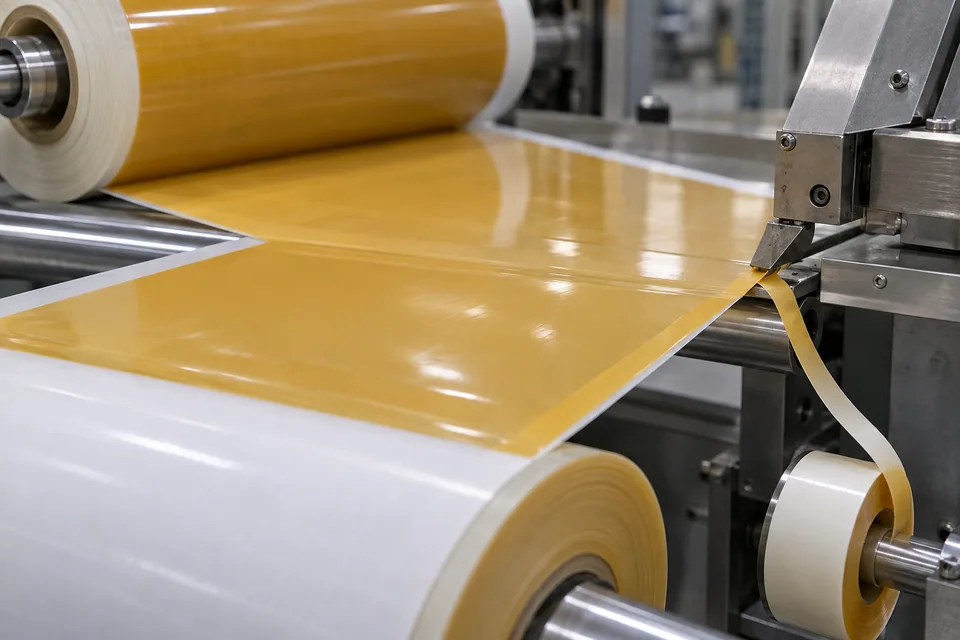
Unwind under the approved material-handling controls, preserving grade and exposure records. Hold the web flat without stretching its carrier or peeling its release liner. Capture a very narrow waste ribbon before it wraps the blade or touches retained adhesive. The appropriate knife form depends on adhesive tack, carrier and liner construction, so make a short trial on the delivered material.
Inspect the newly retained edge
Check the full roll length for exposed adhesive, squeezed-out beads, liner bridges, folded carrier fibers and residue on the opposite face. Measure retained width after rewinding, since roll tracking can drift from a fixed knife position. Inspect both the retained edge and waste; the latter can reveal uncut carrier filaments or a liner that tore after the adhesive separated.
Protect the converted roll
Label the trimmed side, source lot, film grade and handling history. Keep protective liner in place until the qualified application step. Look for interlayer blocking and adhesive transfer after the roll sits under the buyer’s approved conditions. Do not claim any universal storage or out-time limit from the cutting process alone.
Confirm the bond-detail fit
Feed a representative trimmed roll into the receiving station and check peel, laydown and coverage. The blade maker must separately qualify substrate preparation, cure and joint performance. If the new width cannot meet the drawing after normal placement variation, edge trimming is not acceptable even when the cut itself is clean.
Define the Required Cut Result
- Remove only an authorized longitudinal margin.
- Keep specified bond width, carrier and liner intact.
- Avoid adhesive bleed and roll blocking.
- Retain film lot and handling traceability.
Problems to Diagnose Before Changing the Knife
Waste strip sticks to retained film
- Review peel path and waste collection.
- Check knife buildup and adhesive state.
- Inspect wound turns for transfer.
Liner tears while adhesive edge looks clean
- Inspect full stack and waste.
- Recheck support near the trim line.
- Test liner removal at application.
Knife Forms That May Be Considered
| Possible knife form | When it may be considered | What must be confirmed |
|---|---|---|
| Guided longitudinal edge blade | For the qualified film stack after a trial. | Confirm liner, carrier and adhesive are all separated. |
| Paired shear edge station | Only if the supplied construction accepts the shear contact. | Inspect squeeze-out, retained width and winding. |
Information to Send for Technical Review
You do not need to know the exact blade name. Send the available workpiece, machine, current-knife and cut-result information so the application can be reviewed against a drawing or sample.
- Approved adhesive-film grade and bond drawing
- Incoming width and allowed edge waste
- Carrier and release-liner construction
- Handling and exposure procedure
- Adhesive-edge, blocking and liner-peel criteria
Questions About This Cutting Application
Is edge trimming a multi-lane slitting operation?
No. It removes a narrow outside strip while retaining the main web.
Does every blade use film adhesive?
No. The design must specify film; many blade joints use dispensed paste.
May a damaged margin always be trimmed away?
Only if the resulting width still meets the qualified bond detail.
Does a sound trim prove bond strength?
No. Joint preparation and cure are separately qualified.
Public references and scope
These public sources provide material, cutting-method or safety context for this guide. Supplier pages describe their own materials or equipment; they do not establish a MEIRENTE blade specification or performance claim. Confirm the actual grade, machine setup and required cut with a drawing or sample.
Related product and service information
- Wind-Blade Structural Adhesive Film Roll Slitting Blades - wind-blade structural adhesive film · roll slitting
- Blade-Root Reinforcement Fabric Edge-Trimming Blades - blade-root reinforcement fabric · edge trimming
- Blade Leading-Edge Protection Tape Edge-Trimming Blades - blade leading-edge protection tape · edge trimming
Request a Custom Cutting-Knife Review
Send the workpiece details, machine or holder information, current knife photos or sample, required quantity and examples of the present cut problem. Final dimensions, material, edge geometry and tolerances are confirmed from the approved requirements.