
Blade Application Guides / Application Guide / Wind-turbine blade manufacturing
Blade-Root Reinforcement Fabric Edge-Trimming Blades
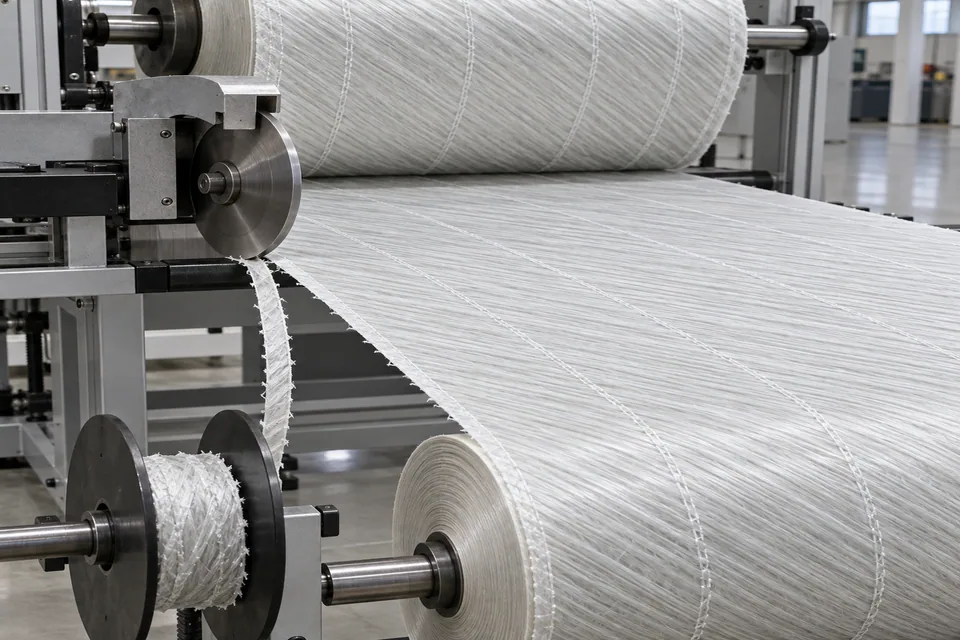
SAERTEX describes non-crimp multiaxial reinforcement fabrics for wind-turbine blade roots and separate cutting and kitting operations. Edge trimming is a narrower conversion task than making many slit lanes: a narrow strip is removed from one or both longitudinal edges of an incoming dry roll to deliver a specified usable width or eliminate a documented edge defect. This is conditional on the incoming fabric’s construction and the buyer’s permitted trim zone. Removing sound reinforcement without a drawing allowance could change the planned ply coverage.
Updated
Where This Cutting Application Appears
Mark the permitted trim zone
Measure actual roll width and compare it with the blade-root material specification. Identify selvage, stitching variation, ragged reinforcement or handling damage that the buyer has agreed may be removed. Establish the fiber axis and any edge identification marks before discarding the strip. The required retained width must come from the layup or cutting plan, not from a convenient machine position.
Support the web at the outside edge
Guide the dry textile so the outside strip enters the blade steadily. A very narrow waste ribbon can wrap a knife or pull on long filaments, especially where angled fibers cross the trim line. Select a blade form by trial on the supplied architecture and use suitable waste capture. This page does not prescribe a universal shear or razor geometry.
Check the new retained edge
Inspect stitch loops, fiber tails, local layer separation and straightness along the whole roll. Compare the trimmed edge with the untouched opposite edge where appropriate. Measure usable width after rewind and check for edge waviness or bowing. If a defect extends inside the allowed trim zone, additional cutting requires a revised width decision rather than an unrecorded wider trim.
Keep trimmed material separate
Collect waste without allowing fibers or dust to return to the retained roll. Record which side was trimmed, the amount removed and the original lot identity. Protect the new edge during storage and transport. A visually neat trim cannot substitute for traceability or for final root-ply fit checks.
Confirm final cutting allowance
Run the trimmed roll into the actual ply-nesting station. Verify that every programmed root ply still fits in the usable width with the specified fiber orientation. Look for edge unraveling during repeated unwinds. A successful edge trim preserves feed stock; it does not create a contoured ply or certify the infused blade-root structure. Confirm that any print, stripe or orientation mark near the discarded selvage remains available through the later kitting route.
Define the Required Cut Result
- Remove only documented longitudinal edge waste.
- Preserve required usable width and fiber direction.
- Avoid loose fibers and stitch unraveling.
- Keep trimmed side and lot traceable.
Problems to Diagnose Before Changing the Knife
Narrow waste ribbon wraps the tool
- Review waste take-off and web guide.
- Check blade condition.
- Stop before waste pulls retained fibers.
New edge appears clean but is too narrow
- Measure after rewind and relaxation.
- Check ply-nesting allowance.
- Record actual trim width and side.
Knife Forms That May Be Considered
| Possible knife form | When it may be considered | What must be confirmed |
|---|---|---|
| Guided longitudinal trim blade | For a continuous dry textile edge with adequate support. | Confirm waste removal and retained-edge fibers. |
| Paired shear edge station | A candidate if the fabric accepts shear and the machine has waste control. | Check stitch retention and final usable width. |
Information to Send for Technical Review
You do not need to know the exact blade name. Send the available workpiece, machine, current-knife and cut-result information so the application can be reviewed against a drawing or sample.
- Incoming and required usable fabric widths
- Authorized trim allowance and damaged edge location
- Stitched reinforcement architecture
- Waste-capture method
- Downstream ply width and orientation criteria
Questions About This Cutting Application
Is this the same as making several narrow rolls?
No. Edge trimming removes a narrow outside strip while keeping the principal web.
Can extra material be trimmed to improve appearance?
Only if the retained width and root-ply layout permit it.
Why record the side removed?
Edge identity and fiber orientation may matter to later cutting.
Does trimming replace final ply cutting?
No. Final contours are cut after this stock conversion.
Public references and scope
These public sources provide material, cutting-method or safety context for this guide. Supplier pages describe their own materials or equipment; they do not establish a MEIRENTE blade specification or performance claim. Confirm the actual grade, machine setup and required cut with a drawing or sample.
Related product and service information
- Blade-Root Reinforcement Fabric Roll Slitting Blades - blade-root reinforcement fabric · roll slitting
- Wind-Blade Structural Adhesive Film Edge-Trimming Blades - wind-blade structural adhesive film · edge trimming
- Blade Leading-Edge Protection Tape Edge-Trimming Blades - blade leading-edge protection tape · edge trimming
Request a Custom Cutting-Knife Review
Send the workpiece details, machine or holder information, current knife photos or sample, required quantity and examples of the present cut problem. Final dimensions, material, edge geometry and tolerances are confirmed from the approved requirements.