
Blade Application Guides / Application Guide / Biopharmaceutical manufacturing
Virus-Filtration Membrane Edge Trimming Blades
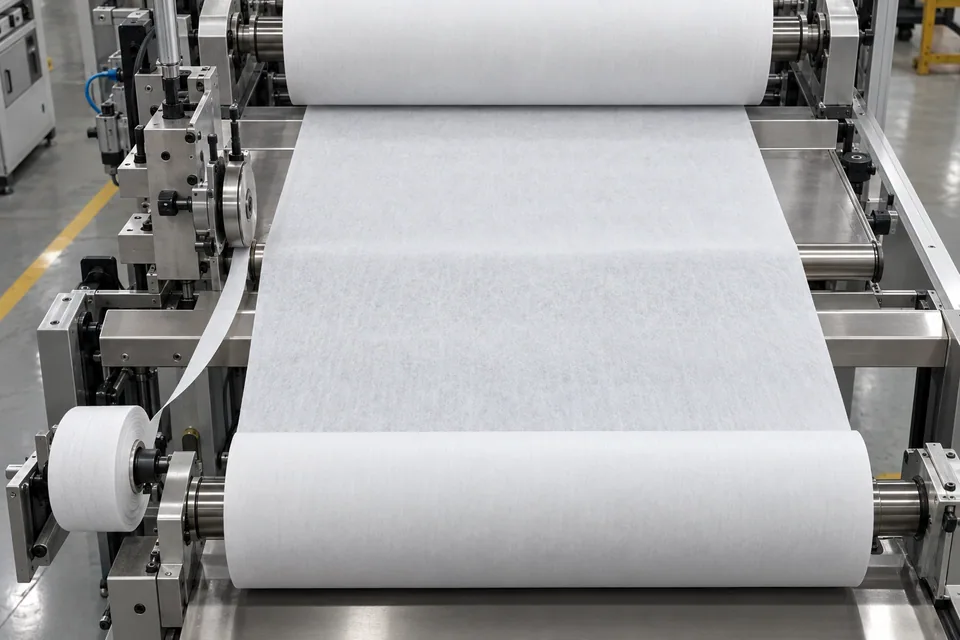
Edge trimming removes one narrow outside margin from a flat virus-filter membrane web during device manufacture. Sartorius documents specialized virus-retentive membrane products; Pyradia documents roll-based membrane lines with careful tension control. Those references do not authorize converting a marketed filter capsule. The media owner must define the active region, support construction and edge-seal allowance. A trim line can be outside the later filter area yet still shed particles or pull the porous membrane sideways. The operation is therefore distinct from multi-lane slitting and from cutting discrete filter shapes. Acceptance requires width, edge and handling evidence from the actual membrane grade, followed by the device maker’s integrity and viral-retention validation.
Updated
Where This Cutting Application Appears
Locate the true sacrificial selvage
Show the original edge, new retained edge, active region and later gasket or weld line on one drawing. Check whether a carrier extends beyond the membrane; trimming carrier alone is not equivalent to cutting the porous layer.
Route the narrow waste strip
Support the main web close to the trim point and guide scrap away without brushing the active surface. Record waste tension. A broken selvage can wrap a shaft and tug a notch into otherwise useful media.
Inspect the retained margin
Measure retained width along the roll and examine nicks, folds, pore crush, pulled support fibers and debris. Compare near-edge defects with an uncut control under the owner’s approved method.
Test transfer into filter assembly
Move accepted trimmed web through the planned pleat or stack layout and verify that the remaining edge-seal allowance stays intact. The filter manufacturer controls environment, lot release, device integrity and retention qualification. The bioprocess owner validates process-specific viral clearance; edge trimming proves none of these.
Define the Required Cut Result
- Retain the defined active width and assembly margin.
- Avoid nicks, compression and loose particles at the new boundary.
- Collect selvage without dragging usable membrane.
- Maintain lot and face traceability.
Problems to Diagnose Before Changing the Knife
Waste strip tears repeatedly
- Check trim width and takeoff angle.
- Inspect knife wear and local support.
- Check incoming membrane strength at the edge.
Useful width drifts
- Review lateral web guide and datum.
- Measure original roll-edge variation.
- Inspect winding tension after the trim.
Particles enter active area
- Map particle location to knife, guide or scrap takeoff.
- Compare pre-trim control.
- Apply the owner’s clean-handling standard.
Knife Forms That May Be Considered
| Possible knife form | When it may be considered | What must be confirmed |
|---|---|---|
| Supported outside edge-trim knife | For a membrane web and margin explicitly released by its owner. | Confirm complete clean separation and stable retained width. |
| Matched rotary shear trim pair | Where an approved line uses overlapping edges to remove selvage. | Confirm edge compression, scrap routing and retained active area. |
Information to Send for Technical Review
You do not need to know the exact blade name. Send the available workpiece, machine, current-knife and cut-result information so the application can be reviewed against a drawing or sample.
- Flat membrane grade and media-owner conversion approval
- Active-area and edge-seal drawing
- Carrier versus membrane edge relationship
- Web guide, knife and waste-takeoff drawings
- Allowed tension and cleanroom condition
- Accepted nick, particle and pore-damage samples
- Roll inspection and lot traceability plan
- Filter-maker assembly and integrity validation
Questions About This Cutting Application
Is edge trimming the same as slitting several product lanes?
No. It removes one defined outside scrap margin while the main web remains.
What if only the carrier overhang is cut?
State that explicitly; cutting a carrier is different from trimming active porous membrane.
Can the trim strip touch the active face?
Only if the media owner allows it; scrap contact can add particles or tears.
Does retained width prove usable filter area?
No. The edge seal and membrane condition must also satisfy the device drawing.
What validates virus removal?
The filter maker qualifies device integrity and retention; the bioprocess owner validates viral clearance under its actual process conditions.
Public references and scope
These public sources provide material, cutting-method or safety context for this guide. Supplier pages describe their own materials or equipment; they do not establish a MEIRENTE blade specification or performance claim. Confirm the actual grade, machine setup and required cut with a drawing or sample.
Related product and service information
- Virus-Filtration Membrane Roll Slitting Blades - virus-filtration membrane · roll slitting
- Single-Use Bioreactor Bag Film Edge Trimming Blades - single-use bioreactor bag film · edge trimming
- Chromatography Membrane-Adsorber Media Edge-Trimming Blades - chromatography membrane-adsorber media · edge trimming
Request a Custom Cutting-Knife Review
Send the workpiece details, machine or holder information, current knife photos or sample, required quantity and examples of the present cut problem. Final dimensions, material, edge geometry and tolerances are confirmed from the approved requirements.