
Blade Application Guides / Application Guide / Biopharmaceutical manufacturing
Single-Use Bioreactor Bag Film Edge Trimming Blades
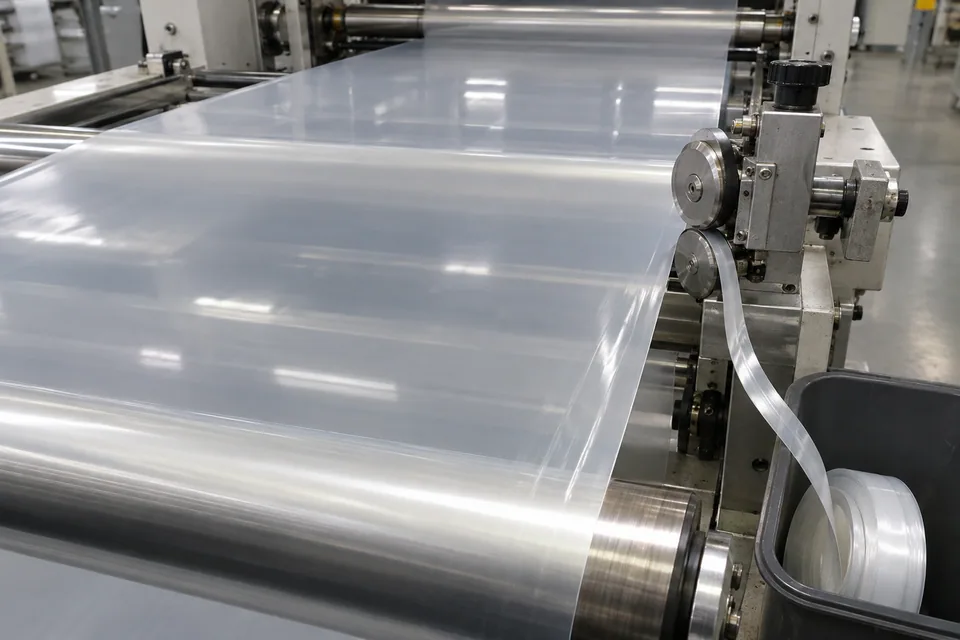
Edge trimming removes only a defined outside margin from an unassembled bioreactor bag film roll or flat panel. Sartorius and Thermo Fisher describe controlled film platforms used to assemble single-use bags; the particular grade and layer orientation must come from the buyer. This operation is narrower in scope than dividing a parent roll into many useful lanes. The retained film edge may later lie near a weld, so a trim that improves width but leaves particles, stretched sealant or exposed barrier is unacceptable. Document whether the waste strip comes from the product-contact side or a sacrificial selvage. No trimming step confers sterile status or finished-bag leak integrity.
Updated
Where This Cutting Application Appears
Define the retained boundary
Overlay the original web edge, final panel boundary, weld seal land and nearest port or sensor location. Check that the narrow removed strip is truly sacrificial. Different bag sizes may use the same film grade but require different edge allowances.
Support the main film beside the trim
Track the web at low, controlled tension and keep the contact face protected. Choose a waste-strip route that does not pull laterally on the useful panel or brush against it. Record where the trim first touches a guide or collection roll.
Inspect both waste and retained edges
Measure final width over the run and inspect for notches, whitening, layer peel, fuzz or particles. A broken waste strip can scrape the retained surface after an otherwise sound cut; compare knife exit with collection-zone samples.
Test later seam placement
Use a representative retained film sample in the bag maker’s normal panel alignment and weld trial. Identify any edge defect that enters the planned seal. Leave seal strength, leak, biological and sterilization acceptance to the assembly maker.
Define the Required Cut Result
- Hold panel boundary and future weld allowance.
- Remove the outside strip without dragging or contaminating useful film.
- Avoid nicked layers and stretched sealant edges.
- Keep film face and lot traceable.
Problems to Diagnose Before Changing the Knife
Waste strip breaks and strikes the panel
- Check trim width and scrap takeoff tension.
- Inspect guide contact location.
- Review blade condition at the break.
Retained edge wanders
- Check web tracking and datum.
- Measure original width variation.
- Compare start and end roll samples.
Visible specks appear near the seam
- Map specks to knife, trim collection and handling.
- Inspect cutter wear and film surface before cutting.
- Apply the bag maker’s cleanliness method.
Knife Forms That May Be Considered
| Possible knife form | When it may be considered | What must be confirmed |
|---|---|---|
| Supported outside edge-trim knife | For a continuous narrow trim from compatible unassembled film. | Confirm layer separation, useful width and clean waste path on actual stock. |
| Matched rotary shear trim pair | Where the line uses opposed edges for the outside margin. | Confirm overlap, clearance and no retained-edge stress. |
Information to Send for Technical Review
You do not need to know the exact blade name. Send the available workpiece, machine, current-knife and cut-result information so the application can be reviewed against a drawing or sample.
- Film specification and product-contact face
- Current width and approved final panel edge
- Weld and port keep-out drawing
- Trim waste width and takeoff design
- Knife/support and web-guide drawings
- Accepted edge and particulate criteria
- Lot, roll orientation and clean packaging method
- Bag-maker weld and integrity test plan
Questions About This Cutting Application
Is edge trimming another name for making many lanes?
No. It removes a sacrificial border while the main useful film remains.
Why inspect the scrap path?
A narrow strip can break, wrap a shaft or scratch the retained face.
Does a straight retained edge prove a good weld?
No. The actual film and assembled seam require separate tests.
Which face may contact the guide?
Only the face permitted by the film and bag maker’s handling specification.
Should the trim reach a port zone?
Only where the approved panel and port drawing defines that boundary.
Public references and scope
These public sources provide material, cutting-method or safety context for this guide. Supplier pages describe their own materials or equipment; they do not establish a MEIRENTE blade specification or performance claim. Confirm the actual grade, machine setup and required cut with a drawing or sample.
Related product and service information
- Single-Use Bioreactor Bag Film Roll Slitting Blades - single-use bioreactor bag film · roll slitting
- Virus-Filtration Membrane Edge Trimming Blades - virus-filtration membrane · edge trimming
- Chromatography Membrane-Adsorber Media Edge-Trimming Blades - chromatography membrane-adsorber media · edge trimming
Request a Custom Cutting-Knife Review
Send the workpiece details, machine or holder information, current knife photos or sample, required quantity and examples of the present cut problem. Final dimensions, material, edge geometry and tolerances are confirmed from the approved requirements.