
Blade Application Guides / Application Guide / Energy storage manufacturing
Vanadium Redox-flow Membrane Edge-trimming Blades
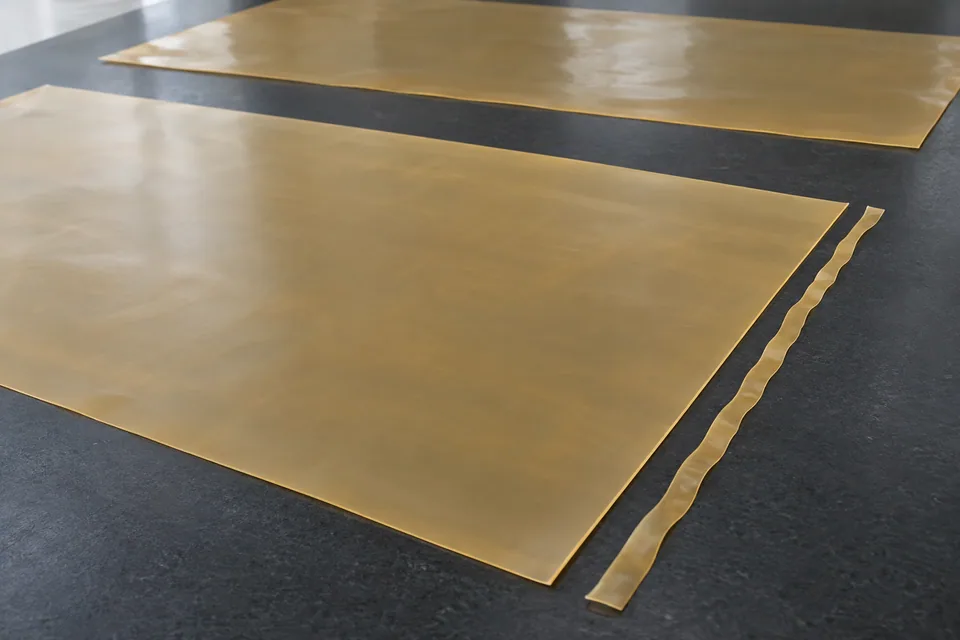
Edge trimming removes a narrow outside margin from a flat vanadium redox-flow membrane before the membrane enters a flow-battery stack. It does not create the active ion-exchange layer or separate a wide web into many useful lanes. Chemours and Fumatech document membrane choices for flow batteries, including differences in chemistry and reinforcement. The actual membrane grade, supplied form, conditioning state and stack drawing must therefore be established first. A trimming trial should preserve the usable membrane, leave a continuous sealing land and make the removed strip easy to collect without dragging across the active surface.
Updated
Where This Cutting Application Appears
Define the retained edge
Mark the intended finished boundary from the stack drawing, then measure the distance from that boundary to the gasket or seal interface. The trim width is a process output, not an arbitrary scrap allowance. Record machine-direction and cross-direction orientation on each sample.
Support and guide the membrane
Keep the flexible membrane supported near the trim line and identify which side may contact guides. A reinforced membrane may not fail like an unsupported film, but the cut can still initiate a tear or delamination. Confirm whether protective interleaves remain during conversion.
Inspect continuity after the cut
Check both retained edges for nicks, stretched white marks, ragged reinforcement and local folds. Inspect the adjoining surface for witness marks from rolls or clamps. Use the buyer’s agreed optical or dimensional method rather than declaring a membrane sound by appearance alone.
Control the waste strip
Route the narrow outside strip away from the retained web. Watch for a trim strip winding around a shaft or pulling the good edge laterally. If the membrane is supplied damp or conditioned, follow the supplier’s handling instructions through trial and storage.
Define the Required Cut Result
- Hold the retained membrane width and seal margin to the approved drawing.
- Produce a continuous edge without nicks, stretched zones or loose reinforcement.
- Keep trim and contact marks away from the membrane area used in the cell.
- Document material condition and orientation for repeatable stack assembly.
Problems to Diagnose Before Changing the Knife
A nick appears in the retained edge
- Compare guide contact with the first point of damage.
- Inspect blade condition, edge support and waste-strip pull.
- Review the same lot before trimming to separate incoming defects.
Width moves during the run
- Check lateral tracking and datum selection.
- Compare trim width on both sides along the sample length.
- Review web tension and any roll or guide adjustment.
The membrane curls or wrinkles after trimming
- Record conditioning and packaging state.
- Check handling pressure and unequal pull on the trim strip.
- Allow the sample to reach the specified inspection condition before judging width.
Knife Forms That May Be Considered
| Possible knife form | When it may be considered | What must be confirmed |
|---|---|---|
| Supported edge-trim knife | For removing a narrow outside margin from a compatible continuous membrane web. | Confirm support, waste removal and accepted edge on the actual membrane grade. |
| Matched shear trim pair | When the existing line uses opposed cutting edges for a stable continuous trim. | Confirm machine dimensions, side clearance and condition; do not transfer settings from another membrane. |
Information to Send for Technical Review
You do not need to know the exact blade name. Send the available workpiece, machine, current-knife and cut-result information so the application can be reviewed against a drawing or sample.
- Flow-battery membrane grade, chemistry and reinforcement state
- Supplied roll or sheet format and conditioning instructions
- Stack drawing showing gasket, seal land and active area
- Incoming width, required finished width and trim allowance
- Accepted and rejected edge and surface examples
- Line layout, contact points and waste-strip takeoff
- Inspection condition, sampling plan and lot traceability
Questions About This Cutting Application
Is edge trimming the same as slitting multiple lanes?
No. Edge trimming removes an outside scrap margin; multi-lane slitting makes several usable strips. Specify which output the line must produce.
Can the active membrane be touched by a hold-down?
Only under the material supplier and buyer handling rules. Trial contact on a representative sample and inspect for surface or dimensional change.
Does a clean-looking edge prove stack suitability?
No. The retained width, seal margin, orientation and any reinforcement damage must also pass the buyer’s inspection and assembly criteria.
What should the RFQ include?
Send the actual grade, format, conditioned state, finished drawing, machine interface and accepted edge samples.
Public references and scope
These public sources provide material, cutting-method or safety context for this guide. Supplier pages describe their own materials or equipment; they do not establish a MEIRENTE blade specification or performance claim. Confirm the actual grade, machine setup and required cut with a drawing or sample.
Related product and service information
- Zinc-Air Battery Separator Paper Contour-Cutting Blades - zinc-air battery separator paper · contour cutting
- Vanadium Redox-Flow Membrane Contour-Cutting Blades - vanadium redox-flow membrane · contour cutting
- AGM Battery Separator Mat Contour-Cutting Blades - AGM battery separator mat · contour cutting
Request a Custom Cutting-Knife Review
Send the workpiece details, machine or holder information, current knife photos or sample, required quantity and examples of the present cut problem. Final dimensions, material, edge geometry and tolerances are confirmed from the approved requirements.